







Archive for the ‘News’ Category

City, Developer Lock Horns Over Improvement Projects

Wednesday, March 23rd, 2011

By Dave Roberts

City officials and a local developer engaged in verbal fisticuffs at Tuesday’s City Council meeting with charges and countercharges of injuring reputations, violation of the Brown Act, umbrage at being accused of violating the Brown Act and threats of lawsuits.

The dispute centers on Discovery Builders’ Black Diamond Ranch development at Somersville Road and James Donlon Boulevard. Conditions for allowing that development included construction of a culvert crossing at Markley Creek and the widening of Somersville Road in that area.

City officials contend that the developer is on the hook for obtaining the permits and construction of the $5 million projects. The developer believes it’s the city’s responsibility to get the permits and do the work, with the developer reimbursing the city’s costs.

City officials are eager to get started on the creek project, which must precede the road widening and which can only be done during the dry season from mid-April to October so as not to disrupt creek wildlife. Two weeks ago they agreed to take over the projects and get reimbursement from the developer.

Tuesday night the Council agreed 4-0 (Wade Harper recused himself due to having received developer campaign contributions) to seek construction bids, to pay $93,000 for a one-year creek permit extension and transferring $1 million from the city’s Capital Projects Fund or the Gas Tax Fund.

Meanwhile city officials have also sent Discovery Builders an official notice that the developer has defaulted on its agreements to take on these projects. That notice is a preliminary step in possible litigation by the city to force compliance. And that possibility has ratcheted up the tension considerably between the two sides.

However, a meeting on Monday between the two parties “seemed to have the possibility of an amicable resolution of the matter,” City Attorney Lynn Tracy Nerland told the council Tuesday night.

But that amicable possibility was scotched when Discovery Builders attorney James Colopy sent the city a letter on Tuesday accusing the council of violating the open meeting law known as the Brown Act. He based this on the fact that a resolution tentatively approved at the March 8 council meeting had changed by the time the council saw the final version on Tuesday.

“We were very disturbed to receive the final resolution from the City Council,” Colopy told the council. “Because that was not the resolution you adopted on March 8 at all. That is a clear violation, in my mind, of the California Brown Act, which only allows legislative entities like yourself to deliberate at a public meeting, and only allows public decisions to be made in public and not be changed in private.”

Colopy was cut off at that point by Mayor Jim Davis because his three-minute time limit had expired. But his letter states, “Discovery Builders does not know what happened behind closed doors during the time period of March 8 to March 17. Given the substantial changes, it is reasonable to assume the City Council met again in private and voted again in private to adopt a different Resolution than the one circulated for public review and public meeting.”

A clearly peeved Nerland disputed that charge, saying, “Mr. Colopy’s letter today alleging that the City Council is meeting in secret and violating the Brown Act is so absurd that one must question his motives. It is common, as the City Council knows, that staff will prepare a resolution and attach it to the staff report for the council’s consideration. And there may be changes to those resolutions. The agenda packet goes out Thursday. Situations may change.

“In this very case, Mr. Colopy came forward with new information to the city that his client now didn’t want to build the culvert and wanted the city to build it and that Discovery Builders would pay those costs. So, obviously in those situations, resolutions  are not going to be the same as what is ultimately adopted by the City Council. It’s somewhat spurious to suggest that the council has no authority to change the resolutions that staff presents to it.”

Colopy also charged that city officials have damaged his client’s reputation.

“Discovery Builders is very upset and concerned about the way that the city of Antioch has been handling this issue,” he told the council. “We have been attacked and our business reputation has been injured because the statements that are being made by the City Council and staff report are being portrayed in the media as Discovery Builders and affiliate entities are not abiding by their contractual entities. When nothing could be farther from the truth.”

Colopy then threatened to sue the city.

“By moving ahead with the culvert project this year, that is a breach of an agreement between the City of Antioch and Discovery Builders entities that was entered into in Sept 15, 2009. To the extent that the City of Antioch continues on its current course of action my client has advised that they are considering legal action to protect their rights under the contract. This is not a course of action that we want to do, but we feel like we have no choice.

“Yesterday’s meeting was productive. I made a request that we put off this agenda item to allow time for the two sides to continue talking and see if they can resolve it. I was told by the city attorney and outside counsel for the city that this matter would have to proceed on two tracks. That we would keep talking about a settlement to see if that would be productive, but otherwise the city was going to move forward with what it was going to do. If that’s what it’s going to do, fine. But we have to also do what we feel is necessary to protect our rights under the law.”

Nerland explained that the culvert work needs to get done in the next half-year during the dry season or be put off for another year. As for the other track of continuing to discuss the dispute with representatives of the Seeno-owned company, progress would depend on “if they continue to come to the table in good faith or whether they are simply going to continue to allege Brown Act violations and we don’t get any further,” she said.

The only council member to respond to Calopy’s charge of violating the Brown Act was Gary Agopian.  

“What really concerns me about this is that this City Council in open session (on March 8) had a discussion about this issue,” said Agopian. “I openly commented then and am openly commenting now. We did nothing in secret. I think it’s repugnant to accuse this council of acting in secret. If there’s concern about someone’s reputation being damaged, I’m concerned about the reputation of this city and its citizens, who by inference are entering into this contract. Because it’s a contract with all the citizens of Antioch. I’m very concerned about that.

“I think that we are being very prudent here by asking for the contract to be adhered to. I still believe that we can get an agreement that would be equitable if all parties are willing to talk.”
Delta Diablo Gets $1M for Biosolids Energy Project

Wednesday, March 23rd, 2011

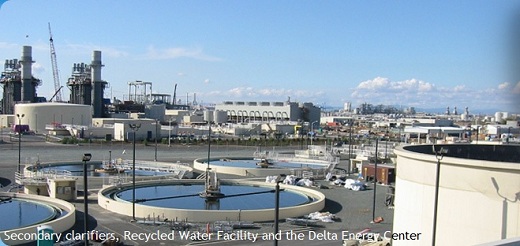
The California Energy Commission today awarded $999,924 for a research project that will look at converting biosolids to energy. Funding comes from the Commission’s Public Interest Energy Research (PIER) program.

“California continues to make significant strides in bioenergy research. By studying how to use biosolids more effectively, California will generate energy from previously untapped waste streams and reduce the volume going into our state’s growing landfills,” said Energy Commission Vice Chair James Boyd.

The Commission approved $999,924 to the Antioch-based Delta Diablo Sanitation District to develop, demonstrate, and implement a system to turn biosolids into energy. The total cost of the project is $4,738,924, with the remainder of costs coming from Intellergy Corporation of Richmond.

Biosolids are the treated byproduct produced by wastewater treatment facilities when organics are removed from municipal sewage. Biosolids contain latent energy that can be harnessed in several ways; one conversion method involves heating the material to break down the solids and create gases that are converted to energy.

Wastewater treatment facilities in California must address how to manage biosolids. Existing options for using biosolids are limited (mainly land application and alternative daily cover in landfills) and face increasing environmental challenges that could eliminate those options. Current disposal practices often involves hauling biosolids long distances, which consumes transportation fuels, increases greenhouse gas emissions, and increases ratepayers’ costs for wastewater treatment.

The Delta Diablo Sanitation District will lead the implementation of a regional biosolids to energy facility under the project that the Energy Commission is funding. The project will demonstrate the steam/carbon dioxide reforming technology of Intellergy which has yet to be commercially demonstrated with biosolids. The biosolids will be heated at a high temperature in an airlock vessel, vaporizing the liquids and gasifying the organic solids. Steam and carbon dioxide will then be added, producing a hydrogen-rich gaseous fuel known as syngas. The hydrogen gas produced will be used to run a fuel cell to generate electricity.

The district is leading the Bay Area Biosolids to Energy Coalition, a collective of 16 San Francisco Bay Area public agencies working on local, sustainable solutions to biosolids management. In 2009, 661,000 dry metric tons of biosolids were generated in California. More than 158,000 dry metric tons of biosolids are produced in the Bay Area annually.

The Public Interest Energy Research (PIER) program supports public interest research and development that helps improve the quality of life in California by bringing environmentally safe, reliable, and affordable energy services and products to the marketplace. For more information, visit www.energy.ca.gov/research/.

Created by the California Legislature in 1974, the California Energy Commission is the state’s primary energy policy and planning agency. The Energy Commission has five major responsibilities: forecasting future energy needs and keeping historical energy data; licensing thermal power plants 50 megawatts or larger; promoting energy efficiency through appliance and building standards; developing energy technologies and supporting renewable energy; and planning for and directing state response to energy emergency.

Shooting at Delta Bowl

Monday, March 21st, 2011

On Sunday at 12:30 a.m.  Antioch Police were called to Delta Bowl on the report of shots being fired in the parking lot. Officers arrived to find no gunshot victims, but evidence that a shootout had occurred.

They found more than 30 expended shell casings of different calibers, apparent human blood, and several cars that had bullet holes in them. No one at the bowling alley said they saw anything, but all said they heard the shootout.  The bowling alley was open at the time.

A short time later three adult males showed up separately at local hospitals, two with gunshot wounds and one with a head injury from being pistol whipped.  None of the victims’ injuries were considered life threatening, and all of the men were uncooperative with police.

Video surveillance of the shootout has been obtained by APD and is currently being examined by detectives. It appears the shooting is between two groups of males and isolated to the parking lot. Anyone with information is asked to contact Detective Desmond Bittner at (925) 779-6939.

County residents can sign up for emergency alerts

Monday, March 14th, 2011


By Federal D. Glover

Supervisor, District V

In the early hours of the disaster of the 8.9 earthquake in Japan and the resulting tsumani, and even now, days later, cell phone towers toppled and communications to the stricken areas were disabled. For many, the only means of communicating with the outside world was through the Internet using Facebook, Twitter and other servers. Relatives and friends were able to reunite and find out the fate of people they knew and the conditions they face.

I was relieved to hear on my cell phone the morning of March 11 that the tsumani would have minimal impact on Contra Costa County’s San Francisco Bay frontage. As a County supervisor I signed up to receive phone calls from the County’s emergency notification system on both my cell and home phones. There is some interesting video footage of the tsumani hitting the Point Richmond shoreline (see above).

The County’s emergency notification system automatically telephones landlines using a reverse 911 directory. Since more and more people are using cell phones as their primary means of communication, Contra Costa County cell phone users now can receive emergency alerts by signing up by linking to receive this free service at the Contra Costa County Sheriff’s Office website at www.cws.cccounty.us and follow the instructions. 

The Japan quake also reminds me to check on my emergency earthquake supply kit. In a dire emergency, such as a levee break or a massive quake on the Hayward Fault, you can expect to be on your own for the first two or three days so everyone needs to be prepared. Information on emergency preparedness is available on the Contra Costa Health Services website at www.cchealth.org/topics/emergencies.

Our prayers and thoughts go to the victims of the Japan quake and tsumani. Check the local newspapers,and television stations to learn how you can help.

BART Service Restored After Derailment

Sunday, March 13th, 2011

Update 4:01 am

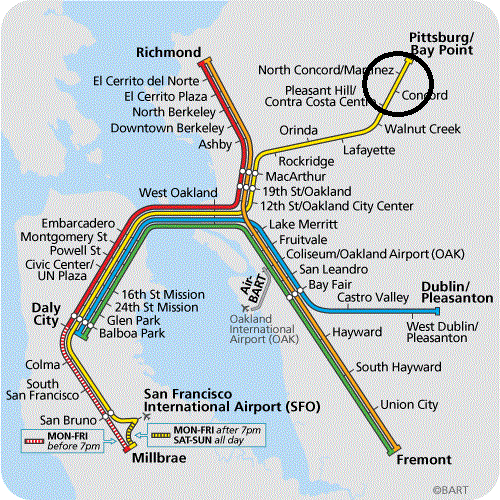
Regular BART service has resumed through the Concord BART Station following a slow speed train derailment on Sun., March 13.

Update 10:02 p.m.

 BART has arranged for a “bus bridge” between Pleasant Hill and Pittsburg/Bay Point stations. There are express buses between Pleasant Hill and Pittsburg/Bay Point from Tri Delta Transit. County Connection is serving Pleasant Hill, Concord and North Concord stations.

Monday Morning Contingency plan (if required)
Work to restore BART service will continue through the night. In the unlikely event that regular BART service cannot resume tomorrow morning, BART will operate between Pittsburg/Bay Point and Concord. There will be express buses between Concord and Pleasant Hill. BART will operate from Pleasant Hill to and from San Francisco and the rest of the system.

Update 4 p.m.:  Normal BART service continues throughout the rest of the BART system and there is a “bus bridge” between Pleasant Hill and Pittsburg/Bay Point. Work to restore BART service will continue through the night. In the unlikely event that regular BART service cannot resume tomorrow morning, BART will operate between Pittsburg/Bay Point and Concord and there will be express buses between Concord and Pleasant Hill.

—————-

There is no BART service between Pleasant Hill and Pittsburg/Bay Point stations due to a train derailment outside of the Concord Station. Normal BART service continues throughout the rest of the BART system.

About BART Service
BART has arranged for eight buses to serve as a “bus bridge” between Pleasant Hill and Pittsburg/Bay Point stations. Still, customers travelling to points west including San Francisco, SFO, Richmond and Fremont should try to begin their journey at Pleasant Hill, Walnut Creek or Lafayette if they can. There is no word on exactly how long it will take to restore BART service in the area, but it is expected to take many hours. The rerailment process is scheduled to begin before 2:00 pm.

About the Incident
The 8th and 9th car of a 10-car SFO-bound train derailed aound 9:20 am outside Concord Station. The train was just leaving the station and was traveling at a low rate of speed. All cars remained upright during the incident. About 65 people were evacuated from the train. BART police officers were on the platform at the time and were able to assist in an orderly evacuation. The Contra Costa County Fire Department was on the scene quickly. Although there were no immediate reports of injury, three subsequent reports of minor back injuries were reported to the Contra Costa County Fire Department.

BART started an investigation into the cause shortly after the incident occurred. Customers who were on the train at the time of the derailment were interviewed. Officials from the state Public Utilities Commission are on the scene as well as the District’s Chief Engineer, Chief Transportation Officer, Chief Safety Officer, Assistant General Manager for Operations and other BART operations personnel.

How to receive breaking service updates from BART
For breaking service updates please check service advisories on the BART website or the BART mobile website, sign up to receive service advisories by email at www.bart.gov/alerts or text “BART delays” to 878787 for on-demand service advisories via SMS.

Assemblywoman Invites You to Balance the State Budget

Friday, March 11th, 2011

California State Assemblywoman Susan Bonilla, who represents Antioch, is inviting her constituents to give her input on how to balance the state budget at an interactive workshop on Thursday, March 24, 2011.

Here is the official announcement:

HOW WOULD YOU BALANCE THE STATE BUDGET?

Interactive Budget Workshop

(*Take the Next 10 California Budget Challenge)

Thursday, March 24, 2011

6 p.m. – 8 p.m.

Los Medanos Community College, Community Room, Library, 2700 East Leland Road, Pittsburg.

Visit my site for maps and to RSVP.

*Next 10 is an independent, non-partisan organization that educates, engages and empowers Californians to improve the state’s future.

To RSVP or for additional information, please call (925) 521-1511.

Regional Plan Launches to Put Brakes on Driving

Friday, March 11th, 2011

Regional planning regulations are being developed to reduce cars and trucks.

Association of Bay Area Governments (ABAG) and Metropolitan Transportation Commission (MTC) staff today unveiled an Initial Vision Scenario for the Sustainable Communities Strategy mandated by the 2008 passage of state Senate Bill 375, which requires the Bay Area and other California metro areas to develop integrated regional land-use and transportation plans to meet state targets for reducing greenhouse gas emissions from cars and light trucks.

The release of the Initial Vision Scenario provides a starting point for conversations with local governments and Bay Area residents about where new development should occur, and how new long-term transportation investments can serve this new growth. This effort will culminate in 2013 with the adoption of a new long-range plan for the nine-county region. The plan, to be known as Plan Bay Area, will detail a 25-year transportation investment and land-use strategy for 2015-2040, and will be the region’s first such plan to incorporate a Sustainable Communities Strategy.

The Initial Vision Scenario focuses on the location of growth areas around the Bay Area and outlines a future development pattern. It assumes a strong economy in which the region will add some 1.2 million jobs by 2035 and will need 903,000 more housing units than currently are available.  The scenario assumes sufficient funding for affordable housing and supportive public infrastructure investments, but is not a forecast for the region.

“The Initial Vision Scenario makes the most of the Bay Area’s existing infrastructure,” explained MTC Planning Director Doug Kimsey. “It projects that 97 percent of all new households will be accommodated in already urbanized areas, and particularly in cities where residents have access to frequent public transit service. Under this scenario, 70 percent of the growth, or 632,100 new households, will go into places that have been designated ‘close to transit’ by local jurisdictions. And the Bay Area’s biggest cities get even bigger, with San Jose, San Francisco and Oakland together accounting for nearly one-third of all new housing units.”

“The Initial Vision Scenario is a tool to advance dialogue among the Bay Area’s regional agencies, together with our local government partners, nonprofit organizations, business and community groups, and interested Bay Area residents,” said ABAG Executive Director Ezra Rapport. “Through this collaborative planning effort to strengthen the character and qualities of our neighborhoods and communities, we can tackle the region’s population growth with a mix of housing, while preserving open spaces, protecting our economy, and getting residents where they need to go.”

MTC is the nine-county San Francisco Bay Area’s transportation planning, coordinating and financing agency. Founded in 1961, ABAG is the official regional planning agency for the 101 cities and towns, and nine counties of the Bay Area, and is recognized as the first council of governments in California.

Fast-growing East County Getting More Diverse

Thursday, March 10th, 2011

The eastern portion of Contra Costa County is one of the fastest growing areas in the Bay Area, according to new figures released by the U.S. Census on Tuesday. At the same time, the area is starting to look like the rest of the state as more Asians, Latinos and African Americans move to the cities of Pittsburg, Antioch, Oakley and Brentwood.

Speaking from Washington DC where he is representing the county at the National Association of Counties conference, Supervisor Federal Glover said, “This is one of most dynamic growth areas in the state. You can look at it as a glass half-empty or a glass half-full. I tend to be see the latter. Half-empty looks at the negative which translates to more crowding, more traffic and more tension among the diverse groups of people. Half-full means the door is open to more business opportunities, a greater talent pool, new ideas, new cultures and cuisines.”

The new numbers indicate that like the rest of the state, there’s been a marked increase in the Asian and Latino population. Unlike the rest of the Bay Area, East County also shows more African Americans moving to the area. 

“The new people are coming here for the same reasons that attracted many of their predecessors: affordable housing, better housing, newer schools and a safer environment,” said Glover.

The new Census numbers will be used by the County to redraw the districts represented by the five supervisors. With the high growth in eastern Contra Costa, it may mean that the districts represented by Supervisor Glover and District 3 Supervisor Mary Piepho, who represents the southeastern part of the county, may face contraction since all the districts are supposed to be roughly equal in population.

Glover acknowledges that the growing diversity of District V might present a different dynamic. “I will have a broader variety of viewpoints and voices to draw from. I don’t see that as a problem,” said Glover, the first African-American supervisor in the county. “I see that as a resource. That’s so American.”