Archive for the ‘News’ Category

Highway 4 Westbound Lane Shift at Somersville this Week

Tuesday, September 11th, 2012

The California Department of Transportation (Caltrans) and the Contra Costa Transportation Authority (CCTA) are widening State Route 4 (SR-4) through Pittsburg and Antioch. Construction has reached a milestone with the completion of the westbound Somersville Road Bridge.

A Traffic Advisory was issued on August 29, 2012 which described the planned westbound traffic switch at Somersville Road during the week of September 2, 2012. Due to contractor scheduling conflicts, this traffic switch has been delayed and is currently scheduled to occur during the week of September 9, 2012.

Traffic on SR-4 at Somersville Road will be modified during the week of September 10, 2012, and westbound traffic will shift to the newly completed bridge. To accommodate this work, all westbound lanes and several ramps in the vicinity will periodically be closed to traffic overnight. This work is tentatively scheduled to take place on the evening of Thursday, September 13.

The SR-4 Widening Project includes over $570 million in State, Federal, and Contra Costa Measure J sales tax, and other local funds to widen SR-4 from four to eight lanes between Loveridge Road and SR-160. The combined effort of Caltrans and the Contra Costa Transportation Authority on projects in the SR4 corridor will reduce congestion, create a safer roadway, improve operations, and reduce traffic delays on this important east-west connector.

When completed, the SR-4 highway median will be used to extend BART service from Pittsburg/Bay Point to a new station at Hillcrest Avenue in Antioch.

The project web site at: http://widensr4.org will have updated lane closure information.

Caltrans and CCTA appreciate your patience as we work to improve the highways.

Two Alarm Fire Threatens Homes in Antioch

Monday, September 10th, 2012

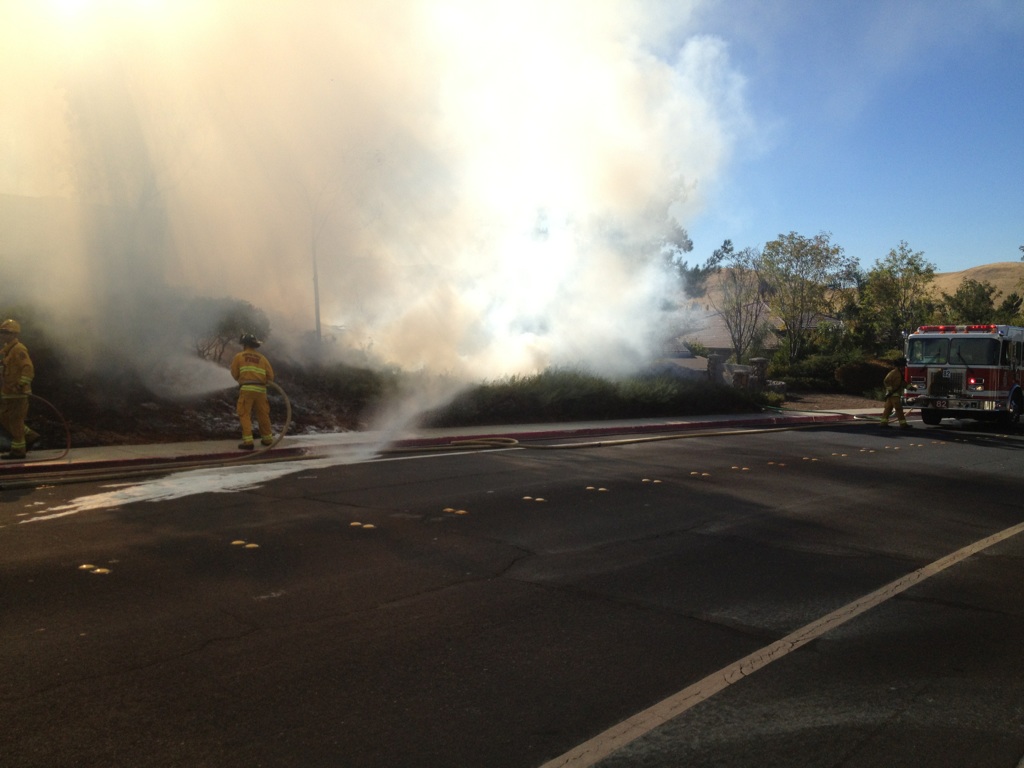
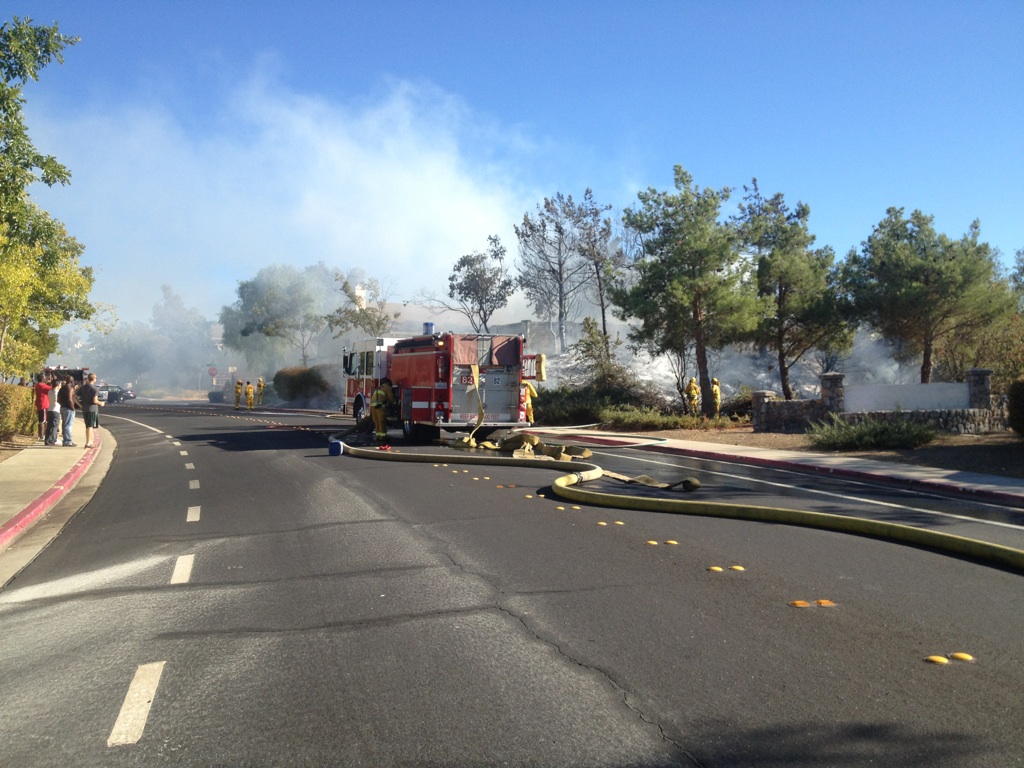
Firefighters douse the flames of the fire on Golf Course Road on Sunday, September 9, 2012

By Allen Payton, Publisher

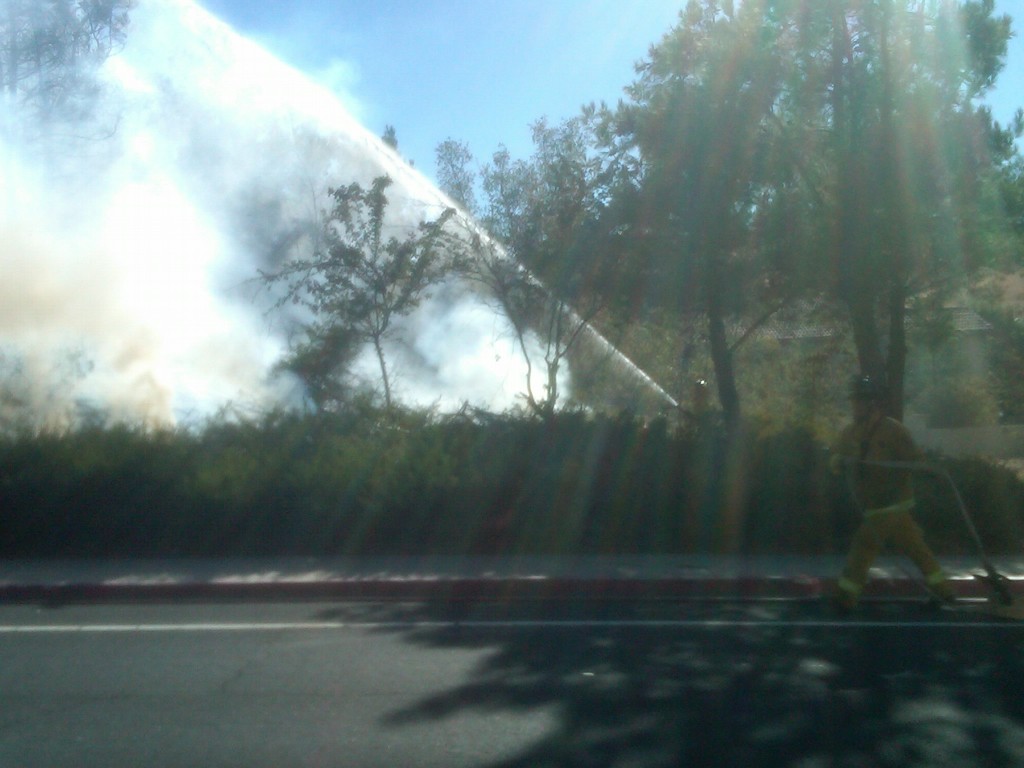
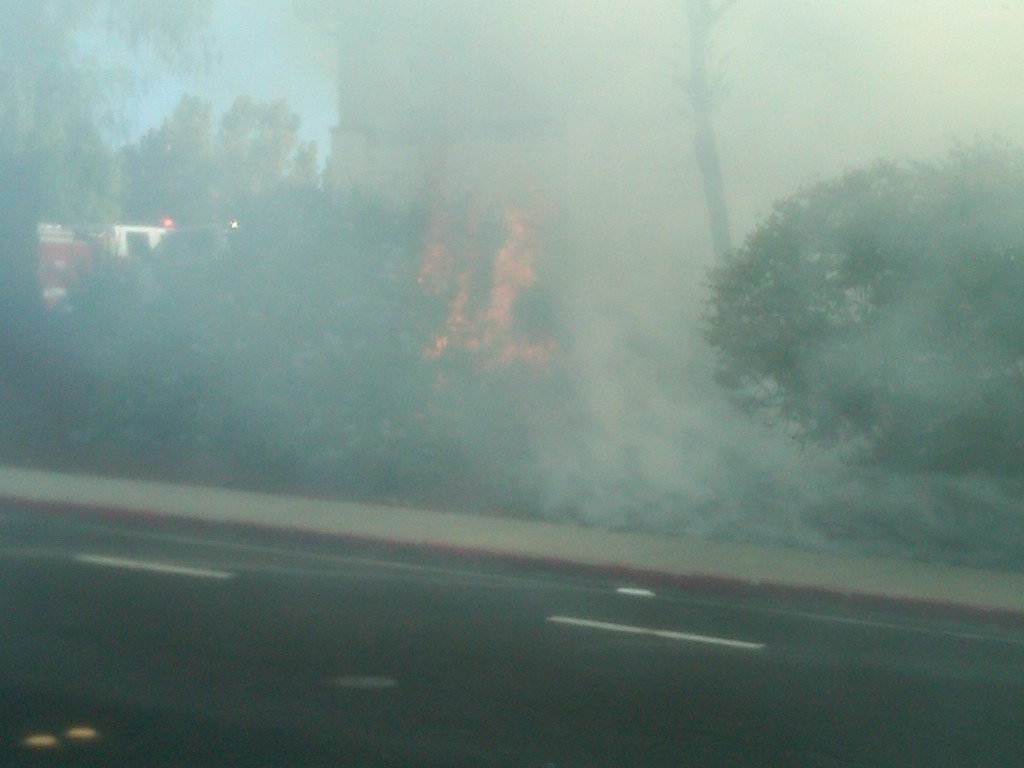
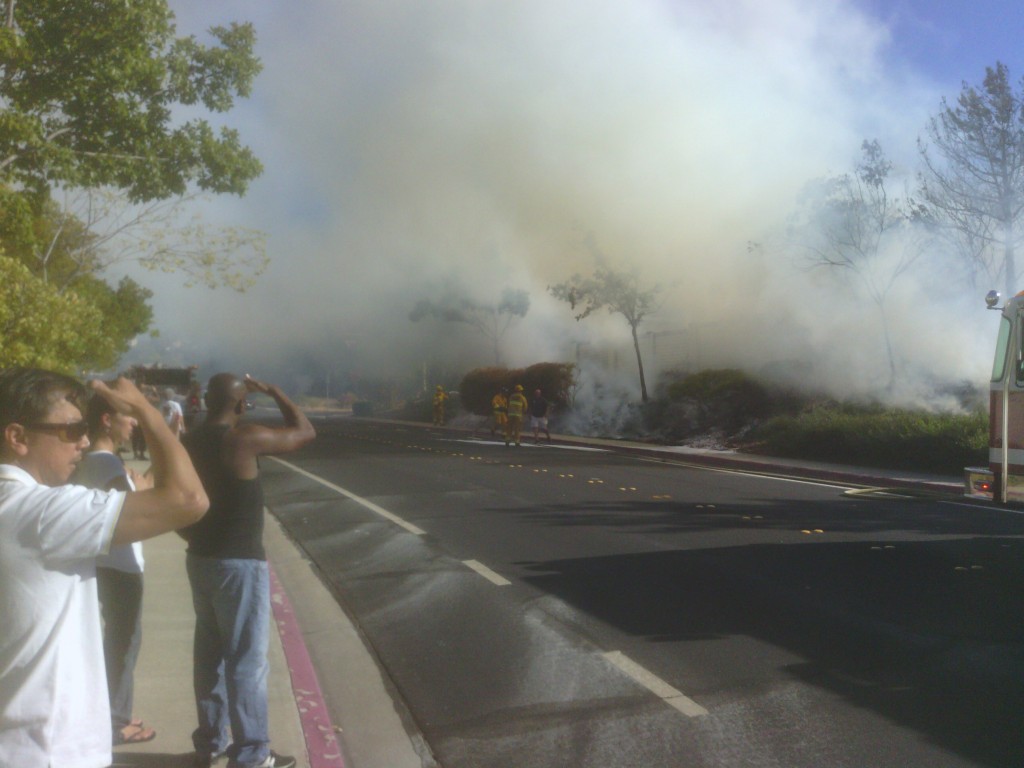
A brush fire in open space on Golf Course Road  in Southeast Antioch on Sunday afternoon, September 9, 2012 threatened adjacent homes, but firefighters were able to douse the blaze before any burned.

The home at the corner of Mesa Ridge Drive and Golf Course Road, and homes at the end of the cul-de-sac on Vesteny Court were closest to the flames that shot as high as 30 feet in the air, according to witnesses, burning bushes and trees in the area near an unmarked monument sign.

Three trucks from the Contra Costa Fire Department responded to the scene.

Fire burns bushes along Golf Course Road 9-9-12

Witnesses watch the fire on Golf Course Road on 9-9-12, photo by Garrett Holloman

Firefighters spray fire retardant on the areas where the fire burned bushes and trees on Golf Course Road 9-9-12. photo by Brandon Payton

The fire on Golf Course Road was under control in about 30 minutes 9-9-12. photo by Brandon Payton

Late Night Roadwork on Highway 4, This Week Between Lone Tree Way and Balfour Road

Tuesday, September 4th, 2012

The Contra Costa Transportation Authority (CCTA) is constructing the State Route 4 Sand Creek Road Interchange and four-lane widening through Antioch and Brentwood. As part of this construction work, the contractor will be placing temporary traffic control devices on SR-4 between

Lone Tree Way and Balfour Road, and modifying traffic signals at SR-4 and Sand Creek Road in Brentwood. In order to ensure crew and public safety during this work, and to minimize the impacts to public traffic, the contractor will be performing traffic control and flagging operations during late evening/early morning hours.

Traffic control and flagging on SR-4 in Brentwood between Lone Tree Way and Balfour Road will take

place during nighttime hours as follows:

�Thursday, September 6th starting at 10:00 PM and ending Friday, September 7th at 4:00 AM

�Friday, September 7th starting at 11:00 PM and ending Saturday, September 8th at 7:00 AM

�Saturday, September 8th starting at 11:00 PM and ending Sunday, September 9th at 8:00AM

Motorists are advised to expect some delays and allow extra time for their commute.

Please drive with caution through the work area and leave a safe traveling distance between your vehicle and the vehicle ahead of you. CCTA appreciates your patience as we work to improve mobility in Eastern Contra Costa County. For the most current information please contact the project hotline number at 925-206-3002 or go to www.ccta.net.

Contra Costa Superior Court Adopts Final Budget Reduction Plan, Some Courts to Close

Tuesday, September 4th, 2012

Over the past three fiscal years, the Contra Costa Superior Court has permanently reduced its budget by nearly $7.5 million due to statewide cuts to the judicial branch budget and unfunded cost increases.

The new state budget presents even more difficult challenges. There are two major problems. First, as a result of cuts to the judicial branch budget and further unfunded cost increases, the court must make an additional $7 million in permanent budget cuts. Second, the state is sweeping (taking) over $8 million in reserves (savings) that the Court painstakingly accumulated over several years to allow it to keep operating at an appropriate level during periods of budget cuts. Since the State has cut the Court’s budget and taken $8 million of its reserves, the Court can no longer maintain its current public service levels.

These reductions amount to approximately 25 percent of the Court’s budget. Despite that, the Court has been, and remains, committed to preserving services it provides to the public and to litigants, while also living within its means. During the week of August 13, 2012, Court leadership met with court staff, justice system partners, other government officials, the legal community and the public in a series of meetings. On August 21, 2012, it published a proposed plan for public comment. As a result of that public input, on August 28, 2012 the Court adopted a modified, final budget reduction plan for implementation during fiscal year 2012-13.

The key components of the plan will have a significant impact on public service levels for years to come. Some of the most important components are these:

  • Six courtrooms will be closed and one other reduced to four days a week because the Court does not have sufficient staff to allow them to operate properly. The loss of these courtrooms will seriously hamper the Court’s ability to provide full access to justice and to hear cases without undue delay. The courtrooms to be closed are the following:

  • Effective October 22, 2012, the existing Family Law courtroom at the Arnason Justice Center in Pittsburg will be shut down and the cases will be reassigned from a Commissioner to the existing Family Law departments in Martinez. East County residents will have to travel to Martinez to have their Family Law matters considered. Among other things, it will take longer to get a divorce or a decision on child custody.

  • The Child Support courtroom in Martinez will be closed one day per week, reducing it to the level of service provided by the basic federal grant which funds this program. This will result in delays in obtaining child support orders.

  • Effective December 31, 2012, the Juvenile Law courtroom in Pittsburg will be shut down and the cases will be reassigned to an existing Judge in Martinez, In addition, the Juvenile Law courtroom in Richmond will be shut down and the judge will be reassigned to Martinez. East County and West County residents will have to travel to Martinez to have their Juvenile Law matters heard. The Court is still considering whether a limited number of Juvenile Law calendars will be heard in Pittsburg and Richmond.

  • Effective December 31, 2012 one Civil Trial department will be closed and the Civil Discovery/Ex Parte courtroom in Martinez will be shut down. Cases now heard in the to-be-closed Civil Trial department and matters now heard by the Civil Discovery Commissioner will be heard by the remaining Martinez Civil Trial Departments. This will result in increased calendar congestion and will cause delays in hearings, trials, court decisions and orders. .

  • The Concord Courthouse will close its doors to the public. Traffic cases will be transferred to the Walnut Creek Court. The remaining case types (Small Claims, Unlawful Detainer, Domestic Violence and Civil Harassment) will be transferred to Martinez, Pittsburg or Richmond. Residents who use the Concord Courthouse will have to travel to another courthouse location. Details regarding these transfers will follow.

  • The use of the Walnut Creek Courthouse will change significantly. Only traffic cases will be heard in Walnut Creek. Criminal, Small Claims, Unlawful Detainer, Domestic Violence and Civil Harassment cases will be transferred to Martinez, Pittsburg or Richmond. Residents who use the Walnut Creek Courthouse (except for traffic hearings) will have to travel to another courthouse location,. Details regarding these transfers will follow.

  • Two Commissioners will hear Traffic cases on a rotating basis, in Pittsburg, Richmond and Walnut Creek.

  • Effective December 31, 2012, court reporting services will be significantly reduced in general civil, family and probate courtrooms. Details regarding these changes will follow.

  • Effective December 31, 2012, specialty courts such as Juvenile Night Court, Juvenile and Adult Drug Court, Domestic Violence Court, Homeless Court, Mental Health, Elder Court and Truancy Court will either be consolidated or eliminated to allow the judges to focus on mandated calendars.

  • Interpreters in Domestic Violence matters in Family Court will only be provided to the extent grant funding allows. Currently, the grant funds interpreters through the fall of 2012. The Court is seeking additional grant funds from the state to fund these vital services. Details regarding the status of this request for additional funding will follow.
  • Effective October 1, 2012, the Clerk’s Office will only be open to the public from 8:00 am to 1:00 pm (reduced from 8:00 am – 3:00 pm). Exceptions will be made for temporary restraining orders and other urgent matters that address the safety of individuals. The reduced hours will provide staff with critically needed time to process the increasing backlog of unprocessed court papers.

  • Self-help services and workshops for unrepresented litigants will be reduced.

  • Other internal measures that will assist the Court in balancing the budget this fiscal year will be instituted.

The Presiding Judge of the Court, the Honorable Diana Becton said, “The Court deeply regrets having to make these changes. However since the State has cut the court’s budget and taken our reserves we no longer have sufficient funds to provide access to justice throughout the county or in a timely manner. We look forward to restoring these services as soon as the State allots sufficient money to the judicial branch that we may do so. The full and fair administration of justice requires no less.”

Candidate for Congress Ricky Gill to Speak at Republican National Convention Tuesday

Monday, August 27th, 2012

Ricky Gill, candidate for Congress in California’s 9th District, which covers most of Antioch, will address the delegates at the 2012 Republican National Convention in Tampa, Florida on Tuesday, August 28.  He will be one of a select number of candidates to speak at the convention.

“It will be an honor to speak on behalf of our Valley and Delta communities on a national stage,” Gill said. “While we face some of the greatest challenges, our communities are among the most underrepresented in America. My remarks at the Convention will focus not only on giving our communities a voice, but also on ensuring the survival of our American Dream for this generation and those to come.”

“I hope this opportunity will prompt Washington to take note not just of our communities’ current struggles, but also of their enduring potential,” Gill added.

Ricky’s speech is scheduled for the afternoon session at 2:35pm Eastern, 11:35am Pacific and can be viewed online at the C-SPAN Convention Hub. However, the RNC schedule is subject to change and campaign supporters are encouraged to follow coverage during the 2pm and 3pm hours.

“We’re extremely pleased that Ricky Gill will be able to address the delegates, alternate delegates and other convention guests,” said convention Chief Executive Officer William Harris.

“The candidates who will be speaking, like the many others running for office across the country, represent the future of our party and a better future for our country,” said Harris. “Their participation will help inspire enthusiasm for Republicans up and down the ticket.”

Nearly 50,000 visitors are expected to visit the Tampa Bay area for the Republican Convention, including delegates, alternate delegates, media and other guests.

About Ricky Gill

Ricky Gill is a native of San Joaquin County who was born and raised in Lodi, California. The son of immigrant parents, Ricky is a small business owner, a family farmer, and a former member of the California State Board of Education whose story speaks to the power of the American dream. Ricky grew up helping manage his family’s vineyard operation and serving the community as chair of the Greater Lodi Area Youth Commission. He has played an integral role in his family’s small business, which employs 60 people in the San Joaquin Valley, for several years. In 2004, he was appointed by the Governor to the California State Board of Education, where he served as the sole representative of more than six million public school students. Ricky now serves as a member of the Lodi Boys & Girls Club Board of Directors. A Phi Beta Kappa graduate of Princeton University, Ricky earned his Juris Doctor at the University of California, Berkeley. The National Republican Congressional Committee has named Ricky a “Young Gun” candidate. For more information visit www.RickyGill.com

Traffic Advisory: State Route 4 Westbound Lane Shift at Somersville Road Starting Sunday, August 19

Saturday, August 18th, 2012

The California Department of Transportation (Caltrans) and the Contra Costa Transportation Authority (CCTA) are widening State Route 4 (SR-4) through Pittsburg and Antioch. Construction has reached a milestone with the completion of the westbound Somersville Road Bridge.

Traffic flow on SR-4 at Somersville Road will be modified over several nights during the week of August 19, 2012, and westbound traffic will shift to the newly completed bridge. During this time frame, all westbound lanes and several ramps in the vicinity will periodically be closed to traffic overnight to accommodate the work.

Once all the traffic modifications on SR-4 at Somersville Road are completed, construction will begin on the new eastbound permanent pavement in this vicinity. Eastbound traffic will be temporarily shifted to the new westbound bridge. There will then be two eastbound and two westbound lanes on the new structure. While this traffic detour is in place, the old/inactive eastbound bridge will then be demolished and construction will begin on a new eastbound bridge and an eBART bridge.

The SR-4 Widening Project includes over $570 million in State, Federal, and Contra Costa Measure J sales tax, and other local funds to widen SR-4 from four to eight lanes between Loveridge Road and SR-160. The combined effort of Caltrans and the Contra Costa Transportation Authority on projects in the SR4 corridor will reduce congestion, create a safer roadway, improve operations, and reduce traffic delays on this important east-west connector.

When completed, the SR-4 highway median will be used to extend BART service from Pittsburg/Bay Point to a new station at Hillcrest Avenue in Antioch.

The project web site at: http://widensr4.org will have updated lane closure information. Caltrans and CCTA appreciate your patience as we work to improve the highways

Chief Cantando to Council: Antioch Violent Crime Up 45 Percent

Tuesday, August 14th, 2012

By James Ott

Antioch’s crime rates are up while arrest rates are down, said Police Chief Allan Cantando during his mid-year report to the City Council at their July 24th meeting.

According to the report violent crime in Antioch is up 45 percent and property crimes have climbed by nearly 60 percent.

Cantando’s presentation compared crime rates from January through June of 2011 with crime rates from those same months in 2012 and it appears that every major crime statistic reported has increased, and in some cases substantially.

There were three homicides from January to June last year and four reported from those same months this year. Rape cases have gone up 100 percent from eight cases to 16, with robbery and aggravated assault cases rising by 34 and 50 percent, respectively.

It is a similar case for non-violent crimes with burglary up 45 percent and auto-theft up 30 percent. Other theft cases have totaled 1023 – up from just 504 from this same time a year ago.

Even arson cases are up 21 percent from 14 this time last year to 17 in 2012.

Despite those increases in criminal activity, Antioch Police have arrested fewer criminals so far this year. From January to June 2011, 2444 arrests were made. From January to June of this year, police made just 1970 arrests – or 19 percent fewer arrests of adults and juveniles.

Chief Cantando said that he believes part of the increase in crimes is the result of increased reporting of criminal activity by the public. Since June 23, 2011 Antioch citizens have been able to report crimes online and so, most likely, there are just more reports of crime being filed.

“Once the public was made aware of [online reporting], it made it much easier for them to report crime and we believe that this shows our increase,” said Cantando. “Not to say that crime wasn’t occurring prior to that but making it easier I think [is why] we’re seeing a rise in our numbers.”

Cantando also said that crime is cyclical and showed a three year comparison from 2009 to 2011 to illustrate how it fluctuates. Although total property crime was up on average 46 percent during those years, violent crimes were down over 10 percent during the same period.

Chief Cantando said that the increases in crime are a result of decreases in police staffing levels, and because of that he doesn’t think many should be surprised by the jump in crime.

“We’ve talked about our staffing levels and what we’re doing to increase those,” he said. “And there is a correlation between our staffing and the crime that’s occurring in our community.”

Another statistic to note was the decreased response time of Antioch Police Officers. The average time it took officers to respond after a call for service was received and an officer was dispatched was five minutes and 37 seconds so far this year. That’s an increase of 30 seconds over last year’s average response time and nearly a minute longer than it took in 2010.

Cantando once again pointed to decreased staffing as the main culprit here. He also said that because of employee turnover in their dispatch, some newer employees are still working out training issues.

Either way, Cantando said he was focused on improving those response times because “it affects everyone.” In fact, Cantando said that when he called the police for a neighbor he had to wait over an hour to get a response.

The Antioch Police’s clearance levels – or the percent of crimes that are solved – were well above the national average in 2011 and their 2012 levels look to be at a similar pace only six months into the year.

Antioch Council Quashes Plan for Police Tax

Thursday, August 9th, 2012

By James Ott

What appeared to be a last-minute move to place a parcel tax on the November ballot in order to raise money for additional Antioch police was ultimately rejected at the City Council meeting on July 10, 2012, due to lack of time.

At the close of the meeting, Antioch City Council Member Gary Agopian asked fellow council members to vote for a special meeting on July 17 to hear the item because Antioch has a city ordinance that requires two public hearings of an item before it can be placed on a ballot. And because the county will run the elections, they require any item that will go on the ballot to be placed between July 23 and the Aug. 1 deadline.

There was only one more regularly scheduled council meeting before that ballot proposal deadline so Agopian and fellow supporters would have needed that special meeting on July 17 for the item to have a chance to make the November ballot. In addition, the ballot measure’s supporters needed to conduct a formal poll of Antioch citizens to gauge their potential support of the parcel tax which currently requires a two-thirds majority vote to pass.

The idea of a parcel tax to generate the revenue to hire more cops was originally proposed at the Jan. 24 city council meeting by Antioch Crime Prevention Commissioner Bill Cook. Cook and his fellow supporters, Citizens for a Safe Antioch, asked Agopian to help them convince fellow council members to fast-track the item to squeeze it in on the upcoming ballot.

Agopian appealed to fellow council members – minus Mayor James Davis, who was absent from the meeting – saying that the item was “a fairly substantial issue that needs to be dealt with.”

“We’ve found the funding [for the required independent poll] and the poll’s going to be done and it should be done in time for a special meeting next week,” said Agopian.

Council members seemed to reject the special meeting – and thus prevented its inclusion on the ballot – after City Attorney Lynn Nerland specified the many requirements the last-minute item would need to make it onto the ballot.

“The council would have to introduce an ordinance on July 17 to be adopted without change on July 24 along with a resolution to consolidate the election in November,” said City Attorney Lynn Nerland.

After Nerland’s comments, Council Member Mary Rocha concluded that there would not be enough time to meet those requirements because even if they had all the necessary information such as the public poll at the special meeting on July 17, they wouldn’t have the required ordinance ready – something they would need all that information before hand to draft.

“Exactly,” responded Nerland. “I would have to be directed tonight to do that.”

To top it off, the final vote on the item would have to occur at a regularly scheduled meeting – the next being July 24.

Mayor Pro Tem Wade Harper said that he would not even have been able to attend the special meeting had they voted to do it anyway.

In the end even Agopian had to admit that it didn’t appear to be doable. “Well then it’s very apparent that the timing doesn’t work,” he said.

Agopian did appear to see a potential silver lining in the future for supporters of the parcel tax however. As mentioned earlier in the discussion by Council Member Brian Kalinowski and City Manager Jim Jakel – a state legislature bill is currently pending that would reduce the required majority vote to pass taxes used for public safety items – such as the proposed parcel tax to hire Antioch police officers – from a 66 percent, or two-thirds majority to only 55 percent.

Jakel seemed to think that, if passed, it could potentially be effective for next year’s ballot, possibly greatly increasing the odds that the parcel tax and related items could pass in public vote.

As a result, Agopian said that perhaps the Citizens for a Safe Antioch would continue with their polling in anticipation of the state bill’s passing, readying the information this time far ahead of its due date.

Also at the Meeting:

City Council decided to table the discussion that would potentially provide medical and retirement benefits for elected officials to the next meeting due to Mayor Jim Davis’ absence.

State law allows a general law city such as Antioch to provide salaries for its elected officials such as its city council members. And currently they $941.20 plus a car allowance of $350 a month and a communications allowance of $50 per month. The Mayor receives $450 for his car allowance and $100 for his communications allowance.

Although state law prohibits a council member’s salary from being reduced during their term, Antioch has passed resolutions since 2009 to encourage voluntary reductions in salary and car allowance due to the city’s years-long economic crisis.

The city council and City Manager Jim Jakel in the proposed resolution feel that because they are allowed benefits and were traditionally paid benefits before the economic problems and in light of “the sacrifices made by employees,” the council members deserve medical and retirement benefits.