Archive for the ‘News’ Category

Find out about TriLink – a potential new transportation link between Brentwood and Tracy

Thursday, April 25th, 2013

Residents of Contra Costa, San Joaquin, and Alameda County are invited to attend a series of three Open Houses to learn about a potential new transportation link between Brentwood and Tracy.

Twelve local communities, including Antioch, together with environmental and business advocates, are collaborating to explore the feasibility of creating a high quality transportation facility that would connect State Route 4 near Brentwood to the Interstate 580/205 corridor near Tracy.

Known as TriLink or State Route 239, this facility could potentially improve access for those who live and work in the region, and support inter-regional goods movement operations that create jobs locally.

First identified in 1959, SR-239 is a legislatively approved, but unconstructed route in the California state highway system. SR-239 is a potential multimodal link between SR-4 near Brentwood and I-205 west of Tracy in San Joaquin County. The route has not been adopted by the California Transportation Commission (CTC); however, Contra Costa County was awarded $14 million for initial study and planning under SAFETEA-LU in 2005. Administration of the study, now called TriLink, was transferred to the Contra Costa Transportation Authority (CCTA) in January 2012.

Learn about how TriLink could affect the region and what route options are under consideration. Come to any of the following open house meetings:

Thursday May 2, 2013 from 6:30 to 9:00 PM

Brentwood Community Center, Multipurpose Room A

35 Oak Street, Brentwood, CA

Wednesday May 8, 2013 from 6:30 to 9:00 PM

Tracy Transit Center, Room 103 & 104

50 E. Sixth Street, Tracy CA

Thursday May 16, 2013, from 6:30 to 9:00 PM

Mountain House Community Services District Board Room

230 S. Sterling Drive, Suite 100

Mountain House, CA 

For more information, visit www.TriLink239.org or email outreach@TriLink239.org

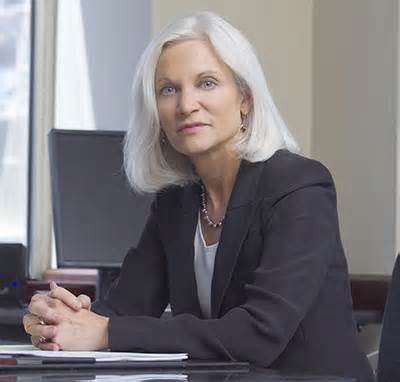
Youth Intervention Network Spring Luncheon to feature U.S. Attorney Melinda Haag

Wednesday, April 24th, 2013
Melinda Haag

Melinda Haag

You’re invited to attend theYouth Intervention Network (YIN) Spring Luncheon:
“Preventing Bullying and Reconnecting Our Youth” on Thursday, May 9, 11:30 – 1:30 pm at the Lone Tree Golf and Event Center in Antioch.

We anticipate an audience of about 100 local and regional leaders at this historic event.
Individual tickets are $50 and we are looking for additional sponsors for this event to support the work of YIN. As a sponsor, you will be recognized in outreach and event material. In addition, this program will be taped for broadcast by CCTV and will reach thousands of households throughout the Contra Costa community.

The Youth Intervention Network (YIN) Spring Luncheon

Honorary Hosts

Assemblyman Jim Frazier, Supervisor Mary Peipho, AUSD School Board President Joy Motts,

AUSD Superintendent Donald Gill, and Antioch Mayor Wade Harper

“Preventing Bullying and Reconnecting Our Youth”

Building Healthy Families, Safe Schools, and an Inclusive Community

Thursday, May 9, 2013

Lone Tree Golf Course and Event Center,

4800 Golf Course Road in Antioch

11:30 am – 1:30 pm

Keynote Speaker: Melinda Haag, US Attorney for the Northern District of California

Panelists:

Allan Cantando, Antioch Police Chief

Stephanie Anello, Antioch Unified School District Student Services

Devorah Levine, Contra Costa Zero Tolerance for Domestic Violence Initiative

Iris Archuleta, Co-Founder, YIN/CEO, Emerald HPC International, LLC

As recent events have demonstrated, bullying, cyberbullying and other forms of mistreatment continue to permeate our schools. The growing indifference and increase in bystander behavior has had the unintended consequence of ‘normalizing’ incivility and intolerance. These dangerous behaviors are occurring at younger ages and are more pervasive and therefore more challenging for adults to identify. It is not possible to legislate civility or punish young people into being tolerant. Evidence and experience call for a change in direction, priorities and the allocation of resources. To increase school safety, attendance, achievement and graduation rates, schools and communities need a new approach and strategies that focus on the fundamental determinants affecting school climate:
– Strengthening the relationships between among youth and adults

– Viewing students as resources and contributors

– Utilizing restorative justice practices and policies

– Changing the social norms that allow bullying to occur.

The principal objective of school violence-reduction strategies should be to
create cultures and climates of safety, respect, and emotional support within educational institutions.

– U.S. Secret Service and Department of Education

Our keynote speaker, Melinda Haag, is serving her first term as the US Attorney for the Northern District of California. She was appointed by President Barack Obama and confirmed by the US Senate in August 2010. Ms. Haag served most recently as the Chief of the White Collar Crimes Section in the Northern District, where she supervised the prosecution of white collar, environmental, child exploitation, and civil rights offenses. Selected by the Daily Journal as one of the Top 100 Lawyers (2009 and 2010) and Top Women Litigators (2005-2009) in California, she received the Lawyers’ Committee for Civil Rights Public Service Award in 2003.

This luncheon will highlight the continuing efforts of the Youth Intervention Network (YIN) to engage youth ages 10 through 18 who, because they are truant and/or academically disengaged, are likely to commit or become victims of violence without the appropriate interventions. Our distinguished panelists will focus on national and regional strategies to prevent bullying and how parents, businesses, and civic organizations can support efforts by AUSD, the City of Antioch, the Antioch Police Department, Contra Costa County, and YIN to prevent bullying and create safe and inclusive learning environments for our youth and young adults in Antioch and East County.

Since 2008, YIN has trained over 250 youth and adult leaders and volunteers, served over 50 families and 90 youth, and brought together more than 35 Antioch and Contra Costa County agencies and organizations. Among youth and families served, there has been a 92% reduction in police calls for service, an 83% reduction in truancy, and an improvement in student GPA by an average of 2 grade points. Ninety percent of the students participating in YIN have graduated from high school. Of these, 100% have gone on to postsecondary education.

YIN was recently featured at the opening celebration of the United Nations Peace University at the Hague in the Netherlands. Also, YIN’s success has been acclaimed in several local, state and national awards, including the National Project Safe Neighborhoods Best Community Involvement Award for 2010.
It has been a goal since the inception of YIN to integrate its best practices into the right community vehicle that would move the vision forward and take it to a level of sustainability. To that end, a transition team has completed the incorporation of YIN as an independent 501c3, and selected a board of directors and officers.

Your participation will support:

• the continuing work of YIN to reduce youth crime and gang violence though direct intervention into the lives of youth and their families, though agency collaboration and accountability, and through positive community messaging and transformation based on inclusion, service, cooperation, personal responsibility, and mutual accountability.

• the development and measurement of cross-agency strategies to reduce truancy, dropout rates, and youth violence and to increase academic performance, graduation, employability, and college-going rates among youth.

• the recruitment, training, and support of community volunteers to serve as mediators and educational advocates who directly engage youth and families under the award-winning YIN mediative intervention model.

We anticipate an audience of about 100 local and regional leaders and the event will be taped for broadcast by CCTV to the Contra Costa community.

Will you support YIN by sponsoring and/or attending this event?

Tickets are $50 and we are seeking additional sponsors for this event to support the work of YIN. Please complete the attached reservation or sponsorship form and confirm your attendance by Wednesday, April 30.

For more information about Melinda Haag, click here.

If you have any questions, please feel fee to contact: keith@emeraldhpc.com

McNerney introduces bill to help homeowners avoid foreclosure

Wednesday, April 24th, 2013

Washington, D.C. – Congressman Jerry McNerney (D-Stockton) introduced the Housing Opportunity and Mortgage Equity (HOME) Act of 2013 to help underwater homeowners avoid foreclosure.  The HOME Act will help lower homeowners’ monthly mortgage payments, providing them with a path to stay in their homes.

“Continuing to strengthen the housing sector is a vital part of economic security.  We need to help people stay in their homes and build financial security.  With the housing crisis still affecting our region, it is vital that we continue to provide relief, thus benefitting our entire community,” said Congressman McNerney.

The HOME Act will provide millions of Americans with lower monthly mortgage payments, providing much-needed financial relief.  It will allow homeowners with mortgages secured by the Government Sponsored Enterprises, Fannie Mae and Freddie Mac, to refinance at the current low interest rates.  This option was originally established by the Home Affordable Refinance Program (HARP); however, according to the Federal Housing Finance Agency (FHFA), as of December of 2012, only 2.1 million loans had been refinanced out of the original goal of 5 million.

The HOME Act will create a one-year refinancing program and grant the FHFA the option to extend the program beyond that deadline.  Currently, there are nearly 30 million mortgages guaranteed by Fannie Mae and Freddie Mac.

“We need to continue to take a multi-faceted, commonsense approach to deal with the ongoing housing crisis.  We will never get our economy back to a competitive, robust state without addressing this challenge.  This is too critical an issue to go unaddressed,” said Congressman McNerney.

The HOME Act is supported by the California Association of Realtors and ClearPoint Credit Counseling Solutions.

Reps. Doris Matsui, Mike Honda and Jim Costa are original cosponsors of the bill.

“We applaud Representative McNerney for introducing the HOME Act to make it easier for responsible homeowners to refinance their mortgages at today’s low interest rates and avoid foreclosure.  We support this important piece of legislation and hope it moves swiftly through Congress.” – Don Faught, President, California Association of Realtors

“Congressman McNerney’s bill is an important step toward improving the stability of the housing market and providing struggling homeowners with affordable alternatives for preserving home ownership. Sustainable home ownership has a positive effect on a local and national level, which helps improve the overall health of our economy.” – Martha Lucey, Senior Vice President and Chief Education Officer, ClearPoint Credit Counseling Solutions

“The HOME Act will open the door for more families to receive needed assistance to save their homes. Thank you, Congressman McNerney, for being a champion of homeowners.” – Cynthia Summers, Housing Chair, California State Conference, National Association for the Advancement of Colored People.

McNerney represents most of Antioch in the U.S. House of Representatives.

Antioch Council postpones opening of, will study policy on locations for felons in state’s realignment program

Tuesday, April 23rd, 2013

By James Ott

City leaders have decided to restrict the opening of new social service centers in Antioch for recently released criminals until the city can research their potential impacts to nearby businesses and communities.

At the Tuesday, March 26 council meeting city council voted to require a conditional use permit for the social service centers and to restrict them to business and professional services zones in the city for at least the next 45 days.

The so called “community supervision programs” are a product of State Assembly Bill 109’s attempt to transfer the responsibility of supervising recently released low-level criminals from the state to the county. Private, public, non-profit and for-profit organizations can apply for over $4 million in state aid to provide services like employment and housing help, peer mentoring and other services to help recently released non-violent, non-serious offenders re-integrate into society.

Antioch staff brought the item to the attention of city council because it said that at least one such organization has already applied to open in Antioch.

According to Antioch Community Development Director Tina Wehrmeister, because the city does not yet have adequate ordinances and regulations in place to deal with these new centers that application almost went through and would have allowed the social services center to open across the street from the Nick Rodriguez Community Center which is frequented by seniors and children.

While the goal of the service centers is to reduce the odds of these low-level criminals from re-offending the program is brand new and so it’s effectiveness is untested, city council said. The city is worried about these programs concentrating parolees into cities like Antioch who already have a high crime rate and a reduced police force.

According to Antioch Police Captain Steve McConnell, Antioch has had 107 felons, who were released under the program, return to the city since AB 109 took effect – more than any other nearby city. That compares to Richmond who has 90, while Concord has 77, Pittsburg has 72, Martinez has 30 and Brentwood and Oakley both have 14.

“I understand that the horse is already out of the barn, that people are being released and they need help,” said council member Gary Agopian. “So if we’re going to allow these types of facilities in Antioch I think it’s prudent, considering the risk, to study the issue and make sure we’re putting these facilities in places that are not going to create problems.”

Agopian also pointed out that while those that are released from prison are considered non-violent, no-serious, non-sexual offenders that is only based on their most recent conviction so those using the community supervision programs could possibly still have a violent or serious criminal past.

It was information like this that led city council to vote unanimously, (with Mary Rocha abstaining), to enact the emergency ordinance restricting the service centers while city staff research more permanent solutions.

“I think we have a responsibility to allow these individuals to get the services they need to become responsible citizens,” said Mayor Wade Harper. “but I’m leaning toward certain restrictions… not near schools, not near parks, not near senior facilities but in a commercial area or near social service offices.”

Todd Billeci, the Director of Field Services for the Contra Costa County Probation Department said that Antioch has time on their side to make the necessary adjustments because the funding and contracts for East, West and Central county community service programs won’t be awarded until May 14.

According to Dana Simas in the Press Office of the California Department of Corrections, “No one is being released from prison early. They’ve served their full sentence and would be released anyway.”

The only difference under realignment is whether they’re on state parole or county probation,” she added. “That’s determined by their current commitment offense. If they’re non-violent, non-serious, non-sex offenders, as defined by the penal code, then they’re placed on probation not parole.

They must be released back to the community in which they lived when the crime was committed.

“We are still 10,000 short of meeting the federal court order of reducing the prison population,” Simas stated.

That means Antioch and East County can expect more individuals to return to the local communities.

Also At the Meeting

The City of Antioch will conduct a poll to asses what kind of tax measure it’s constituents might vote for in order to provide money to hire more police officers.

The poll will ask voters if they would favor a half-cent or a three-quarter-cent sales tax measure or if they would prefer taxing rental properties $200 to $250 dollars a year to raise the money.

City Manager Jim Jakel said that the poll’s fine details will be decided and it should go out to Antioch homes in about the next 45 days.

Antioch currently has 102 sworn and 26 non-sworn officers on it’s payroll and it’s costing the city just under $24 million a year.

At the Tuesday, March 26 council meeting Jakel said that the city would need at least $6.8 million from the tax measure to reach the 126 sworn officer and 50 non-sworn officers it is aiming for.

That would require voters adopting at least a three-quarter-cent sales tax Jakel said – which would raise just over $7 million to go towards the new police hires.

It looks like city council’s goal of eventually having 144 sworn officers might be a bit of a stretch right now as it would cost an additional $10.7 million to get to that level and even a one-cent sales tax would only generate an extra $9.4 million – a full $1.3 less than needed.

As a matter of fact, Jakel estimated that it would cost the city $34,645,00 for pay and benefits – which would be more than the city’s entire current budget.

It was also estimated that the city would need an additional $240,000 to provide vehicles and safety equipment for 126 sworn and 50 non-sworn officers.

That number would jump to $1.1 million to provide the same equipment for 144 sworn and 55 non-sworn officers.

Allen Payton contributed to this report.

Antioch Council postpones opening of, will study policy on locations for felons in early release program

Thursday, April 11th, 2013

By James Ott

City leaders have decided to restrict the opening of new social service centers in Antioch for recently released criminals until the city can research their potential impacts to nearby businesses and communities.

At the Tuesday, March 26 council meeting city council voted to require a conditional use permit for the social service centers and to restrict them to business and professional services zones in the city for at least the next 45 days.

The so called “community supervision programs” are a product of State Assembly Bill 109’s attempt to transfer the responsibility of supervising recently released low-level criminals from the state to the county. Private, public, non-profit and for-profit organizations can apply for over $4 million in state aid to provide services like employment and housing help, peer mentoring and other services to help recently released non-violent, non-serious offenders re-integrate into society.

Antioch staff brought the item to the attention of city council because it said that at least one such organization has already applied to open in Antioch.

According to Antioch Community Development Director Tina Wehrmeister, because the city does not yet have adequate ordinances and regulations in place to deal with these new centers that application almost went through and would have allowed the social services center to open across the street from the Nick Rodriguez Community Center which is frequented by seniors and children.

While the goal of the service centers is to reduce the odds of these low-level criminals from re-offending the program is brand new and so it’s effectiveness is untested, city council said. The city is worried about these programs concentrating parolees into cities like Antioch who already have a high crime rate and a reduced police force.

According to Antioch Police Captain Steve McConnell, Antioch has had 107 early release felons return to the city since AB 109 took effect – more than any other nearby city. That compares to Richmond who has 90, while Concord has 77, Pittsburg has 72, Martinez has 30 and Brentwood and Oakley both have 14.

“I understand that the horse is already out of the barn, that people are being released and they need help,” said council member Gary Agopian. “So if we’re going to allow these types of facilities in Antioch I think it’s prudent, considering the risk, to study the issue and make sure we’re putting these facilities in places that are not going to create problems.”

Agopian also pointed out that while those that are released from prison are considered non-violent, no-serious, non-sexual offenders that is only based on their most recent conviction so those using the community supervision programs could possibly still have a violent or serious criminal past.

It was information like this that led city council to vote unanimously, (with Mary Rocha abstaining), to enact the emergency ordinance restricting the service centers while city staff research more permanent solutions.

“I think we have a responsibility to allow these individuals to get the services they need to become responsible citizens,” said Mayor Wade Harper. “but I’m leaning toward certain restrictions… not near schools, not near parks, not near senior facilities but in a commercial area or near social service offices.”

Todd Billeci, the Director of Field Services for the Contra Costa County Probation Department said that Antioch has time on their side to make the necessary adjustments because the funding and contracts for East, West and Central county community service programs won’t be awarded until May 14.

Also At the Meeting

The City of Antioch will conduct a poll to asses what kind of tax measure it’s constituents might vote for in order to provide money to hire more police officers.

The poll will ask voters if they would favor a half-cent or a three-quarter-cent sales tax measure or if they would prefer taxing rental properties $200 to $250 dollars a year to raise the money.

City Manager Jim Jakel said that the poll’s fine details will be decided and it should go out to Antioch homes in about the next 45 days.

Antioch currently has 102 sworn and 26 non-sworn officers on it’s payroll and it’s costing the city just under $24 million a year.

At the Tuesday, March 26 council meeting Jakel said that the city would need at least $6.8 million from the tax measure to reach the 126 sworn officer and 50 non-sworn officers it is aiming for.

That would require voters adopting at least a three-quarter-cent sales tax Jakel said – which would raise just over $7 million to go towards the new police hires.

It looks like city council’s goal of eventually having 144 sworn officers might be a bit of a stretch right now as it would cost an additional $10.7 million to get to that level and even a one-cent sales tax would only generate an extra $9.4 million – a full $1.3 less than needed.

As a matter of fact, Jakel estimated that it would cost the city $34,645,00 for pay and benefits – which would be more than the city’s entire current budget.

It was also estimated that the city would need an additional $240,000 to provide vehicles and safety equipment for 126 sworn and 50 non-sworn officers.

That number would jump to $1.1 million to provide the same equipment for 144 sworn and 55 non-sworn officers.

Highway 4 eastbound lane closure in Hillcrest Avenue area early morning April 16

Thursday, April 11th, 2013

During construction for the Highway 4 (SR-4) widening project, the contractor will be removing an existing overhead sign structure that spans eastbound SR-4.

In order to ensure crew and public safety during this work, the contractor will close all lanes of SR-4 in the eastbound direction between Hillcrest Avenue and SR-160 overnight. This closure is scheduled to take place on Tuesday morning, April 16 from 1:00 am to 4:00 am.

The detour for this work will be as follows:

o Eastbound motorists will be directed off the highway at the Hillcrest Avenue exit, left on Hillcrest Avenue, right on East 18th Street, right on Empire Avenue, right on Laurel Road, and right onto the eastbound loop on-ramp to SR-4. For detour map, please see attached.

o If traveling to northbound SR-160, while along the above detour route on East 18th Street, turn right onto the northbound loop on-ramp to SR-160.Motorists are advised to expect delays and allow extra time for their commute. Please drive with caution through the detours and leave a safe traveling distance between your vehicle and the vehicle ahead of you.

The SR-4 Widening Project includes over $540 million in State, Federal, and Contra Costa Measure J sales tax, and other local funds to widen SR-4 from four to eight lanes between Loveridge Road and SR-160. The combined effort of Caltrans and the Contra Costa Transportation Authority on projects in the SR-4 corridor will reduce congestion, create a safer roadway, improve operations, and reduce traffic delays on this important east-west connector. When completed, the SR-4 highway median will be used to extend BART service from Pittsburg/Bay Point to a new Antioch station at Hillcrest Avenue.

Caltrans and CCTA appreciate your patience as we work to improve the highways. For the most current information on all SR-4 corridor closures please visit our website at: http://4eastcounty.org.

Kristoff Williams of Antioch makes President’s Honor Roll at Washington State

Monday, April 8th, 2013

By Allen Payton

Kristoff Isiah Williams of Antioch, has earned a place on Washington State University’s President’s Honor Roll for the 2012 fall semester.

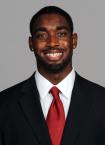
Kristoff Williams, courtesy of WSU Athletics

A criminal justice major in his junior year, Williams is a 2010 graduate of Deer Valley High School, where he was a four-year scholar athlete and a National Football League Hall of Fame Scholar Athlete, as quarterback for the Wolverines. He now plays wide receiver for the WSU Cougars football team. Williams is the son of Daniel and Corlette Williams.

The President’s Honor Roll recognizes students who stand above the rest with excellent academic performance. To be eligible for the honor roll, undergraduate students must be enrolled in a minimum of nine graded hours in a single term at WSU and earn a grade point average of 3.75 or earn a 3.50 cumulative GPA based on 15 cumulative hours of graded work.

With more than 18,000 undergraduate students studying in more than 200 fields of study, Washington State University is proud of its talented and diverse student body. The University is especially honored to recognize those students who stood out above the rest with their outstanding academic work. The award is especially noteworthy because of the world-class caliber of faculty who teach there and their high expectations of their students.

For more information on the WSU President’s Honor Roll visit http://president.wsu.edu/office/awards/honor-roll/index.html. For more information on Kristoff Williams, visit http://www.wsucougars.com/sports/m-footbl/mtt/kristoff_williams_585405.html.

Antioch’s Congressmen among Bay Area delegation to speak out against Governor’s flawed plan for the Delta

Friday, March 29th, 2013

On Thursday, March 28, several U.S. Representatives from northern California spoke out in opposition to the release of the next portion of the Governor’s proposal for the Sacramento-San Joaquin Delta, including Congressmen Jerry McNerney and George Miller who each represent a portion of Antioch. The Governor’s flawed plan would devastate the region and has met strong opposition from the Bay Area’s Congressional delegation.

“I have said time and again that the Governor’s flawed plan is reckless and stands to cost California taxpayers billions of dollars and countless jobs.  I stand firmly with our farmers, families and small business owners who rely on a clean, healthy Delta to sustain their livelihoods – and continue contributing to our local economy.  To move forward with this fundamentally flawed plan without examining all reasonable alternatives is reckless.  I will continue to fight to make sure that the interests of the people of the Sacramento-San Joaquin Delta are represented in any plan related to our region.  These are real folks who stand to have their business doors closed and farmers who stand to lose their family land that has been in their hands for generations if the Governor has his way, and they deserve to have a seat at the table.” – Rep. Jerry McNerney (CA-9)

“This week the State of California released three more chapters of a draft of the Bay Delta Conservation Plan (BDCP) that still continues to ignore the expressed interests of all stakeholders.  The Governor’s plan must incorporate the co-equal goals of a healthy Bay-Delta and water reliability, but without the best available science, a finance plan that is affordable for California taxpayers, comprehensive efforts to protect fish, and without sufficiently analyzing the portfolio based alternative, it is far from achieving both goals and is yet to be a sustainable policy. I hope to see improved drafts in the coming months.” – Rep. George Miller (CA-11)

“This proposed Bay Delta Conservation Plan continues to be rushed and flawed. The science is not complete, has not been reviewed by an independent third party, and there remain serious concerns over whether this plan would even meet federal permitting requirements. Moving forward could cause permanent harm to wildlife and devastate farmers, fishers and small business owners who depend on the Delta for their livelihoods. Until we have a plan that is transparent, based on sound science and developed with all stake-holders at the table, then any process that moves us closer to building these tunnels will recklessly risk billions of California tax dollars and thousands of jobs.” – Rep. Mike Thompson (CA-5)

“Unfortunately, there is nothing in the release of these chapters of the draft Bay Delta Conservation Plan (BDCP) to indicate that any of the concerns expressed by northern California stakeholders have been addressed. In particular, Chapter 7 outlines a governance structure that once again relegates northern California to simply giving input, rather than being part of the implementation or decision making process. The Delta counties continue to be shut out, yet we are expected to shoulder the weight of the negative impacts. To solve California’s water situation, we must find an approach that doesn’t take the problems of one half of the state and lay them at the feet of the other half.  Alternatives, including the portfolio approach, must be considered, and no more chapters of the BDCP should be released until that occurs.” – Rep. Doris Matsui (CA-6)

“As currently designed, the BDCP is really a Bay Delta Destruction Plan that takes taxpayers for a ride, leaves behind a mess, and takes water from the north and delivers it to the south. This is simply an expensive plumbing system that doesn’t add a single drop to the state’s water supply,” said Congressman Garamendi. “As an alternative, we need a comprehensive water plan to meet the needs of all California residents. The only way we can do this is by stretching the supply of this most precious resource through water conservation, recycling, and storage. We need to also fix the Delta through levee improvements, use the best science throughout the process, and respect water rights.”- Rep. John Garamendi (CA-3)

“The release of the second portion of the draft BDCP plan has not been reviewed by an independent third party, and continues to leave serious questions about the science and impact on fisheries unaddressed. My concern remains that a plan based on giant peripheral tunnels will devastate salmon runs that depend on freshwater flows in the Delta.” – Rep. Jackie Speier (CA-14)

“Water is an essential resource to our state, and it’s vital for our health, our environment, and our wallets that we have a comprehensive, long-term plan for securing water access and storage that’s based on sound science. The most recent portions of the Bay Delta Conservation Plan (BDCP) released remain flawed.  Continuing with this plan, without getting input from all stakeholders, without considering other alternatives, and without specifying how the project will be paid for is a bad idea for Sacramento County families.  The potential risk to jobs and billions of California tax dollars is too big to ignore.” – Rep. Ami Bera (CA-7)