Archive for the ‘News’ Category

Payton Perspective: Antioch Council should reject college, approve new auto dealer in the AAA building on Auto Center Drive

Monday, October 12th, 2015

Payton Perspective logo 2015By Allen Payton

At Tuesday night’s meeting, the Antioch City Council will consider the appeal of the Planning Commission’s approval for a medical college in the AAA building and property, at 1700 Auto Center Drive at the corner of Costco Way. The appeal is being brought by Tom Nokes, the owner of the dealerships of the Antioch Auto Center, who owns the land next to the AAA building and parking lot.

He plans to open another auto dealership using the building, parking lot and the two adjacent parcels.

The building is currently occupied by the CSAA Insurance Exchange, which will be relocating to the former Johnny Carino’s restaurant at Slatten Ranch and has put their building up for sale.

Nokes says he was in negotiations with AAA, when they told him they accepted another offer, from the college, instead.

According to the city staff report for the Council’s agenda item, #3, at their August 19, 2015 meeting, the Antioch Planning Commission approved a Use Permit on a 6-1 vote for the Contra Costa Medical Career College. But Nokes appealed the decision to the city council.

While the zoning for the property is Business Park and Planned Business Center which allows for the college, the property is on Auto Center Drive and should have a focus of auto related businesses.

More importantly, an auto dealership will produce more revenue for the City of Antioch through sales and property taxes, as well as more jobs than the college will.

The current dealerships of the Antioch Auto Center generate more sales tax for the City than any other business in town. Those funds go into the General Fund which mostly pays for police. The Antioch Auto Center also currently employs about 250 people, according to Nokes, and he estimates the new dealership would create about another 100 well-paying jobs.

It makes no sense to me to have a medical college locate in the AAA building on Auto Center Drive, instead of another auto dealership. The college can locate in one of a variety of empty retail buildings, throughout the city, such as the current CVS location across the freeway, which will soon be vacant, as the store will be relocating to its new building on Buchanan Road, near Somersville Road.

We need the City Council to do whatever it can to approve Nokes’ appeal, deny the Use Permit of the college, work with them to find a more suitable location, and allow a new auto dealership to be located in the AAA building, instead.

The Council meeting begins at 7:00 p.m. on Tuesday and will be held in the Council Chambers between West Second and Third Streets in downtown. To read the complete Council meeting agenda item, click here: Appeal of college by Nokes ACC101315

Governor Brown signs Frazier bill to help dyslexic students

Friday, October 9th, 2015

Sacramento, CA – Thursday, Governor Jerry Brown signed Assembly Bill 1369, an important piece of legislation by Assemblyman Jim Frazier (D – Oakley) aimed at helping identify dyslexic children in California public schools.

“I applaud the Governor for signing AB 1369 into law,” said Frazier. “AB 1369 received strong bipartisan support in the Legislature because it provides an important first step in addressing a new model that facilitates learning for all students, particularly that of students with learning disabilities.”

The bill requires California to update the criteria for identifying dyslexic children for special education services by adding “phonological processing” to the identification process for special education eligibility. It also provides program guidelines to be developed by our State Superintendent of Public Education and the CA Dept. of Education to assist teachers, parents and professionals in identifying, assessing and improving educational services for dyslexic students.

“The dyslexic community has come together to bridge the gap of decades of knowledge surrounding dyslexia and the lack of action taken by our public education system,” said Tobie Meyer, Decoding Dyslexia CA Lead Legislative Member. “AB 1369 will allow proper identification and appropriate evidence-based remediation for dyslexic students. This is an important first step in getting our kids the help they need to learn to read, write and spell at grade-level and experience educational success.”

Dyslexia is a language-based learning disability wherein individuals experience difficulties with language skills such as spelling, writing and pronouncing words. Approximately 20 percent of students in the education system have dyslexia, and as a result, experience difficulty in functioning academically.

“Over the past few months we have built a strong coalition of parents, teachers and supporters — together, our hard work and dedication has paid off,” said Frazier. “AB 1369 championed the voice of over 6,500 parents statewide who have voiced their strong support for giving dyslexic students the help that decades of research have shown they need.”

To contact Assemblyman Frazier please visit his website or call his District Offices at 707-399-3011 or 925-513-0411. Follow him on Facebook and “Like” him for updates on events and happenings in the 11th AD.

Rep. McNerney blasts “WaterFix” tunnels plan, foes claim it will devastate the Delta region, a waste of money

Tuesday, October 6th, 2015

Stockton, CA – On Tuesday, standing in the heart of the Sacramento-San Joaquin River Delta, Congressman Jerry McNerney (CA-09) held a press conference where he voiced his opposition to what he described as Governor Jerry Brown’s “WaterFix” tunnels plan, and explained why this ill-advised plan would devastate the Delta’s fragile ecosystem and hurt the families, farmers, and businesses in the region. He stressed his position while the public comment period for the plan‘s environmental review documents remains open through the end of October. The Congressman also highlighted why the plan is not the right solution for managing California’s water supply, and the need to pursue alternative, forward-thinking solutions.

“Red flags have been raised across the board on the Governor’s tunnels plan that does nothing to fix the state’s existing water supply management and severe drought problems. From the underlying science and environmental impacts to the projected financial costs, this ‘fix’ is riddled with uncertainty every step of the way,” said McNerney. “The only thing clear is that the tunnels are a repackaging of old ideas that waste billions of dollars and threaten the way of life for an entire region without creating a single new drop of water.”

The Governor’s plan requires the construction of two enormous tunnels, 40 feet in diameter and 30 miles long, and would use three intakes to get water from the Sacramento River. The plan also calls for additional water pumps to be built at an expanded Clifton Court Forebay, an existing reservoir near Tracy. The new and existing pumps would maintain optimal water levels in the forebay and move water from the new tunnel outlets, through San Joaquin County, to existing canals that distribute water across the state.

Yet, these environmental review project documents show significant financial concerns and negative impacts for the Delta region. At a cost of approximately $16 billion, the tunnels would yield a minimal return on investment when it comes to new water supply. Every water user in the Delta could be injured from the changes in water quality, quantity, and levels as a result of the tunnels. The potential increase in salinity and the resulting contamination to crops grown in the Delta region is also a major concern. State contractors are also making plans to acquire as many as 300 farms in the Delta in order to construct the tunnels.

“Construction from the tunnels would cause serious disruption and irreparable damage to farms, communities, and the environment. While we cannot afford to waste money on this wrong, outdated approach, we also cannot just say no,” added McNerney. “We should be using our resources to fund innovative, forward-thinking solutions that create new water and take pressure off the Delta by boosting regional self-sufficiency across the state.”

Speakers at the press conference included: Barbara Barrigan-Parrilla, Executive Director of Restore the Delta; Jeffery Michael, Director of the Center for Business and Policy Research at University of the Pacific; and Tom Zuckerman, third generation Delta farmer, among other regional stakeholders.

“Fourteen years of proposed tunnel construction will decimate the Delta’s $5.2 billion annual agricultural economy, and destroy family farms dating back to the 1850’s. 500,000 acres of Delta farms cannot survive dewatering & construction running 24-hours a day, seven days a week, for fourteen years,” said Barbara Barrigan-Parrilla, Executive Director of Restore the Delta. “Farming families cannot survive being left for fourteen years with homes with no water service, no access to their property, and no farming income.”

“According to the current documents, the Tunnels will deliver little to no new water, and that assumption is critical because it delivers little to no new water to those paying the $17 billion tab,” said Jeffrey Michael, Director of the Center for Business and Policy Research at the University of the Pacific. “The Tunnels project described in the environmental impact report is not financially feasible. It makes no economic sense for the water agencies sponsoring the project, and certainly makes no economic sense for the state as a whole.”

“The current drought reveals the stupidity of blowing $15 to $50 billion on tunnels which don’t increase the water supply instead of conservation, groundwater storage in wet years, and recycling projects leading to regional self-sufficiency at a far cheaper cost,” said Tom Zuckerman, a third generation Delta farmer.

Last month, McNerney, along with Northern California House Democrats, sent a letter to Governor Jerry Brown expressing their concerns with the “WaterFix” tunnels plan. The letter argues that the multibillion-dollar tunnels fail to increase water supply, devastate an already fragile Delta ecosystem, and divert funding from more effective statewide water solutions for California. The letter also urges the Governor to focus on forward-thinking solutions like conservation, efficiency, recycling, stormwater capture, and groundwater recharge.

In July of this year, McNerney also voiced his concerns over the irreversible damage the “WaterFix” tunnels plan would cause to the Delta region.

He has pursued and expanding bold, innovative, technological solutions that create more water and address the energy-water nexus as a part of a comprehensive approach to address California’s severe drought crisis.

In August of this year, McNerney hosted a California Drought Solutions Forum that brought together farmers, water technology innovators, policy makers, state government, academia, and others to discuss how to advance the crucial water and energy efficient technological solutions that are needed to respond to the ongoing drought.

He has also introduced bipartisan legislation to establish a smart water management pilot program meant to spur innovative projects. And, the Congressman introduced legislation calling on Congress to authorize 27 regional water recycling projects that can create water for irrigation, agriculture, conservation, and increase the potable water supply.

Congressman Jerry McNerney represents California’s 9th Congressional District that includes portions of Antioch, East Contra Costa County, and San Joaquin and Sacramento Counties. For more information on Rep. McNerney’s work, follow him on Facebook and on Twitter @RepMcNerney.

Highway 4 construction related lane closures and traffic information for Oct. 3 – 9

Friday, October 2nd, 2015

FULL FREEWAY CLOSURES:

There are no full freeway closures planned for this week.

HIGHWAY LANE CLOSURES:

State Route 4:

There will be highway lane closures in the westbound direction of State Route 4 between Railroad Avenue and Loveridge Road on Monday through Friday from 11:00 am to 7:00 pm.

There will be highway lane closures in the eastbound direction of State Route 4 between Bailey Road and Loveridge Road on Monday through Friday from 4:00 am to 12:00 pm.

There will be highway lane closures in the westbound direction of State Route 4 between Hillcrest Avenue and Contra Loma Boulevard/ L Street on Monday through Friday evenings from 9:00 pm to 4:00 am.

State Route 160:

There are no highway lane closures of State Route 160 planned for this week.

RAMP CLOSURES:

There are no ramp closures planned for this week.

LOCAL STREET CLOSURES:

There will be lane closures in the northbound and southbound directions of Contra Loma Boulevard/L Street between Lemon Tree Way and Saint Francis Drive on Monday through Friday evening from 7:00 pm to 6:00 am.

Cavallo Road will be closed in all directions between E. Tregallas Road and Sunset Drive starting on Saturday morning at 7:00 am and ending on Sunday evening at 8:00 pm. For questions or comments please send e-mail to info@4eastcounty.org

Congressman DeSaulnier backs Biennial Budgeting Act

Thursday, October 1st, 2015

Gives bipartisan reform bill enough votes to pass House

Washington, DC – Congressman Mark DeSaulnier (CA-11) became the 218th cosponsor of the bipartisan “Biennial Budgeting and Enhanced Oversight Act” (H.R. 1610), introduced by Congressmen Ribble (WI-08) and Schrader (OR-05). The bill now enjoys bipartisan support from the majority of Members of the House of Representatives, which guarantees its passage should Speaker Boehner bring it to the floor for a vote. Under the biennial budgeting process, Congress would complete its budget resolution and appropriations bills in the first year of each Congress, and conduct much needed oversight of federal programs in the second year. This process would result in a more comprehensive review of federal spending, and would allow for a greater focus on performance budgeting and good governance.

“There is no question our current budgeting process is broken. It is long past the time for Congress to end the cycle of yearly funding crises and short-term budget extensions. This bill provides the stability our government agencies need, and the accountability our taxpayers deserve. I am proud to help this strong bipartisan bill reach the majority needed to pass the House, and I urge Speaker Boehner to immediately bring it to the floor for a vote,” said Congressman DeSaulnier.

“America is a tremendous economic engine, and our federal budget needs consistency, reliability, and thorough oversight to function efficiently. I introduced the Biennial Budgeting and Enhanced Oversight Act to takebudgeting out of election years and force Congress to conduct better oversight of federal agencies, and I am proud to have Representative DeSaulnier on the bill as our 218thcosponsor,”said Congressman Ribble (WI-08).

“When I chaired the Budget and Appropriations Committee in the Oregon Legislature, we operated with a biennial budget system, and it worked very well. There is no reason we should not be doing the same in this body,” said Congressman Schrader (OR-05). “We’re facing budget crisis after budget crisis and by adopting this bill we would able to avoid stress and uncertainty, not only for our government, but for the American people who expect us to do our jobs.”

Biennial budgeting is a practical reform that has already been implemented by fifteen states. It has strong bipartisan and bicameral support. The bipartisan Senate companion legislation, the Biennial Budgeting and Appropriations Act (S. 150), is led by Senators Johnny Isakson (R-GA) and Jeanne Shaheen (D-NH) and currently has 25 additional cosponsors. Congressman DeSaulnier introduced and passed a similar bill when he served in the California State Senate, which was signed into law by Governor Brown.

County workers and County reach tentative agreement on lowering healthcare costs

Thursday, October 1st, 2015

Martinez, CA—On September 30, a coalition of public sector workers and Contra Costa County reached a tentative healthcare agreement affecting over 4,000 workers and Contra Costa families.

“After months of negotiations, we reached an agreement that will contain healthcare costs and provide an ongoing Labor/Management partnership to continue lowering healthcare costs for the County and workers through smart plan design,” said Dan Jameyson, SEIU 1021 Contra Costa County Chapter President, bargaining team member, and Contra Costa Eligibility Work Specialist.

The proposed 2-year agreement between workers represented by AFSCME Local 512, AFSCME Local 2700, IFPTE Local 21, SEIU 1021, and the Western Council of Engineers that makes healthcare costs more affordable. Additionally, the agreement—once ratified by the County Board of Supervisors and the unions—gives workers and their families options for a number of health plans offered by the County.

Furthermore, a Joint Labor/Management Benefit Committee will continue to work on benefit plan design to save even more money in future years, and address potential excise tax issues under the Affordable Care Act. The committee will continue to work towards common-sense proposals that would simultaneously contain rising healthcare costs while maintaining quality health care for thousands of Contra Costa families.

The healthcare labor coalition will bring the tentative agreement to a vote with their members in the next week. The Contra Costa County Board of Supervisors will have the opportunity to ratify the agreement at their October 6th Board meeting.

The healthcare labor Coalition represents 4,000 Contra Costa County workers who make it a safe and healthy place to live in and raise families. The members of AFSCME Local 512, AFSCME Local 2700, IFPTE Local 21, SEIU 1021, and the Western Council of Engineers nurse our sick, make our neighborhoods safer, educate our children, clean our schools, and care for our seniors and developmentally disabled.

Deer Valley High teacher, Maria McClain chosen one of county’s two Teachers of the Year

Wednesday, September 30th, 2015
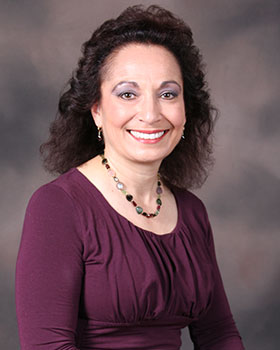
Maria McClain, math teacher, Deer Valley High School, Antioch Unified School District

Maria McClain, math teacher, Deer Valley High School, Antioch Unified School District

PLEASANT HILL, Calif., September 25, 2015 – Last Friday night, in an energy-filled and packed Concord Hilton banquet room, Contra Costa County Superintendent of Schools Karen Sakata, announced Maria McClain, of Antioch Unified School District and Kate Perry of Liberty Union High School District as the county’s 2015–2016 Teachers of the Year.

Maria McClain recently began her 28th year of teaching grades 10–12 for the Antioch Unified School District. For the past 19 years, McClain has been at Deer Valley High School (Antioch). McClain has taught high school pre-calculus, AP Calculus, AP statistics, and algebra, as well as junior high school mathematics and algebra. McClain obtained her undergraduate college units at Diablo Valley College, followed by earning her bachelor’s degree in mathematics and teaching credentials at California State University, Sacramento.

“Through her dedication, Maria McClain consistently demonstrates the finest qualities and attributes of a highly skilled educator and serves as a solid role model for her fellow peers,” says Susan Ceballos, vice principal, Deer Valley High School. “It is truly refreshing to observe how she creates an academic environment that is both engaging and enriching for all her students. On a daily basis, Ms. McClain maintains a standards-based instructional program that not only promotes an appreciation for mathematics, but also provides her students with the fundamental learning concepts for life-long application. At the same time, she implements successful instructional strategies that address the diverse learning needs of all students. In doing so, she differentiates her instructional approach by employing an array of strategies and activities to monitor student progress daily. Perhaps and most importantly, Ms. McClain is able to motivate her students by establishing high expectations while still maintaining a nurturing rapport with them during the instructional period.”

This past July, Kate Perry began her fifth year of teaching social science to grades 9–12 at Independence High School, in Brentwood. The nine-year teacher also taught social studies at St. Patrick-St. Vincent High School, in Vallejo, and worked as a service learning coordinator for Irvington High School in Fremont. Perry attained her bachelor’s degree in political science from San Francisco State University, earning her teaching credentials at Mills College and University of California Extension. Last year, she received her master’s degree in education from Mills College.

“I enrolled into Independent High School as a sophomore, after dropping out six moths prior from my first high school,” reports Perry’s former student, Tiffany Montana. “When I came to Ms. Perry, I didn’t have goals and graduation was farfetched. That was not good enough for her. She showed me that if I stayed focused on my schoolwork and I worked hard, I could graduate on time. Ms. Perry knew I could be anything I wanted, and helped me realize that I really could be anything I wanted to be. While attending Independence, she would text or call me before class to make sure I was going to come in. As a teacher, she provided me with the push I needed. Knowing my decisions could potentially disappoint her was enough for me to do my best. When I graduated on time, in 2014, I had a 3.7 GPA and was looking forward to my future. I owe this drastic change to Ms. Perry’s dedication to my education.”

After both teachers were named Teacher of the Year by their school districts, last March, McClain and Perry successfully proceeded, with the other 16 eligible county candidates, through a rigorous countywide selection process, it included an application screening, classroom evaluation, interview, and speech presentation. Their fellow finalists are Dawn Foote, Liberty Union High School District (Ron Nunn Elementary) and Paul Fitzgerald, Acalanes Union High School District, (Miramonte High).

More than 400 attendees were on hand for an evening that will certainly not be forgotten. The audience was made up of the TOYs’ family members and friends, as well as numerous local educators, business partners, and elected officials. Kicking off the festivities were a few high-energy musical numbers, featuring intricate rhythms of percussion instruments and complementary harmonies of a 60-student group from Alamo Elementary. The tremendous performance was lead by their music teacher, Nancy Raaum.

The evening also featured Sakata introducing the TOY class of 2015–2016 of sharing with the audience her visits to each of the teachers’ classrooms, and the comments their students gave her about their teachers. This was followed by speeches of the TOY finalists on the topic: “What I have learned from my students.” After the finalists’ speeches were given, McClain and Perry’s announcement was made by Sakata.

McClain and Perry will now compete with all the other county representatives in the California State TOY competition. The California State Teachers of the Year are expected to be announced in late October. The county TOY program is coordinated by the Contra Costa County Office of Education. (For additional TOY info, visit the CCCOE’s Teacher of the Year page).

About the Teacher of the Year Program

In 1972, California began recognizing outstanding teachers, establishing the Teachers of the Year Program. This program is open to all teachers in public & private schools who teacher pre-kindergarten through twelfth grade. Contra Costa County has participated in the program since its beginning, when Joseph E. Davis, Jr., of the Acalanes Union High School District, was named the county’s first representative.

Since that time, four teachers from this county have been State finalists: Janet Neill, San Ramon Valley Unified (1975); David Eakin, John Swett Unified (1981); William Thomas, Mt. Diablo Unified (1982); and Janice Bergamini, Mt. Diablo Unified (1991). In addition, William Pence, San Ramon Valley Unified (1999), was selected to represent California at the National Teacher of the Year level. And, in the last two years, the County has had two other state representatives – Mary Allan, Antioch Unified (2001) and Janet Gower, Mt. Diablo Unified (2002). For a list of all of the Contra Costa County Teacher of the Year Representatives please click here.

The county’s TOY program is directed by the CCCOE. With such a high caliber of teaching professionals to draw from, the CCCOE’s TOY program uses a three-stage selection process, with a point and percentage system to determine the final candidate as follows:

Application Screening:

On March 20, a committee of 13, representing the county’s education, business, and public-sector partners meticulously reviewed the applications submitted by the school districts. This committee independently rated each application. After the application screening and scoring were completed, five teachers were selected to advance to the next phase as semifinalists.

Classroom Observation and Interview:

During the weeks of late April and early May, a small committee of education specialists and business partners will observe the semifinalists interacting with their students. Immediately following, the committee interviews the candidates, discussing topics such as their teaching philosophy and techniques. The results of the two screening processes are then combined to determine the four finalists.

Speech Presentation:

This coming August, the four TOY finalists will each give a three- to five-minute speech to another panel of a dozen educators, business, and public-sector representatives who will judge the finalists on their speech and presentation skills.

On the evening of September 24, 2015, all 22 TOYs, accompanied by their families, friends, and co-workers (an audience of approximately 400) will be honored at the annual Teacher of the Year Dinner Celebration, held at the Hilton Concord. Contra Costa County Superintendent of Schools Karen Sakata, who serves as master of ceremonies, introduces the TOYs by sharing a special story that reflects his classroom visits of each teacher during the recent spring and summer months. This will be followed by the four finalists giving their three- to five-minute speeches (same speeches given in August) to the filled banquet room. The excitement-filled evening will come to a dramatic close with the announcement of the 2015-2016 Contra Costa County Teacher of the Year.

The County representative is announced at the Awards Dinner in September at a gala affair that honors each district’s Teacher of the Year. Local business and community organizations generously donate classroom grants, services and other items to each of the district winners.

For more information and to see all of this year’s finalists, visit http://www.cccoe.k12.ca.us/supe/toy.html#about


Report: Antioch household income decreased 22.7% from 1999-2013, third highest in California

Wednesday, September 30th, 2015

Rising costs and stagnant wages are a nationwide issue but some Californians are feeling an especially tight squeeze. To determine which California city’s residents are most affected by rising homeownership costs and wages that have not kept pace with inflation, consumer finance site NerdWallet analyzed and ranked 207 cities in the state on these key economic factors, adjusted for inflation, over the past 14 years.

The report found that household income has trailed inflation in Antioch, decreasing 22.70%, the third highest in the state, behind Palm Desert at 24.2% and Westminster at 23.9%. That compares to a 7.8% drop in annual household income in California, on average and accounting for inflation.

The report also provides comparisons on a city-by-city basis of housing and college education costs during that time.

The full report can be found here.