Archive for the ‘News’ Category

Tri Delta Transit launches operation of their first electric bus

Friday, June 29th, 2018

Photos by Tri Delta Transit.

Following over two years of research, planning and testing, the Eastern Contra Costa Transit Authority (Tri Delta Transit) recently began operating their first battery electric transit bus. “This is a big moment for both Tri Delta Transit and all of Eastern Contra Costa County,” said Jeanne Krieg, Chief Executive Officer of Tri Delta Transit. “This decision, supported by the Tri Delta Transit Board of Directors, is yet another example of the forward-thinking attitude towards technology and transportation. I am extremely proud of this progressive step.”

As part of a pilot program, Tri Delta Transit plans to launch a total of four battery electric buses by the end of the year. The first two electric buses you may see on the streets today are built by bus manufacturer, Protera, a leader in electric bus technology. An additional two buses should be delivered later this year by Southern California bus manufacturer, BYD Motors. “The pilot program will test the performance of these electric buses in our service area and results will be evaluated to determine future orders of all-electric buses.”

The new 40-foot electric buses will be used throughout Tri Delta Transit’s service area and can carry up to 38 seated passengers with up to another 18 riders standing. Like all Tri Delta Transit buses, the new electric buses are ramp-equipped to accommodate wheelchairs and mobility devices, have priority seating for seniors and people with disabilities, and exterior bike racks that can accommodate up to two bikes.

As part of their goal to stay ahead of industry trends, Tri Delta Transit is looking at new ways to lower their carbon footprint and minimize their impact on the environment. The introduction of these four electric buses is an important step forward in that overall goal and builds on Tri Delta Transit’ s dedication to being a green business. “Our decision to test electric goes beyond cleaner air and doing the right thing,” said Krieg. “These buses are whisper-quiet and will drastically reduce noise pollution along their daily routes. Additionally, they will save our transit agency tens of thousands of dollars in fuel and maintenance costs and enable us to begin other upgrades to our system.” The buses can drive for more than 100 miles on a single charge.

With a unique design that strongly supports Tri Delta Transit’s branding, the electric buses are eye-catching and have been overwhelmingly embraced by transit riders. The buses are being used on multiple routes, so regardless of which route you use, you may see one approaching your stop the next time you ride.

Tri Delta Transit provides over 3,000,000 trips each year to a population of over 250,000 residents in the 225 square miles of Eastern Contra Costa County. They currently operate 15 local bus routes Monday – Friday, five local bus routes on weekends, door-to-door bus service for senior citizens and people with disabilities, and shuttle services to community events. For additional information about Tri Delta Transit, please visit www.trideltatransit.com.

Antioch Police arrest two gang members for attempted murder, search for third suspect

Friday, June 29th, 2018

By Lieutenant D. Bittner #3252, Antioch Police Investigations Division

On the morning of May 1, 2018 Antioch Police Department detectives learned of a violent assault which occurred earlier that same morning, at approximately 3:30 AM, at a gas station located in the 4100 block of Lone Tree Way. The victim of the assault had serious facial injuries.

Recovered firearms.

Detectives learned that the victim was attacked by five Norteño gang members as he sat in his car. The gang members displayed gang related hand signs, punched and kicked the victim and ultimately shot at the victim with a firearm as the victim drove away.

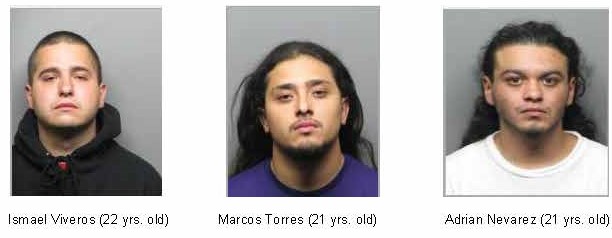
Marcos Torres and Adrian Nevarez, both 21-years-old, were identified as suspects in the case and are suspected as being Lone Tree Norteño (LTN) gang members. Charges of attempted murder, assault likely to produce great bodily injury, dissuading a witness, mayhem and firearm/gang enhancements were filed on both subjects. Both were taken into custody through the use of the Antioch Police Department SWAT team and the assistance of the Pittsburg Police Department. An illegal assault rifle and several handguns were located at the home of Marcos Torres.

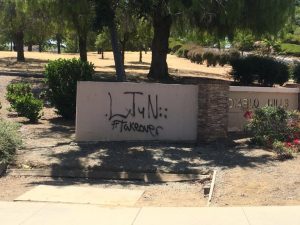
Lone Tree Norteño gang graffiti.

During the investigation officers located graffiti in the Lone Tree Way corridor symbolizing the Lone Tree Norteno gang (see attached photograph). The graffiti has been removed and the Antioch Police Department is confident that the apprehension of Torres and Nevarez will stop any further crime involving the gang.

One suspect in this case is still outstanding. He has been identified as Ismael Viveros, 22-years-old. He is known to frequent the Antioch, Pittsburg and Concord areas. Anyone with any information regarding this investigation or Viveros’ whereabouts should contact Detective Hoffman of the Antioch Police Department at 925-779-6931.

Despite continued opposition Antioch Council finalizes Cannabis Business District on 3-2 vote

Thursday, June 28th, 2018

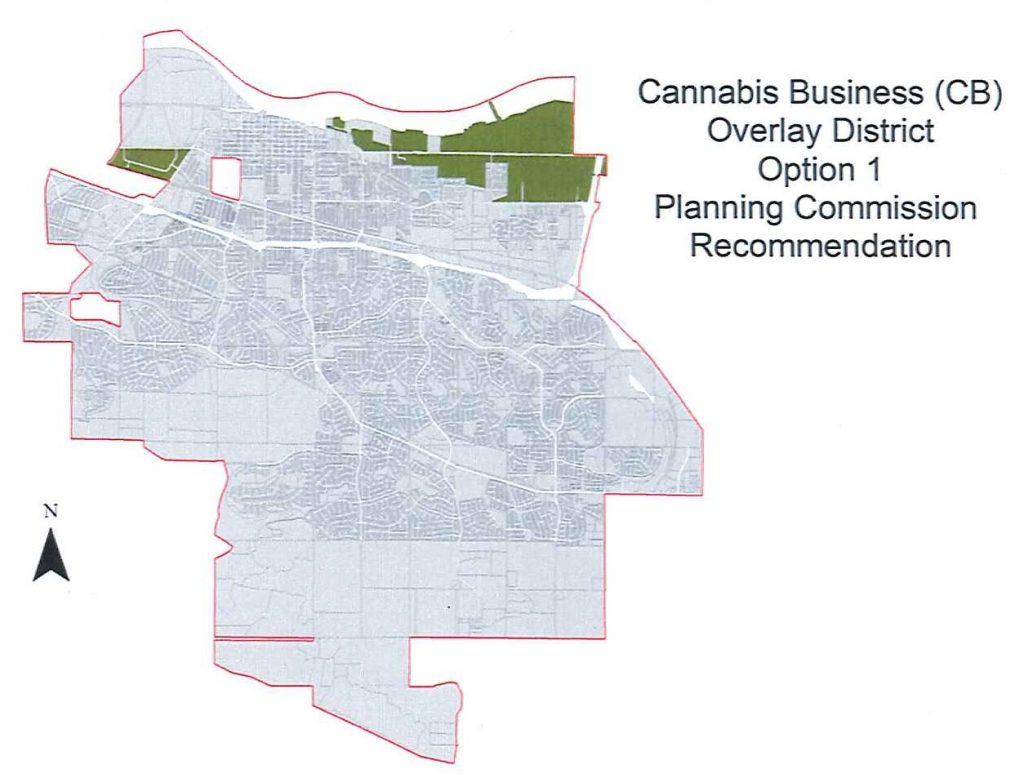
The two areas of Antioch where recreational marijuana related businesses will be allowed to locate in Antioch.

Spends final $180,000 of one-time funds on traffic cameras,  youth programs; chooses not to give City Manager pay raise

By Alexandra Riva

The Antioch City Council met Tuesday, June 26, to discuss the Antioch Municipal Code establishing a Cannabis Business Zoning Overlay District in the city, among other issues on the agenda. (See related article)

This agenda item was brought to the start of the meeting and received over 20 public comments, most of which were in opposition to the proposal.

A common theme among the public comments shared at the meeting was emotional appeal. Many members of the community shared personal anecdotes concerning the ills of cannabis, like Jessica Bennett.

Bennett began smoking marijuana 17 years ago, hoping that it would help with her depression, but soon realized that it was a gateway drug. Now, she says, she has found relief in religion, and no longer uses drugs or pills.

“I worship in the city of Antioch, and I outreach in the city of Antioch. I teach my Sunday school kids to be leaders, to be different than the world, said Bennett. And I am asking you to please vote differently than the other cities. Just because they voted yes to this doesn’t mean we have to do it too. We can be different, we can be the difference.”

Community member Demetrio Ramirez, who has been involved with the cannabis industry for over 20 years, spoke in support of the adoption of the Cannabis Business Zoning Overlay District.

“I represent the unseen. In this auditorium, what you see, is typical. A group of people, well represented, who are not in touch with the need of Cannabis…the ones who aren’t showing up tend to be the sick, and they need this care,” said Ramirez.

Despite the overwhelming opposition from the public in attendance, the measure was passed on a 3 to 2 vote, with Mayor Sean Wright and Council Member Lori Ogorchock in dissent. During a break in the meeting following this decision, members of the public thanked the two for their votes.

Code Enforcement Consultant Contract

When the meeting resumed, the discussion of a proposed extension to the expiration date of the Code Enforcement Consultant Contract with TRB to June 30, 2019 and an increase to the not to exceed amount by $250,000. This proposition passed with five affirmative votes.

The discussion of a 2018 to 2019 action plan, which would utilize Community Development Block Grant and Housing Successor Agency Funds was discussed next. This action plan includes a recommended investment of just above two million dollars in funding that would go toward providing services and improving neighborhoods in the city of Antioch.

“The city of Antioch, through this process, is putting $100,000 into helping the homeless. That the city of Antioch is putting $385,000 into downtown to help renovate and change some of the streets and improve downtown,” said Mayor Wright.

The item was passed with five affirmative votes.

Item five on the agenda, a public hearing to confirm assessments for landscape maintenance districts 1, 2A, 4, 5, 9, and 10, for the 2018 to 2019 fiscal year, was the next decision made. There were no requests to speak from the public, and a motion was made to vote. The assessments were adopted in a unanimous decision.

Council Spends $180,000 Traffic Cameras, Youth Programs

The council meeting concluded with the authorization of a final allocation of $180,000 for the Consideration of Projects Under the one-time Revenue Policy was discussed next. This money was to be given and spent during the 2017 to 2018 fiscal year, but it is recommended that it be moved to the 2018 to 2019 fiscal year budget. Some of the projects discussed, which fit under the one-time revenue policy, were traffic cameras, cameras for the police department, and youth programs. The vote, 5-0, affirmed the reallocation of the $180,000 to the 2018 to 2019 fiscal year budget.

Council Nixes City Manager Pay Raise

During their June 12th meeting the City Council agreed to bring the discussion of a possible $20,000 pay raise for City Manager Ron Bernal back to closed session for further deliberations. The decision followed hesitation by the council.

At the meeting on Tuesday, Interim City Attorney Derek Cole announced that no amendments to Bernal’s contract would be made at this time. However, direction was given to city staff to develop a salary schedule for Bernal that involves a step system, which is tied to performance, for future consideration.

EDITOR’S CORRECTION: A subheadline for the article about the June 12 council meeting stated the Council approved the $20,000 pay raise for Bernal. We apologize for the mistake.

Coroner’s inquest finds Antioch man shot by Pittsburg police died “at the hands of another person, other than by accident”

Thursday, June 28th, 2018

Terry Amons in July, 2017 from his Facebook profile.

By Jimmy Lee, Director of Public Affairs, Contra Costa County Office of the Sheriff

Sheriff-Coroner David O. Livingston announced that a Coroner’s jury has reached a finding in the January 12, 2018 death of Terry Dean Amons, Jr. who was shot by Pittsburg Police. The finding of the jury is that the death is “at the hands of another person, other than by accident.” See related Antioch Herald article.)

The Coroner’s jury reached a verdict after hearing the testimony of witnesses called by the hearing officer, Matthew Guichard.

A Coroner’s inquest, which Sheriff-Coroner Livingston convenes in fatal incidents involving peace officers, is a public hearing, during which a jury rules on the manner of a person’s death. Jury members can choose from the following four options when making their finding: accident,

suicide, natural Causes, or at the hands of another person, other than by accident.

See a KRON4 news report about Amons’ death.

Allen Payton contributed to this report.

BREAKING NEWS: DeSaulnier reports proposed detention center “has been halted”

Wednesday, June 27th, 2018
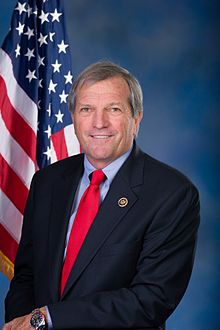
Rep. Mark DeSaulnier.

Washington, DC – Today, Wednesday, June 27, 2018, Congressman Mark DeSaulnier (CA-11) issued the following statement in response to news that the U.S. Department of Homeland Security confirmed that it will not be moving forward with a detention center at the Concord Naval Weapons Station.

“I am pleased the effort to turn Concord Naval Weapons Station into a detention facility has been halted. As we advised the Administration, the Concord Naval Weapons Station is an unsafe and inhabitable environment, and to propose housing almost 50,000 people there was both dangerous and immoral. We fought this proposal along with our local officials and dedicated community and will continue to fight against the inhumane and unjust policies proposed by this Administration. It is important not to let our guard down as one tweet can change things.”

Congressman DeSaulnier voiced concerns to the Administration about creating a detention facility on Concord Naval Weapons Station and led an effort of California Members in asking for the release of a proposal identifying Concord Naval Weapons Station as a possible detention site. News of Concord making the list of proposed facilities first broke in Time Magazine and Congressman DeSaulnier immediately contacted local officials to work with them to fight this effort. He also held a Facebook town hall to answer questions from area residents.

Supervisors OK commercial cannabis ordinance, requires voters pass tax measure in November

Wednesday, June 27th, 2018

Mitchoff calls for calm over proposed Concord detention center

By Daniel Borsuk

Contra Costa County voters will get a crack at voting on a tax measure in November on how much the county should tax commercial cannabis enterprises, now that the board of supervisors unanimously approved an ordinance establishing zoning regulations for the cultivation, distribution and selling of recreational marijuana in most of unincorporated Contra Costa County.

Six areas where cannabis enterprises would be prohibited from setting up shop include Bethel Island, Sandamound Slough, Contra Costa Centre, Acalanes Ridge, Saranap and Alamo.  During the proposed ordinance’s public hearing process there was community protests especially from Alamo residents opposed to the establishment of commercial cannabis enterprises in their community mostly for public safety concerns.

Supervisors will consider proposed tax and health ordinances linked to the commercial cannabis ordinance at their July 10 meeting.

While the commercial cannabis ordinance charts regulations established in the Framework for Regulating Cannabis in the Unincorporated Area of Contra Costa County that supervisors approved in April, at Tuesday’s meeting supervisors were more focused on how the cannabis growers can conserve water, especially underground water, for a crop known to require high volumes of water to grow at a time California seems to permanently undergo drought conditions.

As a last-minute change, supervisors were handed an alternative water service plan provided by county planner Ruben Hernandez.  This water service alternative earned the stamp of approval from supervisors and establishes rules on how commercial cannabis cultivation operations can use groundwater but must comply with regulations aimed at conserving groundwater.  For instance, a commercial cultivation business could pump groundwater when “the retail water supplier does not provide retail water service at all times during the year.”

All five supervisors signed on and supported the water service alternative even though one prospective cannabis cultivator, Israel Martinez, a Brentwood farmer, said the county’s proposed groundwater revised rules are “too restrictive” and he said he supported the earlier Planning Commission’s groundwater rules because “cannabis uses a minor amount of water.”

“I don’t support any water alternative.” said East county rancher Eric Thomas.  “I’d like to see a cap on cannabis cultivation.  This does not use any water recapture.  Why not truck in water? You can recapture as much as 90 percent of the water used,” Thomas said.

All five supervisors approved the groundwater use alternative presented by the Department of Conservation and Development and therefore they unanimously approved the commercial cannabis ordinance.

“This is not the gold rush or green rush, but there is a significant investment that’s involved in establishing these types of businesses.” remarked Supervisor Diane Burgis whose rural oriented District 3 in East County, would be a big beneficiary of the potential new cannabis ordinance should it go into effect.

Supervisor Federal Glover of Pittsburg, Supervisor Candance Andersen of Alamo, and Supervisor John Gioia of Richmond were willing to move forward on approving the commercial cannabis ordinance and accept the Department of Conservation and Development’s last-minute groundwater use proposal.

Board chair Karen Mitchoff also joined the other supervisors even though initially she preferred to wait and find out what state legislators were going to do about proposed legislation that would change the way county tax measures are passed either by a two-thirds vote or a majority vote.

Glover Unveils Keller Canyon Landfill Investigation Funding Source

Supervisor Glover announced that he has identified funds in the Keller Canyon Mitigation Fund, a fund used for an assortment of community activities in the Pittsburg and Bay Point area, to be spent for the county’s investigation into findings that there have been illegal deliveries and deposits of radioactive debris from the Hunters Point Naval Shipyard.  A price tag has not yet been disclosed for the investigation.

The mitigation fund that landfill operator Republic Services finances will spend the money associated with covering costs of hiring a specialist to conduct an independent investigation into whether there were more than two documented cases where debris from the Hunters Point Naval Shipyard wound up at the landfill off of Baily Road.

Mitchoff Calls For Calm Over Concord Naval Weapons Station Use

Board Chair Mitchoff urged citizens to refrain from protesting at the Concord Naval Weapons Station, a site that the Trump Administration plans to house detained immigrants.  Should the President’s plans materialize at the closed weapons base, the government plans to spend as much as $233 million to construct housing for detained immigrants, U.S. Congressman Mark DeSaulnier (D-Concord) first disclosed the Administration’s plans last week.

The Navy has refused to disclose whether there are any plans to house as many as 47,000 detained immigrants at the closed military base.

“I specifically ask that no one march or protest,” Mitchoff said. “This may convey the wrong message to the Administration in Washington.”

Other than a protest planned in El Cerrito later this week, no protests have yet been planned at the shuttered weapons station.

$300,000 Contract Awarded from Animal Benefit Fund

On a 5-0 vote, supervisors approved a $300,000 contract to Unconditional Dog to provide animal enrichment services to dogs at the Pinole and Martinez animal shelters, but supervisors pulled the consent item for discussion because of concern over the Oakland-based company’s practices and whether County Animal Services will be accountable.

“I do support Ms. (Beth) Ward’s efforts, but the point is we need accountability,” said Dee Good.  “There should be some accountability.”

Another animal shelter observer, Carol Mason, also said the Unconditional Dog contract lacks accountability. “What kind of accountability is there at the shelters? Accountability is still important.”

Ward told supervisors her department awarded a three-month contract to Unconditional Dog in April to see if the company’s animal enrichment program does a better job in taming difficult dogs and thereby driving up the animal adoption rate at shelters.  Ward said the trial program showed some progress.

The Animal Benefit Fund will cover the contract costs.  No public funds are involved in the contract.

Supervisors asked that Ward give a report on the Unconditional Dog program in March 2019.

Keller Canyon Landfill/Hunters Point Naval Shipyard radiation probe agitates East County residents

Monday, June 25th, 2018

By Daniel Borsuk

Some 400 Bay Point and Pittsburg residents exited a community meeting at Ambrose Community Center with more questions than answers Thursday night about stories that radioactive materials had been mistakenly delivered to the Keller Canyon Landfill, located in southeast Pittsburg off of Baily Road. (See related article).

With representatives from county, regional, and state agencies and the Navy in attendance, but no one on hand from TetraTec, the contractor responsible for the removal of nuclear waste material from the former shipyard, residents learned that TetraTec has rejected a request to pick up the bill to pay for an independent investigation into how radioactive material waste entered the landfill on at least two instances.

Those two documented instances where radioactive materials from the shipyard were delivered to the landfill included the January 2014 case when 42 trucks dumped tainted soil with elevated lead.  The case was not considered to be an RCRA hazardous waste situation.  “All contaminated soil was removed from Keller Canyon Landfill,” said    Scott Anderson a Deputy Base Closure Manager of the U.S. Navy Base Realignment. “The Navy wants the community to know that the public is safe.”

In another instance, February 2015, Anderson said the Navy cleaned up at Keller Canyon Landfill after 218 tons of radioactive asphalt that had been delivered to the landfill.   “All the asphalt plus 102 tons of dirt were removed,” he said.

Residents were uncomfortable with the responses that the Navy, and especially Rick King, general manager of Keller Canyon Landfill, offered.  King defended how the landfill properly screens trucks loads with debris from multiple departure points, including Hunters Point Naval Shipyard.

Some speakers like Jeanette Burgess questioned if the landfill operator rigged the monitors at the entrance to allow truck laden with radioactive materials to enter.   “I question your testers,” she said.

“I don’t know where you get your information,” rebutted King, who defended how the Republic Services Co. personnel monitors the testers and that they meet regulations.

Contra Costa County Environmental Health Director Marilyn Underwood said while there is the possibility Republic Services, operator of the Keller Canyon Landfill, might have to redraft an environmental impact report, she said the county is in the midst of searching for an independent consultant to assess the two documented events as well as other potential radioactive deliveries.

Supervisor Federal Glover, whose District 5 includes Keller Canyon Landfill, urged attendees to ask questions.  “Don’t leave here without asking your questions,” he said.  “We’re trying to get an independent investigation. We’re trying to get the information.”

Since TetraTec has refused to pick up the tab to pay for the independent investigation, Dr. Underwood of the county environmental health department said Supervisor Glover is looking into other potential sources to pay for the investigation.

Former Concord Naval Weapons station possible site for 47,000 immigrant detention center

Saturday, June 23rd, 2018

The former Concord Naval Weapons Station. Photo by Concordreuseproject.org

By Allen Payton

It was revealed on Friday that according to a copy of a draft memo obtained by TIME, the U.S. Navy is considering establishing a detention center for up to 47,000 illegal immigrants at the former Concord Naval Weapons Station. It would be one of four remote bases in California, including at Camp Pendleton, as well as Alabama and Arizona as part of the Trump Administration’s new zero tolerance policy of prosecuting and detaining all those who cross our border illegally, even for the first time.

The immigrants, including families with children, would remain in a “temporary and austere” tent city as the Navy memo describes it, according to the TIME article, until their court hearing, including those seeking asylum. The estimated cost to construct all of the facilities would be $233 million.

It’s not clear where the facility would be located on the former weapons station site. The land south of Highway 4 is now labeled the Concord Reuse Project and includes plans for as many as 12,000 homes in four transit villages, elementary school, office park and open space, with the 500-acre first phase by Lennar Urban planned for 4,400 homes. Attempts to reach Guy Bjerke, Concord’s Director of Community Reuse Planning for more details, were unsuccessful.
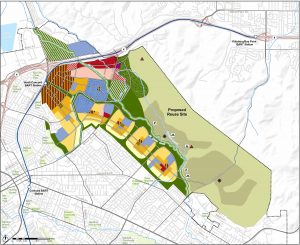
Concord Reuse Plan for the former Naval Weapons Station land south of Highway 4.

In the Executive Order he signed on Wednesday banning the separation of families apprehended at the border for crossing illegally, President Trump stated “The Secretary of Defense shall take all legally available measures to provide to the Secretary (of Homeland Security), upon request, any existing facilities available for the housing and care of alien families, and shall construct such facilities if necessary and consistent with law.”

Congressman Mark DeSaulnier (D-CA11) whose district includes Concord, released a statement on Friday regarding the proposed detention center.

“STOP! The Administration needs to take a time out,” he stated. “This is no way to effectuate intelligent immigration policy, including for those seeking asylum. This is absolute madness and I oppose it wholeheartedly. If the Administration wants to have a rational dialogue about fixing our immigration system, I am happy to do that, but making up immigration policy on the fly is just wrong. We will fight this in every way we can.”

In addition, Margarget Hanlon Gradie, Executive Director of the Contra Costa AFL-CIO Labor Council, released the following statement on Friday opposing the proposed detention center.

“Working families oppose the proposal to jail asylum seekers anywhere in Concord, Contra Costa County, or America.

“We have worked for a dozen years to create a new vision for the Concord Naval Weapons Station that brings benefits to our community — not prisons.  We believe this land – the public’s land, belonging to the people of Concord – should be used for schools, hospitals, affordable homes and good jobs, not the criminal abuse of human rights.

We stand with Rep. Mark DeSaulnier and other elected leaders in their call to reject cynical political posturing. Our federal government needs to restore DACA for our Dreamers and create a path to citizenship in a functional immigration system that supports workers’ rights, family reunification, and the needs of local and global economies.”

Screenshot of a tent city-type detention center from TIME.com

Anna Roth, Director of Contra Costa Health Services also released a politically-charged statement on Friday regarding the proposed detention center.

“Contra Costa Health Services learned through media reports on Friday that the former Concord Naval Weapons Station may soon be used as a detention facility for as many as 47,000 undocumented immigrants.

As principle guardian of public health in Contra Costa County, charged with protecting all people who live here, Contra Costa Health Services condemns this dangerous, immoral proposal – not just the location of this facility, but its existence.

Whether the despicable practice of caging young children separately from their parents continues or family members are imprisoned together, there is no place in Contra Costa or any civilized society for these types of facilities.

We know as health professionals the irrevocable harm caused by family separation, a trauma that leads to higher incidence of addiction, mental illness and chronic disease among survivors. The consequences to the health of prisoners, particularly children, are not hard to predict.

The health impacts of institutional violence against immigrants also extend to residents of our county. As Health Services Director, I hear from patients and employees every day who are under duress because of recent immigration practices.

Many Contra Costa residents live in fear, documented and otherwise. Patients miss appointments because they’re afraid ICE will be waiting for them in the doctor’s office.

This climate of fear adversely affects our community’s health, and would only worsen with this detention facility pitched in the center of our county. For the health of all Contra Costans we demand that a detention camp not be located in our county.

Furthermore, we call for an immediate end to the practice of imprisoning undocumented immigrants, particularly children.”

Sincerely,

Anna M. Roth RN, MS, MPH Director | Contra Costa Health Services”

Immigrants who cross the U.S. border illegally and are detained awaiting their court hearing, are part of a backlog of 700,000 immigration court cases according to a report by Mother Jones, including those seeking asylum. But, according to a Washington Times article, the backlog is closer to one million cases. “James McHenry, the director of the Executive Office for Immigration Review, which handles immigration cases, said Tuesday that the backlog of active cases is over 692,000 and that the courts have an additional 330,000 cases that have been put into ‘administrative closure,’ but that are still before the courts.”

The asylum process takes more time, causing the immigrants to remain in detention longer, which can be extended further if they arrive without documentation. (See requirements for being granted asylum). In order to seek asylum it must be done in the U.S., including at a port of entry, an embassy or consulate in the immigrant’s home country, or in another country, such as Mexico.

Those seeking asylum cannot work while they await the decision by the government until after 150 days have passed, according to information on the U.S.  Citizenship and Immigration Services’ website:

“You cannot apply for permission to work (employment authorization) in the United States at the same time you apply for asylum. You may apply for employment authorization if: 150 days have passed since you filed your complete asylum application, excluding any delays caused by you (such as a request to reschedule your interview) AND No decision has been made on your application.

According to a 2016 report by then-Homeland Security Secretary Jeh Johnson during the final year of the Obama Administration, there has been an increase in families from Central America crossing the border illegally and being apprehended by U.S. Customs and Border Patrol.

“Unaccompanied children and families have presented new challenges in our immigration system,” he stated.

Those figures show an increase from 15,000 families crossing illegally in 2013 to almost 78,000 in 2016.

The first time an immigrant crosses illegally they are charged with a misdemeanor. Each subsequent illegal crossing it is a felony. Previously, the parents of those crossing as families for the first time have been apprehended, cited and released, pending their court hearing. But, many of them never appeared for their court date. The Trump Administration, under Attorney General Jeff Sessions’ new zero tolerance policy, requires the arrest and detention of even those who cross the border illegally for the first time.

According to the press release by the Department of Justice, the “policy comes as the Department of Homeland Security reported a 203 percent increase in illegal border crossings from March 2017 to March 2018, and a 37 percent increase from February 2018 to March 2018—the largest month-to-month increase since 2011.”

According to the Department of Homeland Security’s Immigration Statistics Yearbook for 2016, each year, on average the U.S. allows in one million foreign nationals who are granted lawful permanent residence (i.e. immigrants who receive a ‘green card’), admitted as temporary nonimmigrants, granted asylum or refugee status, or are naturalized.”

Please check back later for any updates to this report.