







Archive for the ‘News’ Category

Governor Newsom uses “dimmer switch” to shut down most of California, again

Monday, July 13th, 2020

Governor Gavin Newsom provides an update on the state’s response to #COVID19.

Posted by California Governor on Monday, July 13, 2020

“We’re turning back into a modification mode of our stay-at-home order.” – Gov. Newsom

Order affects some activities, businesses in Contra Costa County

By Allen Payton

“Looking at the conditions…based on the trend lines, based on the science…increased positivity rates…increased hospitalizations,” California Governor Gavin Newsom announced today he is using a “dimmer switch” for statewide actions.

“We are requiring all counties to close their indoor activities, including restaurants, wineries, tasting rooms, movie theaters, family entertainment centers, zoos and museums, card rooms and the shuttering of all bars,” he stated.

It applies to all counties, not just those on the monitoring list. However, all of those activities have already been closed in Contra Costa County, so that part of Newsom’s order doesn’t affect those in our county.

The governor called for the expansion of “opportunities for outdoor operations,” but didn’t elaborate.

He shared additional sectors that must be shuttered in the counties on the monitoring list, of which Contra Costa County is one.

“For all the counties on the monitoring list we are directing they close indoor operations in additional sectors: fitness centers, places of worship, offices for non-critical sectors, personal care services, that includes hair salons and barber shops, and indoor malls” Newsom stated.
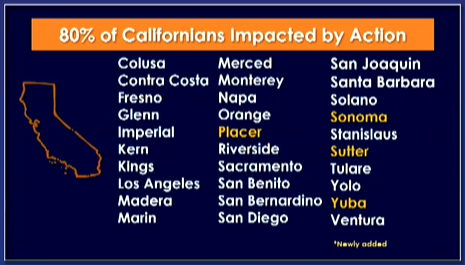
“It’s a dynamic list. Counties come on, counties come off,” he said.

Newsome spoke of the increasing number of cases, positivity rate, hospitalizations and ICU admissions.
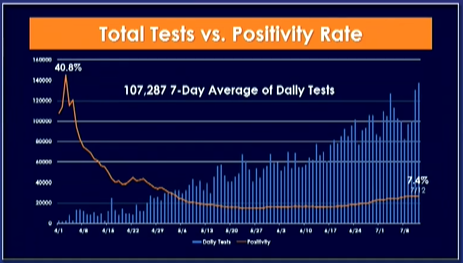
“As of yesterday, in the latest reporting periods, we had 8,358 cases. For the seven-day average there were 8,211 new cases per day,” he shared. “So, you see that seven-day average trending up.”

“The positivity rate has settled in and…over a 14-day period is 7.4%, over a 7-day period it’s 7.7%,” he explained. “This represents a 21% increase in positivity rate over a seven-day period.”
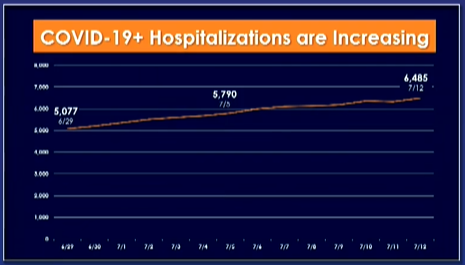
He also spoke of an increase in hospitalizations and ICU admissions.

“We’re seeing a modest reduction in the rate of growth…in the total number of people hospitalized,” Newsom stated.

“That represents a 20% increase over a two-week period, last week it was a 39% increase over a two-week period,” he said.

Newsom then reiterated the wearing of masks, and said, “we’ll get through this” and thanked everyone “from the bottom of my heart for your perseverance, for your patience” and called on Californians to “our need to maintain our vigilance” and “continue to do the good work we’ve done as a state…so we can work through this, get to the other side more resilient, more capable than ever.”

Newsom then held a question and answer session.

According to a County Health Services press release, California COVID-19 closures affect some Contra Costa businesses.

Due to a sharp rise in COVID-19 activity, California Governor Gavin Newsom today announced the temporary closure of several types of indoor businesses and activities.

Effective immediately, all counties must close dine-in restaurants, bars, wineries and tasting rooms, movie theaters, family entertainment centers such as bowling alleys and arcades, zoos and museums, and cardrooms.

None of these types of businesses had previously reopened under Contra Costa County’s social distancing ordinance and must remain closed under the state order.

Breweries, brewpubs and pubs must “close all operations indoor and outdoor statewide,” according to the state’s COVID-19 web page.

Additionally, Gov. Newsom required counties that have remained on the California Department of Public Health’s county monitoring list for three or more consecutive days to close additional businesses and activities, effective immediately.

Contra Costa does meet the criteria, so this part of the governor’s order does apply to the county. Some businesses and activities that had previously been permitted in the county are affected:

  • Offices for “non-essential” business sectors, as determined by the state – visit ca.govfor more information when it becomes available.
  • Hair salons and barber shops
  • Indoor malls

All of these businesses and activities are required by the state to close today unless their operation can be modified to be outside or by pickup.

Other businesses and activities required by the state to close in watch-list counties include indoor worship services and indoor protests, which Contra Costa also suspended with its own local order effective today.

Fitness centers and personal care services, such as nail salons and tattoo parlors, were also named in the state order but had not previously reopened in the county.

For more information about today’s order from California, visit covid19.ca.gov.

Contra Costa Health Services urges everyone to continue taking simple steps to protect themselves from COVID-19: Follow the social distancing order, and wear a face covering when you leave home or when you are near other people. Wash your hands thoroughly and frequently, and always stay home from work or school if you are not feeling well.

Visit cchealth.org/coronavirus for local information about Contra Costa’s response to the COVID-19 pandemic.

 

Contra Costa Supervisors to consider extending rent, eviction moratorium during special meeting Tuesday

Monday, July 13th, 2020

By Allen Payton

In response to Gov. Newsom’s order on June 30 giving counties and cities the authority to extend their moratoriums on rent payments and evictions to Sept. 30, the Contra Costa County Board of Supervisors will consider extending the county’s moratorium during their meeting on Tuesday, July 14. The current moratorium expires on Wednesday, July 15. (See agenda item D9)

The proposed ordinance applies to  offers a variety of reasons for extending the moratorium, including:

“The COVID-19 pandemic and associated public health orders have resulted in the closure of many local small businesses, and have imposed extreme restrictions on other local small businesses.

The COVID-19 pandemic and associated public health orders are expected to result in a loss of income to a widespread portion of the local population that depend on wages or business income to pay rent and result in medical expenses for certain Contra Costa County residents.

Contra Costa County and the cities within the County are also experiencing a housing affordability crisis, which is driving homelessness and displacement of residents.

Many County residents are experiencing or will experience losses of income as a result of the local emergency and shelter-in-place orders, hindering their ability to pay rent and leaving them vulnerable to eviction.

Many of the County’s renters are rent-burdened, paying over 30 percent of their income on rent, and some renters are severely rent-burdened, paying over 50 percent of their income on rent, which leaves less money for families to spend on other necessities like food, healthcare, transportation, and education.

Without local protection, eviction notices, including notices for failure to pay rent, are likely to surge as residents and businesses are unable to earn income due to the COVID19 pandemic, or are forced to pay medical expenses associated with the COVID-19 pandemic; and

Housing displacement due to rent increases and evictions occurring during the local emergency would hinder individuals from complying with state and local directives to shelter at home, and would lead to increased spread of COVID-19, overburdening the healthcare delivery system and potentially resulting in greater loss of life.”

If the board members vote to extend the moratorium, they will have to choose which date, up to September 30th, they want it extended.

The meeting begins at 8:30 a.m. and can be viewed live on Comcast Cable 27, ATT/U-Verse Channel 99, and WAVE Channel 32, and can be seen live online at www.contracosta.ca.gov.

Those who wish to address the board during public comment or with respect to any item that is on the agenda may call in during the meeting by dialing 888-251-2949 followed by the access code 1672589#. To indicate you wish to speak on an agenda item, please push “#2” on your phone.

Owner of NorCal K9 in Antioch sentenced to two years in state prison for animal cruelty

Monday, July 13th, 2020

By Scott Alonso, Public Information Officer, Contra Costa District Attorney

Garry Reynolds.

On July 10, the Honorable Patricia Scanlon sentenced the owner of NorCal K 9 Garry Reynolds (39-years-old) to two years in state prison. Earlier this year, a jury found Reynolds guilty of four felonies – all counts of animal cruelty for each dog under the care and supervision of NorCal K9, a dog training business. The jury found Reynolds was criminally negligent in the care of four animals under his company’s care in Antioch. (See related article)

Reynolds was remanded into custody immediately after he was sentenced. Judge Scanlon also denied a motion by Reynolds’ attorney to reduce the charges to misdemeanors and the motion for a new trial. Deputy District Attorney Arsh Singh prosecuted the case on behalf of the People. DDA Singh is assigned to the Felony Trial Team.

“I am satisfied the defendant will serve time in state prison due to his extreme negligence and disregard for the animals under his company’s care,” DDA Singh stated. “This case should serve as a wakeup call for any dog training company in our community. Animals deserve to be protected and treated well. Our Office will not tolerate the abuse of any animal.”

The City of Antioch started an investigation into the house where the dogs were located at 5200 Lone Tree Way. The investigation started as a code enforcement matter but progressed to a criminal investigation led by the Antioch Police Department due to a dog’s death. Two dogs were eventually euthanized due to the injuries the dogs suffered.

The investigation also led police to Devon Ashby, an employee of NorCal K9. Ashby was charged by the DA’s Office for his involvement in this case and he pleaded guilty to a misdemeanor count of animal cruelty.

The following dogs were associated with the jury’s earlier guilty verdict:

  • Gunner, Doberman
  • Favor, Cane Corso
  • Zeus, German Shepherd
  • Rambo (Bo), Labro-Poodle

Case information: People v. Garry Reynolds, Docket Number 05-191200-5

Oh my heaven, on 7-11: New county health order bans indoor church services again, outdoor diners must wear masks except when eating and more

Saturday, July 11th, 2020

More than 8% of Contra Costa COVID-19 tests now positive

From Contra Costa County Health Services

Due to a sharp rise in the percentage of COVID-19 tests returning positive in the community, Contra Costa County Health Officer, Dr. Chris Farnitano today, Saturday, July 11, 2020 amended its social distancing health order to temporarily tighten face-covering requirements and prohibit indoor gatherings where there is elevated risk of spreading the virus. (See details, here and CCC Full Health Order 07-11-20)

Local data show that 8.04 percent of COVID-19 tests administered over the past seven days were positive, a sign that the virus is spreading rapidly in the county and that the community must take immediate steps to prevent our healthcare system from becoming overwhelmed.

Contra Costa is especially concerned about the risk of COVID-19 transmission in indoor gatherings, and in gatherings that involve removing face coverings for eating and drinking.

When Contra Costa received authorization (variance) from the California Department of Public Health in June to allow the reopening of some businesses and activities, the plan we submitted indicated that an 8% testing positivity rate would trigger the review and reconsideration of reopening activities in the county.

Other indicators show COVID-19 is on the rise in Contra Costa communities. The seven-day average number of new cases identified in the county rose from 38 on June 8 to 146 on July 8, while the seven-day average number of hospitalized COVID-19 patients rose from 17 to 54 during the same period. As of Saturday morning at 11:30 a.m. there are no 77 COVID-19 patients in Contra Costa County hospitals. (See more statistics on the CCHealth Coronavirus Dashboard)

The 209 adult intensive care unit beds in Contra Costa County hospitals are on average a little more than half-full on a given day, including COVID-19 patients and patients with other health concerns.

Given the rapid spread of local cases, Contra Costa Health Services (CCHS) is concerned that the number of patients needing intensive care could quickly exceed capacity.

According to the new health order, indoor worship services are temporarily prohibited, effective on Sunday at 11:59 p.m. Services held earlier on Sunday, July 12, are not subject to this change.

Certain categories of outdoor gatherings, including worship services and social protests, are permitted at any size in Contra Costa so long as state health guidelines are followed, including physical distancing and appropriate use of face coverings. (State guidelines for outdoor worship services and protests)

In outdoor dining settings, staff and customers must now observe face covering requirements at all times, except when putting food or drink in the mouth. The new order also increases guidance for businesses that serve alcohol with meals to better align with state guidelines.

Members of extended family “social bubbles” must now always use face coverings when together, except when putting food or drink in the mouth.

Contra Costa County hopes to ease these enhanced, extraordinary safety measures as soon as possible, and will review available health system data daily to determine when it is safe to do so.

CCHS urges everyone to continue taking simple steps to protect themselves from COVID-19: Follow the social distancing order, and wear a face covering when you go out or are near other people. Wash your hands thoroughly and frequently, and always stay home from work or school if you are not feeling well.

In response, the following questions were sent to Contra Costa County Health Officer Dr. Chris Farnitano, Board of Supervisors Chair Candace Andersen and the county health communications staff:

Why are indoor church services being shut down, again?

What statistics can you show that they were the direct cause of the spike in the recent COVID-19 cases in our county? Especially since those who attend worship services have been required to social distance and wear masks while attending an indoor service.

Might it be from other activities such as swimming or a variety of other activities?

Is everyone who gets tested given a questionnaire in which they report what their activities have been for the previous 14 days? If so, can you please provide a copy of the questionnaire?

If not, how do you know and are you merely making assumptions and an arbitrary decision to once again unfairly target people of faith who have the most First Amendment protections while exercising their freedom of religion than any other activity in our nation, since they also have the freedom of peaceful assembly?

Finally, how many of the positive cases in our county are from people outside of the county being brought into our county from elsewhere?

Please check back later for answers to these questions and more.

Visit cchealth.org/coronavirus to read the new health order, and for local information about Contra Costa’s response to the COVID-19 pandemic.

Allen Payton contributed to this report.

New name. Same game: now labeled Delta Conveyance Project, the bypass tunnel diverting water south moves forward – Part 1 of 2

Friday, July 10th, 2020

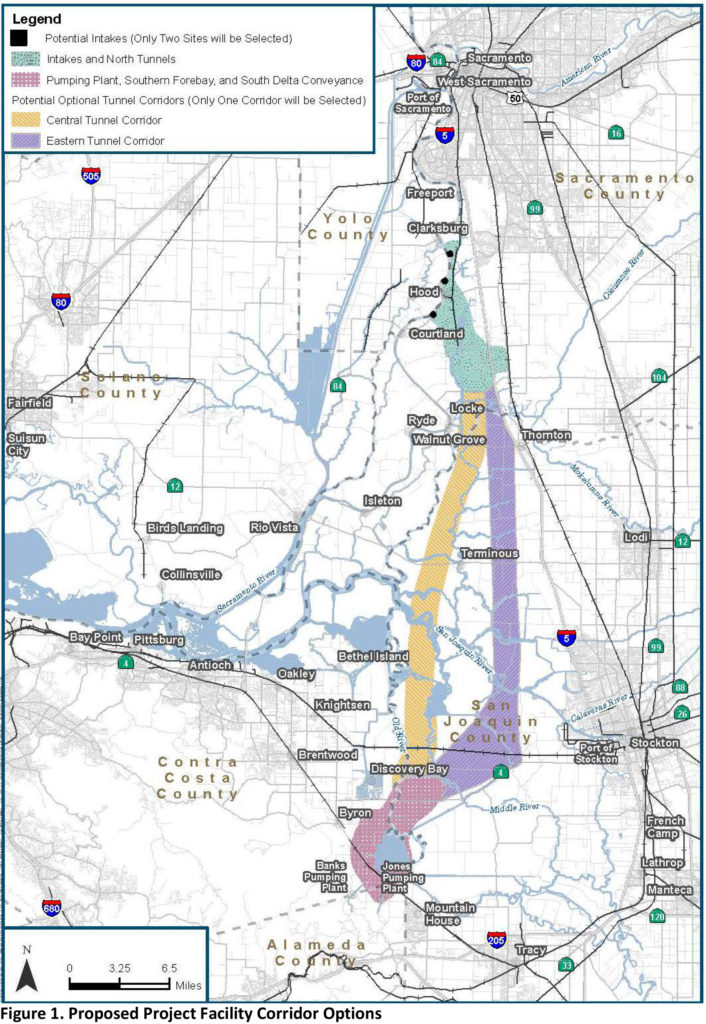
Proposed Delta Conveyance Project Facility Corridor Options. From Scoping Summary Report.

This week’s DCP Environmental Planning Update includes:

  • Adoption of a Mitigated Negative Declaration and Approval of Soil Collection Activities
  • Announcement of Federal Environmental Review

Delta Conveyance Project Scoping Summary Report Now Available

By Allen Payton

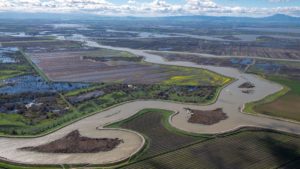
Photo by Department of Water Resources.

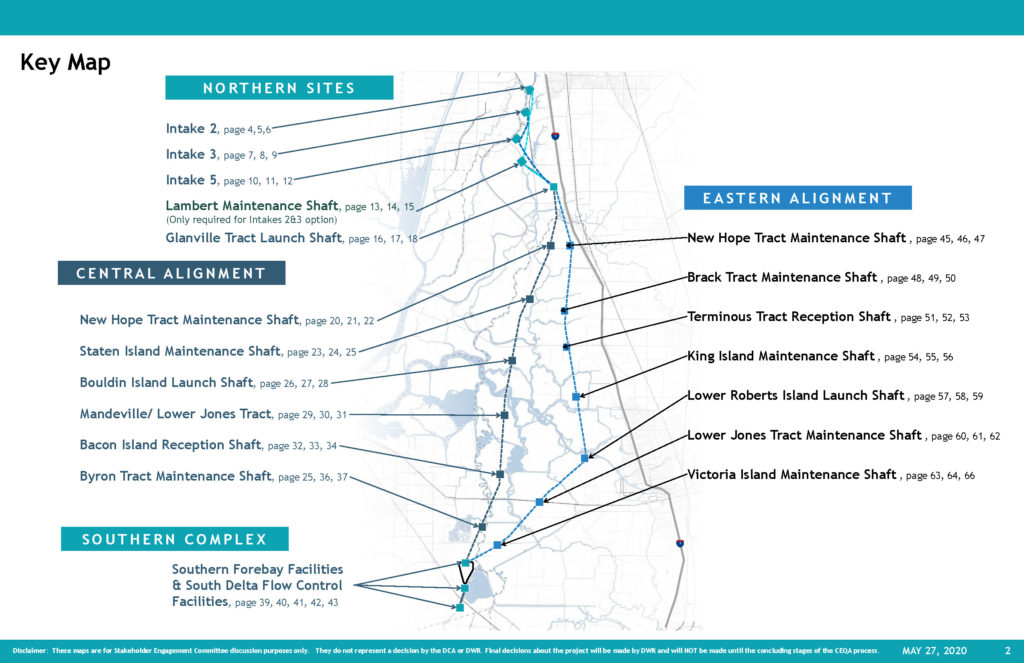
What was planned as two tunnels beneath the California Delta to divert fresh water from north of the Delta to areas south including as far away as the Municipal Water District serving Los Angeles, is now a single tunnel plan that is referred to as the Delta Conveyance Project (DCP). The state previously referred to the two tunnel project as the WaterFix.

Although the state Department of Water Resources (DWR) rescinded all approvals of the WaterFix twin tunnel project last year, the Delta Conveyance Design and Construction Authority continues engineering and geotechnical work on the single tunnel project under DWR’s supervision.

On May 2, 2019 the DWR announced it was taking formal steps to withdraw proposed permits for the WaterFix project and began a renewed environmental review and planning process for a smaller, single tunnel project that will protect a critical source of water supplies for California. Those actions implement Governor Gavin Newsom’s direction earlier in 2019, to modernize the state’s water delivery infrastructure by pursuing a smaller, single tunnel project through the Sacramento-San Joaquin Delta. The project will be designed to protect water supply reliability while limiting impacts on local Delta communities and fish. The actions also follow the governor’s executive order directing state agencies to develop a comprehensive statewide strategy to build a climate-resilient water system.

The purpose of the new DCP is “to develop new diversion and conveyance facilities in the Delta necessary to restore and protect the reliability of State Water Project (SWP) deliveries and, potentially, Central Valley Project (CVP) water deliveries south of the Delta, consistent with the State’s Water Resilience Portfolio [WRP].”

California Natural Resources Secretary Wade Crowfoot describes it as “A smaller project, coordinated with a wide variety of actions to strengthen existing levee protections, protect Delta water quality, recharge depleted groundwater reserves, and strengthen local water supplies across the state” that “will build California’s water supply resilience.”

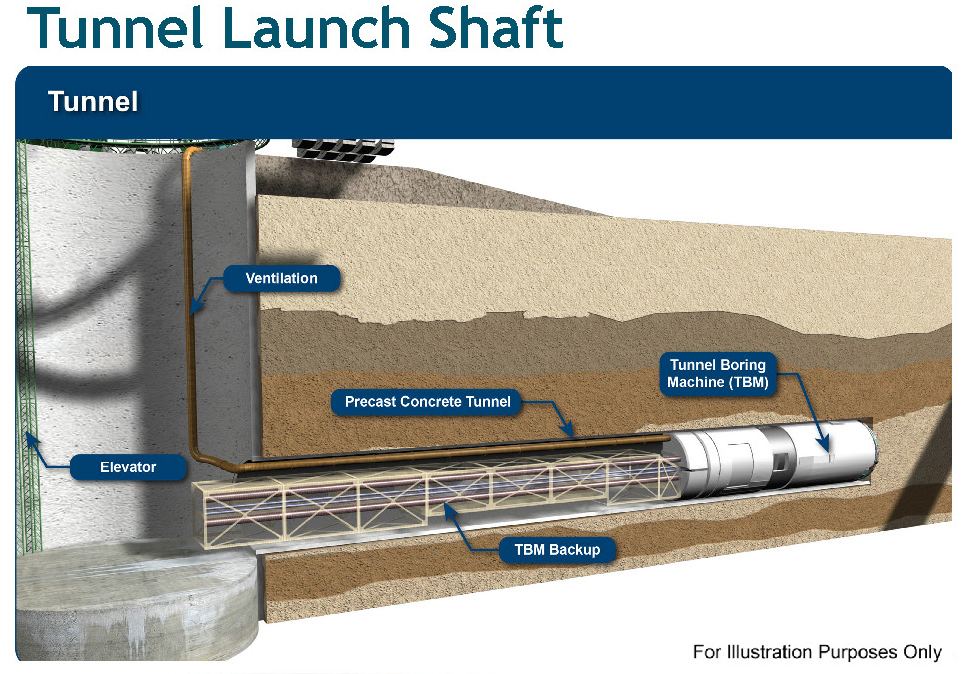
The tunnel will be drilled 150 feet underground.

No Participation by Contra Costa Water Agencies

So, the effort to move fresh Delta water south, continues. But none of the water agencies in Contra Costa County are part of the DCA. They all either oppose or have chosen to remain neutral on the proposed tunnel in the face of almost complete opposition by county residents.

Instead, Contra Costa County is part of the five-member Delta Counties Coalition, along with Sacramento, San Joaquin, Solano and Yolo Counties all opposing the tunnel project.

However, there are four county residents who are members of the DCA’s Stakeholder Engagement Committee. Learn more about them, their opposition to the project and what they’re doing to limit and ensure the project mitigates any impact on county residents and businesses in Part 2 of this report.

The DCA participating state water contractors include the following agencies:

  • Alameda County Water District (At Large)
  • Alameda County Flood Control and Water Conservation District, Zone 7 (At Large)
  • Antelope Valley-East Kern Water Agency (At Large)
  • Coachella Valley Water District (At Large)
  • Metropolitan Water District of  Southern California (2 Permanent Seats)
  • Mojave Water Agency (At Large)
  • San Bernardino Valley Municipal Water District (At Large)
  • San Gorgonio Pass Water Agency (At Large)
  • Santa Clara Valley Water District (Permanent Seat)

DCA officers serve two-year terms. The SWC At Large Director and Alternate Director represent all participating State Water Contractors without a permanent Board seat. Directors and Alternate Directors are determined by the participating State Water Contractors. In addition, the Joint Powers Agreement allocates a Board seat to Kern County Water Agency. This seat is currently unfilled as Kern County Water Agency has not joined the DCA

Photo by California Dep’t of Water Resources.

$11 Billion Price Tag Could Quadruple

According to Barbara Barrigan-Parrilla, Executive Director of Restore the Delta, “the $11 billion figure quoted for construction of the Delta Conveyance Project is dated and incomplete. The $11 billion figure is in 2018 dollars. In 2018, Metropolitan Water District claimed inflation for construction should be calculated at 5% interest annually. That puts the project over $12 billion today without all the mitigation measures discussed by the Design Construction Authority in stakeholder meetings with Delta community members. These externalized mitigation costs will be absorbed by taxpayers.

Before bond interest, and with externalized mitigation costs, inflation roughly would put construction costs closer to $20 billion. Bond interest generally speaking would double the cost to $40 billion. And if the state is going to make Delta communities whole and leave the Delta ‘better off’ than it is presently, additional billions of dollars would need to be spent.”

Impact on Antioch

For Antioch, which has pre-1914 rights to water and can take as much from the river as it needs, and has the lowest intake in the entire Delta, the result will be greater saltwater intrusion, as there will be less pressure from the fresh water flowing through the Delta. In response, the City of Antioch has approved the construction of a $60 million desalination plant. (See related article)

Latest Updates & Reports

This week, the DWR issued an update and scoping report on environmental planning for the single tunnel project.

DWR Adopts Mitigated Negative Declaration and Approves Soil Collection Activities

Today, Thursday, July 9, 2020, consistent with the requirements of the California Environmental Quality Act (CEQA), the Department of Water Resources (DWR) adopted the Final Initial Study/Mitigated Negative Declaration (IS/MND) for soil investigations in the Sacramento-San Joaquin Delta (Delta). As part of the CEQA process, DWR also formally approved the action and adopted a Mitigation Monitoring and Reporting Plan (MMRP). Soil investigations will include data collection, soil samples and surveys in support of DWR’s efforts to better understand the region’s geology to support the future evaluation of potential activities, including the proposed Delta Conveyance Project. As identified in the Final IS/MND, any potential significant impact will be avoided or otherwise mitigated with implementation of mitigation adopted as part of the project approval process. To access a copy of the Notice of Determination and Final IS/MND, which includes responses to comments and the adopted MMRP, visit the Delta Conveyance Environmental Planning page on DWR’s website.

U.S. Army Corps of Engineers to Prepare an Environmental Impact Statement Under the National Environmental Policy Act

The U.S. Army Corps of Engineers (USACE) has informed DWR that it will conduct federal environmental review of the proposed Delta Conveyance Project. USACE, which has regulatory authority over certain actions within specifically defined waters in the United States, will prepare an Environmental Impact Statement (EIS) under the National Environmental Policy Act (NEPA). Later this summer, USACE will issue a Notice of Intent officially announcing the start of preparation of the EIS. USACE’s letter to DWR can be found here.

The tunnel shaft will be drilled 150 feet below ground. From DCA SEC 2019-12-11-Delta Conveyance System Overview

Delta Conveyance Project Scoping Summary Report Now Available

The Department of Water Resources (DWR) has published a Scoping Summary Report for the proposed Delta Conveyance Project. This scoping report is a summary of the public scoping period that concluded in April. It includes all public comments received. The information collected during scoping will help inform the ongoing environmental analysis.
The scoping report includes: project overview, the purpose of scoping, a description of scoping activities, meetings, and notifications; a summary of public comments received and copies of all public comments received, including public scoping meeting transcripts.

The purpose of scoping is for DWR to gather feedback from the public and agencies on what to consider when preparing the proposed Delta Conveyance Project Environmental Impact Report. Specifically, DWR was seeking input on the range of project alternatives and potential environmental impacts to study further.

DWR will continue environmental review and analysis of the proposed Delta Conveyance Project, which is intended to maintain reliability of the state’s water system in the decades to come. For more information about the status of the environmental planning work, click here.

Upcoming Meetings

The next meeting of the Delta Conveyance Design & Construction Authority (DCA) Board of Directors will be held next Thursday, July 16 at 5:30 p.m. in the Tsakopoulos Library Galleria, 828 I Street in Sacramento (map). For details on watching and participating in the meeting online, click here.

Ways to Stay Informed

To stay informed of plans and progress on the Delta Conveyance Project visit https://water.ca.gov/Programs/State-Water-Project/Delta-Conveyance; Twitter @CA_DWR; email DeltaConveyance@water.ca.gov; or call the Project Hotline at 866.924.9955.

Regional agencies seek input on the future of the Bay Area

Friday, July 10th, 2020

For transportation, housing, economy and environment for next three decades

Plan Bay Area 2050’s Draft Blueprint is available for public comment through August 10, 2020

SAN FRANCISCO, July 10, 2020 . . . The Metropolitan Transportation Commission (MTC) and the Association of Bay Area Governments (ABAG) are inviting the Bay Area public to provide input on the newly released Plan Bay Area 2050 Draft Blueprint, a 30-year regional vision that seeks to create a more affordable, connected, diverse, healthy and vibrant Bay Area for all. The Draft Blueprint is being released today for a public comment period that will run through August 10, 2020.

Given the myriad challenges the COVID-19 pandemic poses to the Bay Area, MTC and ABAG will hold virtual workshops and telephone town halls through August 7, 2020. Both organizations want to hear from all Bay Area residents in order to incorporate diverse voices from across our region. Input received by the agencies will be used to further refine the Final Blueprint to create a more resilient and equitable Bay Area for future generations. The Final Blueprint is slated for approval in late 2020 and will be integrated into Plan Bay Area 2050 prior to its adoption in 2021.

The Plan Bay Area 2050 Draft Blueprint weaves together transportation, housing, economic and environmental strategies, alongside an expanded set of growth geographies, to advance critical climate and equity goals. Designed to accommodate the 1.5 million new homes necessary to house future growth and address overcrowding, as well as 1.4 million new jobs, the Draft Blueprint integrates critical strategies to address our severe and longstanding housing crisis. With infrastructure investments in walking, biking and public transportation – as well as sea level protections designed to keep most Bay Area communities from flooding through 2050 – the Draft Blueprint makes meaningful steps towards the adopted Plan Bay Area 2050 Vision.

Plan Bay Area 2050 is a joint initiative of MTC and ABAG. For more information on Plan Bay Area 2050 or to provide comments on the Draft Blueprint, visit: www.planbayarea.org. The entire list of public events can be found here: www.planbayarea.org/meetings-and-events/upcoming-public-events.

See previous plans here – Plan 2040  Plan Bay Area

MTC is the transportation planning, financing and coordinating agency for the nine-county San Francisco Bay Area. ABAG’s mission is to strengthen cooperation and collaboration across local governments to build healthier, stronger communities.

Santa Clara County Deputy Sheriff from Antioch arrested for smuggling drugs to jail inmates

Thursday, July 9th, 2020

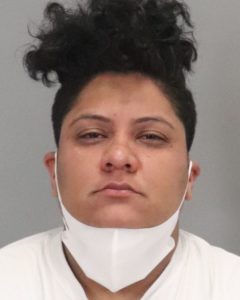
Mayra Rios booking photo – EFZ313. Photo by Santa Clara County Sheriff’s Office.

The Santa Clara County Sheriff’s Office announced Tuesday, July 7, 2020 the arrest of one of their deputies.

In April 2020, Santa Clara County Sheriff’s Office Detectives received information that a Correctional Deputy was involved in smuggling methamphetamine into the Elmwood Correctional Facility in Milpitas on behalf of inmates.

An extensive two-month investigation revealed that Mayra Rios (35) of Antioch, California was the involved Deputy. Detectives sought authorization for a higher bail amount from a magistrate based on her aggravating circumstances, which include access to funds, her former position of authority and influence, and potential flight risk.

Rios was arrested in Pleasanton and is currently being held at the Santa Clara County Main Jail on $1,000,000 bail. The case number is 20-189-0183B.


According to SCCSD Public Information Officer, Deputy Jessica Gabaldon, “The only additional information I can provide at this time is Ms. Rios has been with the Sheriff’s Office for three years and was assigned to the Elmwood Correctional Facility.”

Allen Payton contributed to this report.


Sen. Glazer touts latest legislative accomplishments, including placing $1 billion tax increase on November ballot

Thursday, July 9th, 2020

State Senator Steve Glazer. (D-7-Orinda)

SACRAMENTO – Sen. Steve Glazer’s legislative agenda – including a three-bill package to help residents survive power outages – cleared the Senate this spring and moved to the Assembly despite challenging conditions brought on by the COVID-19 pandemic.

In addition to the power outage bills, Glazer carried measures to deter unsafe house parties in short-term rentals – prompted by an Orinda tragedy in which five people were killed – and another to ban the sale of flavored tobacco products, which have been used to lure kids into the nicotine habit.

Behind the scenes, the senator also played a key role in passing a constitutional amendment (ACA 11) that could make it easier for seniors to sell their house and buy another without incurring huge increases in their property tax bills. That measure would increase taxes in the state by $1 billion per  year, raising money for fire protection by closing a loophole that has allowed out of state investors and absentee landlords to take advantage of a law meant to help people pass on their family home to their children.

The power outage package was intended to address issues with cell phone service, medical devices and hospitals during shutdowns triggered by utilities trying to avoid sparking a fire during high-wind events.

The bills were:

SB 431– (co-authored with Sen. Mike McGuire) to require a 72-hour backup power for cell towers to ensure people have access to cellphone communications during a wildfire power shutdown;

SB 801 – to require utilities to provide backup power sources to protect residents who rely on electricity to power life-saving medical devices;

SB 1099 (co-authored with Sen. Bill Dodd) – to allow hospitals to use backup power without facing local penalties.

“Senator Glazer has truly been a champion of persons with disabilities, older adults and wildfire victims and we commend his work in carrying legislation to ensure that power companies are required to provide backup power to many of them during Public Safety Power Shutoff events,” said Curtis Child, legislative director for Disability Rights California, referring to SB 1099. “This legislation will save lives.”

The Senate also approved Senator Glazer’s bill, SB 1049, increasing penalties for short-term rentals that allow disruptive and dangerous events. Last Halloween in Orinda a mass shooting left five people dead at a party hosted at an AirBnB property.

“In a few short months amidst a deadly crisis, lawmakers were asked to scale back their legislative agendas,” Senator Glazer said. “So, I am thrilled with how much important work we were able to get done, and am especially glad I could address some critical issues for residents in my district.”

The Senate also approved SB 793, which Glazer co-authored with Sen. Jerry Hill, to ban the sale of flavored tobacco products. This bill is similar to previous legislation Glazer has co-authored with Hill banning tobacco and e-cigarette companies from marketing flavored products to children.

The Senate also approved Senator Glazer’s bill, SB 1232, to help student parents pay for books and college supplies with a Cal-WORKS grant. It would also exempt these students from having to meet work requirements.

Assembly Constitutional Amendment 11, which Glazer helped push through the Senate, allow seniors and disabled people to sell their home and buy another one without having to pay the substantially higher property taxes that would typically be assessed on the new purchase. This will allow more empty-nesters to move out of larger homes that have more space than they need while freeing up homes for young families who have been squeezed out by the housing shortage. It appears on the November ballot as Proposition 19.

The constitutional amendment, if approved by voters in November, would also close a loophole that gives people a property tax break when they inherit a home from their parents. People who live in the home they inherit would still get the benefit but it would no longer be available to landlords.

According to the California Board of Equalization, “Proposition 58, effective November 6, 1986, is a constitutional amendment approved by the voters of California which excludes from reassessment transfers of real property between parents and children.

Proposition 193, effective March 27, 1996, is a constitutional amendment approved by the voters of California which excludes from reassessment transfers of real property from grandparents to grandchildren, providing that all the parents of the grandchildren who qualify as children of the grandparents are deceased as of the date of transfer.”

According to Jon Coupal, president of the Howard Jarvis Taxpayers Association in his latest California Commentary, “the Legislative Analyst’s Office estimates that the repeal of the ‘intergenerational transfer protections’ guaranteed by Props. 58 and 193 will result in 40,000 to 60,000 families getting hit with higher property taxes every year.”

The two changes could eventually raise $1 billion a year in new revenue that would be dedicated to fire protection.

“Senator Glazer’s efforts to create a dedicated fund to support underfunded fire districts in California show how effective a resourceful and persistent lawmaker can be in delivering much needed funds to his fire districts,” said Brian K. Rice President, California Professional Firefighters. “We are grateful for the support Senator Glazer has provided us and should ACA 11 (Proposition 19) be passed by the voters, we look forward to working with him to secure funds for his district.”

Glazer worked with the authors of the measure to ensure that a portion of the revenue would be available to the East Contra Costa Fire Protection District, which has been forced to reduce services and close a number of stations because state funding formulas gave it far less property tax revenue than a typical fire district.

“This fire district has never had the revenue it needs to serve the fast-growing East County,” Glazer said. “ACA 11 is a smart, fair tax reform that will help seniors while generating more resources for fighting fires. If it passes, I will work with my fellow legislators to make sure that the East County district gets its fair share.”

Allen Payton contributed to this report.