Archive for the ‘News’ Category

Antioch SWAT arrest two for illegal gun manufacturing early Thursday morning

Thursday, January 7th, 2021

Illegal gun parts seized by Antioch Police on Thursday, Jan. 7, 2021. Photo: APD

By Acting Sergeant Loren Bledsoe, Antioch Police Department

Today, Thursday, Jan. 7, 2021 at approximately 6:30 AM, members of the Antioch Police SWAT team assisted the APD Gang Unit in executing a search warrant at a residence located in the 1600 Block of Cavallo Road in Antioch.

The search was part of an ongoing firearms manufacturing investigation that was initiated by the APD Gang Unit. As result of the search, detectives located several high-powered rifle parts and frames, high-capacity magazines as well as evidence of illegal firearms manufacturing and sales. This led to the arrest of two individuals at the scene, 18-year-old and 46-year-old Antioch residents, who will not be named at this time due to the ongoing investigation.

This preliminary information is made available by the Investigations Bureau. There will be no further information released regarding this case at this time. Anyone with information is asked to call Detective Quamaine Murphy at (925) 779-6937 or the Antioch Police Department non-emergency line at (925) 778-2441. You may also text-a-tip to 274637 (CRIMES) using the key word ANTIOCH.

New year means new California traffic safety laws

Wednesday, January 6th, 2021

By Jaime Coffee, Information Officer, California Highway Patrol

The California Highway Patrol (CHP) wants to highlight some new roadway safety laws that take effect in 2021.

License points for distracted driving (AB 47, Daly; 2019):  Using a cell phone in a handheld manner while driving is currently punishable by a fine.  Beginning July 1, 2021, violating the hands-free law for a second time within 36 months of a prior conviction for the same offense will result in a point being added to a driver’s record.  This applies to the violations of talking or texting while driving (except for hands-free use) and to any use of these devices while driving by a person under 18 years of age.

Unattended children in motor vehicles (AB 2717, Chau):  Exempts a person from civil or criminal liability for trespassing or damaging a vehicle when rescuing a child who is 6 years old or younger and who is in immediate danger from heat, cold, lack of ventilation, or other dangerous circumstances.  The law takes effect January 1, 2021.

“Move Over, Slow Down” amendments (AB 2285, Transportation Committee):  Extends the provisions of the “Move Over, Slow Down” law currently in place on freeways to also apply to local streets and roads so drivers approaching a stationary emergency vehicle displaying emergency lights, including tow trucks and Caltrans vehicles, must now move to another lane when possible, or slow to a reasonable speed on all highways, not just freeways.  The law is effective January 1, 2021.

Emergency vehicles (SB 909, Dodd):  Allows authorized emergency vehicles to use a “Hi-Lo” warning sound.  This distinctive sound, different than a siren, would be used to notify the public of an immediate need to evacuate an area in an emergency.  The CHP is currently developing regulations to standardize the Hi-Lo warning sound statewide.  Until the regulations are adopted, law enforcement agencies can use the Hi-Lo warning sound by obtaining a permit from the CHP.  The law went into effect September 29, 2020.

The mission of the CHP is to provide the highest level of Safety, Service, and Security.

Plan Bay Area 2050: Final Blueprint Analysis released

Wednesday, January 6th, 2021

The Metropolitan Transportation Commission (MTC) and the Association of Bay Area Governments (ABAG) are pleased to announce the release of the Plan Bay Area 2050 Final Blueprint Outcomes – a major milestone in the development of Plan Bay Area 2050, the Bay Area’s long-range plan to guide the growth of our nine-county region for the next generation. The Plan Bay Area 2050 Final Blueprint, which is made up of the strategies, growth geographies, and regional growth forecast was approved by MTC and ABAG in September 2020.

Building on analyses of the Draft Blueprint, the Final Blueprint includes a set of 35 revised and expanded strategies to tackle the Bay Area’s transportation, housing, economic and environmental challenges while creating a more resilient and equitable future for the Bay Area. These strategies are either public policies or sets of investments that can be implemented in the Bay Area over the next 30 years.

Over the last several months, MTC and ABAG staff analyzed these strategies to determine how much more progress the Bay Area makes toward reaching Plan Bay Area 2050’s vision of ensuring by 2050 that the region is affordable, connected, diverse, healthy and vibrant for all. This analysis shows that continued progress has been made due to the new and expanded strategies featured in the Final Blueprint. The 35 strategies featured in the plan demonstrate how the region can:

  • Achieve the Bay Area’s 19% greenhouse gas emissions reduction target, as set by the California Air Resources Board;
  • Reduce overall housing and transportation costs for residents, especially for households with lower incomes;
  • Increase the production and preservation of affordable housing;
  • Create a more accessible and reliable transit network;
  • Reduce the risk of displacement for people with lower incomes;
  • Invest in parks and open spaces, particularly in historically disinvested communities;
  • Increase resilience against wildfires and sea level rise; and
  • Support a thriving economy with a more balanced regional pattern of jobs and housing.

Read more about the Final Blueprint strategies and their outcomes on planbayarea.org.

Staff will seek adoption of the Final Blueprint as the Preferred Alternative for environmental analysis purposes by the Commission and ABAG Executive Board in January 2021.

Related: Plan Bay Area, Plan Bay Area 2050, RHNA

BART announces its 50 accomplishments in 2020

Tuesday, January 5th, 2021

At BART, we are firm believers that by thinking strategically, working hard, and engaging community, we can and will achieve remarkable things. With that, we chose to end 2020 with optimism.

Here is a list of 50 BART accomplishments in 2020.

Let’s start with improvements to the rider experience:

We launched some new features:

We took big steps forward on exciting multi-year projects:

We made changes within policing:

  • Hired Ed Alvarez, a 23-year veteran of the BART Police Department, bringing a new vision for safety
  • Created a train team of 12 police officers dedicated to riding trains and walking platforms on nights and weekends
  • Launched the successful and award-winning unarmed Ambassador Pilot and formalized the program
  • Hired 35 officers, bringing vacancies to a new low of 20
  • Established the new Progressive Policing and Community Engagement Bureau within BPD

We advanced police reforms:

  • Began Integrating Communications, Assessment, and Tactics (ICAT) training to give officers the skills to safely defuse critical incidents with people experiencing a mental health crisis
  • Banned the use of the Carotid Control Hold
  • Expanded the officer-worn body camera activation buffer with new audio requirement
  • Held 16 stakeholder outreach meetings to solicit feed-back on new public safety approaches with 1000 survey responses

We focused on infrastructure:

We continued efforts to modernize our stations:

We supported local, small businesses:

  • Hosted 44 outreach and matchmaking events between small businesses and Primes to increase opportunities available to small businesse, helping to continue essential construction projects
  • Awarded a Progressive Design-Build contract for the new BART Headquarters in Oakland with 32% small business participation

We continued our Transit Oriented Development (TOD) efforts:

  • Adopted AB 2923 development principles and released BART’s TOD Work Plan
  • Amended policy to support the production of affordable housing by allowing for a discount of up to 60% from fair market value for land for projects with affordable housing
  • Approved plans for development at West Oakland Station that includes 762 housing units, 30% affordable
  • Selected development team to advance development at El Cerrito Plaza Station
  • Our development partners completed over 600 new homes during the pandemic, and broke ground on 400 new homes, 150,000sf of office, & 164 room hotel

We focused on financial stability:

  • Secured AAA bond rating
  • Advocated for and secured emergency relief funds
  • Secured dedicated funding for our long-term efforts to reduce crowding and increase service:
    • Full Funding Grant Agreement for FTA Capital Investment Grant ($1.169B)
    • California Transit and Intercity Rail Program ($107M)
    • California Solutions for Congested Corridors ($60M)

We invested in our employees:

  • Developed an emergency budget plan to avoid lay-offs
  • Approved new labor contracts more than 6 months early
  • 16 employees from 10 departments completed the Government Alliance on Race and Equity training series and established a Race and Equity Action Plan
  • Increased inventory and distribution of PPE and disinfecting products, deployed free COVID testing and contact tracing

We prioritized COVID-19 response:

  • Was one of the first transit agencies in the U.S. to release a comprehensive pandemic response plan with the launch of the 15-Step Welcome Back Plan
  • Made available free masks at all stations
  • Offered free hand sanitizer stations systemwide
  • Sharing crowding data 
  • Testing disinfecting technologies and upgraded air filters
  • Reprioritized cleaning schedules to ensure all train cars are sprayed with disinfecting mist every 24 hours
  • Coordinated with the region’s transit systems to develop the Healthy Transit Plan, establishing a baseline set of COVID-19 response measures across all systems
  • Accelerated efforts for a contactless experience with 100% Clipper only conversion systemwide
  • Partnered with community organizations, county officials and medical groups to provide free COVID-19 testing in our parking lots and plazas


Contra Costa Supervisor install Burgis as Chair, Glover as Vice Chair

Tuesday, January 5th, 2021

By Susan Shiu, Director, Contra Costa County Office of Communications and Media

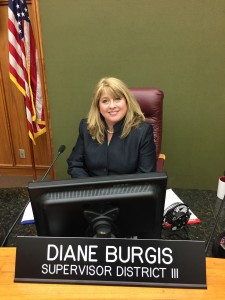
Supervisor Diane Burgis. Herald file photo.

The Contra Costa County Board of Supervisors held a swearing-in ceremony for Supervisor Diane Burgis as Board Chair and Supervisor Federal Glover as Vice Chair at its January 5, 2021 Board meeting.

District 3 Supervisor Diane Burgis, who has served Contra Costa County since she was first elected in 2016, including serving the prior year as Vice Chair, takes the leadership role from outgoing Chair, Supervisor Candace Andersen of District 2.

Supervisor Burgis expressed her thanks to Supervisor Andersen as well as her readiness to tackle our County’s issues. “I appreciate Supervisor Andersen’s unwavering commitment to keeping our residents safe and keeping the County moving forward while addressing the impacts of COVID-19. As Chair, I intend to work with my colleagues to support our county health officer to get the coronavirus under control, move the County toward economic recovery for all residents and businesses, enhance mental health crisis response, reform our juvenile justice system, address racial justice and inequality, protect the Delta and proactively fight climate change, and at long last, provide sustainable fire protection services to all areas of the County.  I’m excited about the year ahead and ready to get to work,” said Supervisor Burgis.

District 5 Supervisor Federal Glover will serve as Vice Chair in 2021. He has served on the Board of Supervisors since 2000, representing a district that includes the County’s northern waterfront.

Supervisor Burgis is in her second term, and Supervisor Glover is serving his sixth term. They will lead the five-member elected body that sets the direction of county government and oversees its $3.98 billion budget to serve this large and diverse East Bay County.

For more information about Contra Costa County and its Board of Supervisors, visit the County’s website at www.contracosta.ca.gov or the webpage: www.contracosta.ca.gov/7283/Board-of-Supervisors.

Parking and circulation improvements at Antioch BART Station in January

Saturday, January 2nd, 2021

As we expand parking at Antioch Station, we will be making some modifications to the existing parking lot to increase permit parking. Effective January 11, 2021, Lot B, which is the parking area directly in front of Antioch Station, will be converted to all permit parking. The only exceptions are that the ADA stalls will remain fee parking and the motorcycle stalls will remain free. These modifications require adjustments in signage and pavement markings.

All parking stalls that are to be closed temporarily for construction will be signed at least 72 hours in advance. Please look out for barricades and signage to guide you around the work areas during this time.

Please see the attached map of work areas and the final parking lot configuration. Be advised that the final configuration will require customers parking in the solar panel covered lot (Lot B) to display a BART parking permit, available from Select-a-Spot.com. Fee parkers may park in the adjacent parking lots. Additional fee parking (roughly 850 parking stalls) will also be available Spring 2021.

We apologize for this inconvenience and appreciate your patience during this construction.

During the current COVID-19 pandemic, some BART projects, including Antioch Station Parking Expansion Project, have been designated as essential. For this reason, construction activities on the Antioch Station Parking Expansion Project will continue for the time being. BART and Contractors will ensure that workers comply with all CDC guidelines including the social distancing requirement. BART and Contractors will make adjustments as updates to the current situation are provided.


Dredging up the past at Antioch Dunes National Wildlife Refuge

Thursday, December 31st, 2020

Sand and water dredged from the San Joaquin River are pumped onto Antioch Dunes National Wildlife Refuge in October. The water will return to the river through outfall pipes, leaving the sand behind. Credit: Mark Hayes/USFWS

Sand from the Port of Stockton is restoring a unique refuge

By Brandon Honig, External Affairs Specialist, U.S. Fish and Wildlife Service

Over thousands of years, the shifting sands of time built dunes that reached 120 feet high and stretched for two miles along the San Joaquin River, about 35 miles east of San Francisco. Isolated from similar habitats, the Antioch Dunes slowly developed species found nowhere else in the world.

The gradual shifting of sand, however, was replaced by a rapid effort to turn it into bricks in 1906, after a devastating earthquake and fires demolished buildings in San Francisco. As industry depleted the sand over the next 70 years, the dunes’ unique species struggled to survive on dunes that eventually topped out at 50 feet.

Now the U.S. Fish and Wildlife Service (USFW) and Port of Stockton are trying to turn back the clock, one load of sand at a time. Since 2013, the Port has pumped nearly 92,000 cubic yards of sand — enough to fill more than 6,500 dump trucks — onto the dunes to support three endangered species: the Lange’s metalmark butterfly, Antioch Dunes evening primrose and Contra Costa wallflower.

There may be fewer than 50 Lange’s metalmark butterflies remaining today, down from an estimated 25,000 between 50 and 100 years ago. The butterfly is only found at Antioch Dunes National Wildlife Refuge. Credit: Steve Martarano/USFWS

“The population of Lange’s has been trending downward for a couple of decades now,” said Mark Hayes, a biologist with the Service’s San Francisco Bay-Delta Office. “We counted about 10 butterflies in 2020, and the total population is very likely less than 50 currently. This is precariously low.”

The orange, black and white butterfly with a wingspan of 1 to 1.5 inches, whose population likely numbered 25,000 less than a century ago, was listed as endangered in 1976. The white-petaled primrose and yellow-petaled wallflower followed with listings in 1978.

The Service established Antioch Dunes National Wildlife Refuge for the three species in 1980, making it the first national refuge for insects and plants. At the time, the 55-acre urban refuge with two non-adjacent units was also the nation’s smallest.

Wildlife resource specialist Louis Terrazas inspects sand placed on Antioch Dunes National Wildlife Refuge through a partnership with the Port of Stockton. The landscape to the right shows refuge land that has not yet been restored with sand. Credit: Brandon Honig/USFWS

“This is a very industrial neighborhood we’re tucked into,” Louis Terrazas, a wildlife resource specialist for the refuge, said of Antioch Dunes. “There’s a shipyard on one side, a gypsum-processing plant, an old water-treatment facility over there and two strips of land owned by Pacific Gas and Electric.”

As sand disappeared in the 20th century, non-native grasses and plants took hold, crowding out the primrose, the wallflower and the Antioch Dunes buckwheat, which is the only plant where the Lange’s butterfly will lay its eggs. In the early 2000s, a series of wildfires further cut the butterfly population, leaving only about 100 alive in 2010 — all on the refuge’s 14-acre eastern unit.

With no butterflies to protect on the western unit, the Service decided to overhaul that site and try to restore the conditions that had once enabled the dunes’ endangered species to thrive. Refuge staff began looking for sources of sand in 2012 and were soon contacted by the Port of Stockton.

Beachgoers lounge on an Antioch, California, sand dune in the early 1900s, before much of the sand was mined for building materials. Credit: Contra Costa County Historical Society

The Army Corps of Engineers dredges sand from the San Joaquin River each year to clear passage for cargo ships, and the Port is responsible for finding sites to place the sand. The Port typically sent sand to nearby Sherman Island, but saw an opportunity to make a real impact at Antioch Dunes.

“Our board has been pushing us to reach out and find projects like this — ways we can go above and beyond the normal regulations to try to have a beneficial impact on the [Sacramento-San Joaquin River] Delta,” said Jeff Wingfield, the Port of Stockton’s director of environmental and public affairs. “It costs us a little extra in time and prepping the site and some other little work, but for us it’s important to beneficially reuse the material.”

Since the Port’s first delivery in 2013, the evening primrose has experienced a huge jump in numbers, Terrazas said, and the wallflower and buckwheat are also reappearing. Eventually the refuge hopes to re-establish the Lange’s butterfly on the western unit as well.

The Contra Costa Wallflower, right, and Antioch Dunes evening primrose live side by side at Antioch Dunes National Wildlife Refuge, the only national refuge established to protect plants and insects. Credit: Susan Euing/USFWS

To fully restore the refuge’s dune system, the Service could continue taking sand deposits for a couple of decades, Terrazas said, which might not be possible without the Port partnership.

“We bought some sand from another site in 2009, but it was really expensive, and the sand material had some non-native species in it,” he said. “We decided it was not the best method of restoring the site.”

The endangered Antioch Dunes evening primrose has shown a huge jump in numbers since dune-restoration began in 2013. Credit: Steve Martarano/USFWS

Under the current method, the Port provides and delivers clean sand, and it doesn’t cost the Service a dollar. USFW staff devotes a great deal of time to this project, but the sand itself and the labor to place it at the Antioch Dunes are donated.

“Restoring the dunes is vitally important to the refuge’s ecosystem and could be the key to long-term preservation of its endangered species,” Hayes said. “We value our partnership with the Port and hope this continues as we implement our restoration plan.”


 

Antioch father shoots son multiple times during Wednesday night dispute

Thursday, December 31st, 2020

Arrested for attempted murder

By Sergeant James Stenger #3604, Antioch Police Violent Crimes Unit (Investigations Bureau)

On Wednesday, December 30, 2020, at about 7:53 pm, Antioch Police patrol officers were dispatched to 3500 block of Briarwood Court for a disturbance between a father and son. During the incident the father produced a firearm and shot his son multiple times. The son was transported to a local hospital where he is currently listed in critical but stable condition. The father was arrested and booked into the Contra Costa County Jail in Martinez for attempted murder with bail set at $750,000. This case will be presented to the Contra Costa County District Attorney’s Office on Monday, January 4, 2021.

Additional inquiries or information can be directed to Antioch Police Detective Gerber at (925) 779-6943 or by emailing RGerber@antiochca.gov. Anonymous tips or information about this – or any other incident – can be sent via text to 274637 (CRIMES) with the keyword ANTIOCH.