







Archive for the ‘Health’ Category

Friday Update: 151 cases, 2 deaths from COVID-19 in Contra Costa County

Saturday, March 28th, 2020

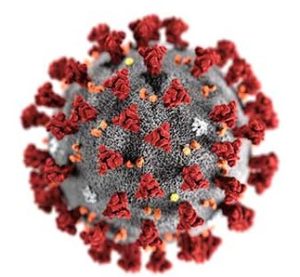
Coronavirus. CDC image.

As of Friday, March 27, 2020 at 5:08 p.m. Contra Costa Health Services is reporting a total of 151 cases of COVID-19 and two deaths from the virus in the county. The totals are updated daily and are based on preliminary reporting. Numbers may change based on additional findings.

WIC Services in Contra Costa County available by phone

Friday, March 27th, 2020

Benefits Auto-Issued for the Month of March

On Thursday evening, Governor Gavin Newsom announced a statewide shelter-in-place order for all Californians, except certain essential employees and residents acquiring necessities, such as food, prescriptions, and health care.


WIC provides healthy foods and support services to families.  If your income has been affected by recent events, and you are pregnant, recently had a baby, or have an infant or child under the age of five, you may be qualified to receive WIC services.  Applying is easy and quick.  You will receive your food benefits within a few days. You can apply online at cchealth.org/wic or call 1 (800) 414-4WIC.

WIC food benefits are considered an essential service. We will strive to continue to serve our community during this time under the governor’s and local Health Officer’s order.  Currently, we are providing all WIC services over the phone, including new enrollments.  To protect you and our WIC staff, all in-person appointments are suspended at this time.  Please stay at home.  The new WIC Card and WIC app make it easy for you to access your benefits electronically.

Community members should call their local WIC offices to enroll or certify, obtain future food benefits, reschedule, get breastfeeding help, or to get questions answered.

  • Concord & Crossroad WIC: (925) 646-5370
  • Brentwood WIC: (925) 513-6880
  • Pittsburg WIC: (925) 431-2460
  • San Pablo WIC: (510) 942-4000

Please note that California WIC started monthly auto issuance of benefits and extended some certifications for those who were eligible.  This means if you have a WIC card, you may already have your benefits pre-loaded.  You can check your California WIC app for benefits.

If you have any additional questions, please contact your local WIC program at 1 (800) 414-4WIC.  For further Covid-19-related information, please visit the county website at:  cchealth.org or CDPH website.

WIC and Contra Costa Health Services are committed to providing the individuals and communities we serve with high quality, comprehensive, community-directed care that is accessible to all and culturally and linguistically appropriate.

Please note that WIC is safe to use and does not affect immigration status for anyone who is currently in the U.S.  WIC is not considered a part of public charge.  We are here to help!

Antioch Schools to remain closed until May 1

Friday, March 27th, 2020

IMPORTANT UPDATE FROM SUPERINTENDENT STEPHANIE ANELLO RELATED TO COVID-19 AND SCHOOL CLOSURES

The following autodialer went out on Wednesday,  March 25:

“Good morning, this is Stephanie Anello, Superintendent of the Antioch Unified School District with an important announcement related to COVID-19 and school closures. At this time, AUSD schools will be closed until May 1st. We will continue to provide meals and our current online learning platforms and packets until April 6th. On April 7th, we hope to have additional opportunities for online learning as well as opportunities for obtaining technology resources. Thank you all for the tremendous outpouring of support, understanding, and patience you have shown during this difficult time. As always, please do not hesitate to contact us should you have any questions or concerns. Thank you.”


Amid California shelter in place, White Pony Express continues to deliver rescued food to those in need

Friday, March 27th, 2020

By Steven Spraitzar, Public Relations, White Pony Express

White Pony Express (WPE), the Pleasant Hill food rescue group, announces that its programs are continuing to operate under Contra Costa County’s stringent requirements to contain the spread of COVID-19.   Specifically, WPE wishes to let the public know that:

  • White Pony Express remains OPEN for business. It continues to rescue nutritious fresh food from supermarkets and restaurants and deliver it free to those in need in our communities.

  • WPE’s School Food Pantry Program is continuing to deliver food to free-lunch schools in the county. However, because the schools have closed, this food is now being taken to alternative distribution sites where the food is being made available to the school families.
  • Volunteers are urgently needed as some volunteers wish to self-isolate.
  • Those who wish to volunteer can sign up at https://www.whiteponyexpress.org/covid-19-response-volunteer
  • Financial donations are also needed so WPE can continue providing nutritious food to hungry people. If you’d like to contribute, you can do so by visiting WPE’s website at https://www.whiteponyexpress.org/donate-funds.
  • WPE will make limited deliveries of needed clothing for the foreseeable future.
  • No donations of clothing will be accepted while the shelter-in-place order is in effect.
  • WPE has implemented stringent health guidelines in place to protect its volunteers. These protocols (hand washing, use of hand sanitizers, gloves, social distancing, etc.) are now a part of all WPE’s food and clothing operations.

ABOUT WPE:  WPE is a volunteer-powered 501(c)(3) organization headquartered in Pleasant Hill, CA, which helps people move from the margins to the mainstream by providing free food and clothing in a loving and respectful manner.

Dr. Carol Weyland Conner founded WPE in September 2013 when she was troubled that in an area with such an abundance of food, many thousands were going hungry, while at the same time food retailers were throwing out huge quantities of healthy, fresh food. From this insight, the Food Rescue program was born. In a little over 6 years, WPE has rescued and delivered more than 10.5 million pounds of fresh, nutritious food, free of charge, that would otherwise go to waste. This is equivalent to 8,750,000 meals.

In 2014 the White Pony General Store was added to provide high quality clothing, toys, and books to the underserved in our communities—all free of charge. Since that time, the General Store has given away over 512,000 items to those in need.

For more on WPE, visit www.whiteponyexpress.org.

Contra Costa, 6 other Bay Area jurisdictions order labs testing for COVID-19 to report more comprehensive testing data to State and local authorities

Thursday, March 26th, 2020

High Quality Data Essential for Combatting the Spread of COVID-19

Joint Press Release

Martinez, CA – Seven Bay Area jurisdictions are taking a unified, regional step to combat the spread of the novel coronavirus (COVID-19). On March 24, the Public Health Officers of Alameda, Contra Costa, Marin, San Francisco, San Mateo, and Santa Clara, with the City of Berkeley, announced an order with new reporting requirements for laboratories that test for the novel coronavirus. Laboratories must report results of tests for all residents of each jurisdiction to the ordering health care provider and the appropriate state and local health officials.

Currently, labs report only positive results, making it difficult for public health officials to know how many people are being tested overall. The new order requires laboratories to report all positive, negative, and inconclusive results, and information that allows health officials to better locate the person tested. The more comprehensive information will improve health officials’ understanding of the rates of infection and the location of possible infection clusters

Growing availability of testing through commercial and academic laboratories expands the overall testing capacity beyond small, specialized public health laboratories. The public health laboratory network offers only limited testing for emerging infections such as COVID-19 as other commercial and academic laboratory sectors come on-line. Because of the limited capacity of public health laboratories and the absence of further reporting requirements of private laboratories, the current percentage of cases that are detected through testing is important, but reflects only a small portion of the total number of people infected in our jurisdictions.

“This order will ensure public health officials regionally and across the state have access to the information we need to understand, predict, and combat the spread of COVID-19,” said Dr. Sara Cody, Santa Clara County Health Officer. “Commercial and academic laboratories are important partners in providing testing to our community. Receiving this critical information from those labs will help local health departments respond to COVID-19 during this unprecedented time.”

The laboratory reporting order follows new data of increasing local transmission of COVID-19, including 930 confirmed cases with 19 deaths shared by the seven jurisdictions. The Bay Area’s total count of 930 confirmed COVID-19 cases is more than half of California’s case count. This does not account for the rapidly increasing number of assumed cases of community transmission.

Expanding reporting beyond positive results to include timely reporting of negative and inconclusive results allows local health officials to better understand whether there are areas of the community that are experiencing more intense transmission and project future trends in in the spread of the virus,” said Dr. Tomás Aragón, Health Officer, City & County of San Francisco. “By sharing high quality test result data at scale, state and local health authorities can better track COVID-19, predict its spread, and better focus public resources to end this global pandemic.”

For more information about COVID-19 activities in these areas, Alameda, Contra Costa, Marin, Santa Clara, San Francisco, San Mateo, or Berkeley COVID-19 websites.

Supervisors hear call for public donations to fight COVID-19; county records first death

Wednesday, March 25th, 2020

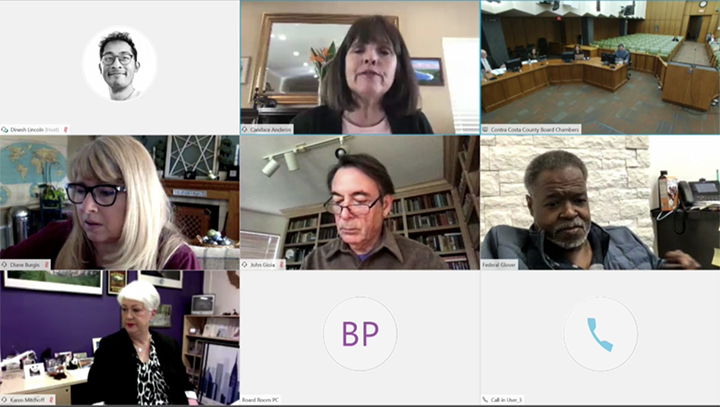
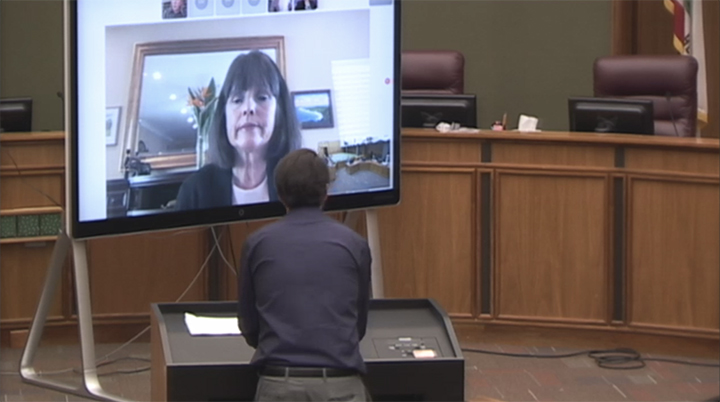
Screenshot of Contra Costa County Board of Supervisors virtual, online meeting on Tuesday, March 24, 2020.

Hold online, virtual meeting; homeless population increases 43% in county

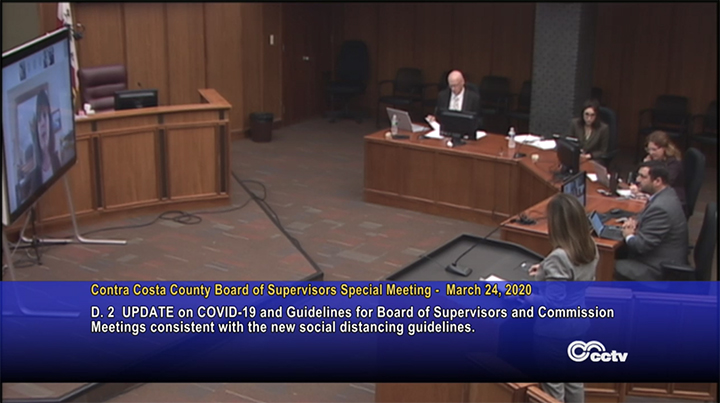
County staff stay six feet apart in the Board meeting room speak with members of the board during the virtual meeting. Video screenshot.

By Daniel Borsuk

Forced to meet remotely in an inaugural teleconference board meeting Tuesday, Contra Costal County Board of Supervisors learned the county is lean on supplies to combat the rising COVID-19 pandemic.

Circumstances are getting so dire, Contra Costa Health Services officials have put out the call for donations from the public for surgical protective equipment and supplies for healthcare providers as concerns emerge the county cannot deliver an adequate amount of medical gear and supplies for emergency workers to be adequately protected while treating those potentially affected by COVID-19.

As of Tuesday, Contra Costa Health Services Director Anna Roth told supervisors 71 county residents now have contracted COVID-19 and one person has died, an increase from 10 COVID-19 cases when Roth released her initial report to the Supervisors 21 days ago on March 3. Twenty-two persons are currently waiting for lab test results, reported Roth.

When Supervisors individually met via teleconference, Contra Costa Health Services along with six other Bay Area medical entities had earlier announced a unified, regional program designed to combat the spread of COVID-19 by ordering laboratories testing for COVID-19 to report comprehensive testing data to local and state authorities.

In addition, the county is stepping up the wide gap in procuring medical supplies and gear for health care workers. “We are making preparations for more people to become sick,” said Dr. Chris Farnitano, Contra Costa County Health Officer.

County Health Officer Dr. Chris Farnitano, speaks with Board Chair Candace Andersen during the virtual meeting. Video screenshot.

A call has gone out to the public from Contra Costa Health Services to donate protective medical supplies for health care workers. Those supplies include eye protection including goggles and face shields, antibacterial and disinfecting wipes, typically alcohol or bleach based, excluding baby wipes. The county also needs N-95 and surgical masks in unopened containers, and disposable medical gowns.

The county has designated three donation centers that will be open Monday through Friday, 10 a.m. to 2 p.m. The donation centers are at West County, 151 Linus Pauling Dr., Hercules; Central County, 1750 Oak Park Blvd., Pleasant Hill; and East County, 4545 Delta Fair Blvd., Antioch.

County Administrator David Twa said the County has started to buy motel rooms nearby medical work sites so tired and overworked emergency workers can get sleep and avoid having to travel home during the nationwide health emergency.

“Some people say this COVID-19 pandemic is going to dip into our reserves. Well, we have already seen COVID-19 dip into our reserves,” said Supervisor Karen Mitchoff of Pleasant Hill who was frustrated with the likely fiscal impact as well as the technical problems that flared up during the two-hour supervisors’ teleconference meeting. Mitchoff requested that a better teleconference program replace the current program.

Supervisors are expected to begin their review of the proposed 2020-2021 fiscal year budget via teleconference at next week’s board meeting.

Homeless Population Increases 43 Percent

In other business, Lavonna Martin, director of the Contra Costa County Health, Housing and Homeless Services, informed supervisors that the county’s homeless population in 2019 increased 43 percent in two years. Based on a department survey there were 2,295 homeless persons counted in 2019 in comparison to 1,607 in 2017. In 2018, there were 2,234 homeless persons.

The 2019 report indicates 1,398 persons are in the 25 to 54-year-old age bracket. The survey found that 165 persons were 62 years old or older.

Sixty-three percent of the families that are homeless can be served by available shelters with 201 beds, but only 28 percent of the single adults can be served by shelters, according to the study.

Psychiatric Emergency Service Project

Supervisors gave the go ahead for the Public Health Commission to conduct public hearings on the proposed remodel project for the Contra Costa Regional Medical Center’s over-used Psychiatric Emergency Services – PES – located in the Contra Costa Regional Medical Center in Martinez.

Current conditions at the PES are deemed to be a danger to patients, to the general public.

The objectives of the PES project are to separate children, ages 7 through 12, and adolescents, ages 13 through 17 years, from adult patients, and provide a larger dedicated space more conducive to a therapeutic environment to better support youth and their families, the addition of a confidential triage space at the entrance of the PES, and expansion of treatment space for adults.

Supervisors were shown three project options. Option 1 would cost $3.7 million and add 2,101 square feet to the existing 5,370 square foot facility. Option 2, the recommended option, would cost $4,920,968 and would add 2,265 square feet to the current facility, and Option 3 would cost $8,332.471 to add 3,499 square feet to the existing facility.

Amtrak San Joaquins COVID-19 service adjustments

Tuesday, March 24th, 2020

(STOCKTON, Calif.) – March 23, 2020 – The San Joaquins Joint Powers Authority (SJJPA) and Amtrak are working closely with local, state, and federal public health agencies to monitor the Coronavirus (COVID-19) situation closely. Following severe travel restrictions along the corridor, Amtrak San Joaquins is reducing service due to the drop in ridership and revenue, while also maintaining appropriate social distancing abilities aboard the trains.

As of March 23, Amtrak San Joaquins ridership is down approximately 70%. To help contain costs and continue to operate essential transportation services for our riders, SJJPA and Amtrak will be making the following operational adjustments, beginning Thursday, March 26, 2020:

  • Train Service Suspensions: Due to reduced demand, Amtrak San Joaquins trains 701, 702, 703, 704, 714, and 717 will be suspended. We’ve reduced trains with lowest ridership to mitigate the effects on riders still needing to utilize service for essential travel. The suspensions eliminate all direct train service to Lodi and Sacramento. Lodi and Sacramento will continue to be served by Thruway Busses to/from all operating trains.
  • Suspension of Café Car Service: To eliminate risks from food handling and reduce unnecessary onboard passenger movement, Café Car Service will be suspended. Emergency snack packs and water will be distributed to riders free of charge. SJJPA and Amtrak encourage passengers to prepare ahead of time to bring their own food and drinks.
  • Closure of Stations: To focus resources on essential transportation functions, the following station lobbies will be closed: Hanford (HNF), Fresno (FNO), Merced (MCD), Modesto (MOD), and Martinez (MTZ). Note: Trains will stop at all closed stations. Bakersfield (BFD), Stockton (SKN), Sacramento (SAC), Emeryville (EMY), and Oakland (OKJ) will operate with reduced staff and hours. Tickets can still be purchased via amtraksanjoaquins.com, Amtrak Mobile App, 1-800-USA-RAIL, and onboard from the conductor with cash.
  • Reduction in Thruway Bus Service: Amtrak San Joaquins will be suspending all connecting Thruway Bus services to trains that are being suspended. Additionally, Thruway routes with multiple round-trips that are currently underutilized due to the reduction in ridership will be reduced. A summary of continuing bus services can be found below.

The safety of Amtrak San Joaquins’ passengers and employees is our top priority. We continue to monitor the COVID-19 situation closely, and we are taking action based on guidance from public health experts; that includes restoring service to trains and routes once demand returns. To reduce risk during this operational period, we are:

  • Enhancing cleaning protocols: We have increased the frequency of cleaning services on our trains and at our stations.
  • Increasing disinfectant supplies: We have increased the quantity of sanitizers and disinfectant wipes available for riders and employees on our trains and at our stations.
  • Reinforcing good hygiene practices: We are regularly sharing best practices with employees and customers on ways to protect against communicable diseases.

Get accurate information about Coronavirus and prevention at https://www.cdc.gov/coronavirus/2019-ncov/about/index.html

Summary of Thruway Bus Service:

  • RT 1 – Bakersfield – Los Angeles – Long Beach/San Pedro – West Los Angeles – Summary as Follows:
    • 1 Round-Trip between Bakersfield and San-Diego via Los Angeles
    • 3 Round-Trips between Bakersfield and Los Angeles
    • 1 Round-Trip between Fresno and Los Angeles with Connection to Pacific Surfliner
    • 1 Northbound One-Way Trip and 2 Southbound One-Way Trips Between Bakersfield and Long Beach/San Pedro
    • 2 Northbound One-Way Trips Between West Los Angeles and Bakersfield and 3 Southbound One-Way Trips Between Bakersfield and Torrance
    • Bus Numbers Still Operating: 5822, 5710, 5810, 5910, 5712, 5812, 5912, 5716, 5816, 5916, 5818, 5811, 5713, 5813, 5715, 5815, 5915, 5719, 5819, 5919, 5885
  • RT 3 – Stockton – Sacramento – Chico – Redding – 2 Round-Trips Between Stockton-Sacramento-Chico-Redding and 1 Round-Trip Between Stockton-Sacramento-Chico**
    • Bus Numbers Still Operating: 3710, 3810, 3712, 3812, 3716, 3816, 3718, 3711, 3811, 3713, 3813, 3865, 3715, 3815, 3646, 3819
    • *All Oakland/Bakersfield trains include connections to/from Sacramento
  • RT 7 – Martinez – Napa – Santa Rosa – Ukiah – Arcata – 1 Round-Trip
    • Bus Numbers Still Operating: 6313 and 6318
  • RT 9 – Bakersfield – Barstow – Las Vegas – All Service Suspended
  • RT 10 – Bakersfield – Oxnard – Ventura – Santa Barbara – 2 Round-Trips
    • Bus Numbers Still Operating: 5612, 5615, 5616, and 5619
  • RT 12 – Bakersfield – Palmdale – Victorville – 1 Round-Trip
    • Bus Numbers Still Operating: 3410 and 3415
  • RT 18 – Visalia – Hanford (Train Transfer) – Paso Robles – San Luis Obispo – 1 Round-Trip
    • Bus Numbers Still Operating: 6710/4010 and 6715/4015
  • RT 19 – Bakersfield – San Bernardino – Palm Springs – Indio – Hemet – 1 Round-Trip Bakersfield to San Bernardino, 1 Round-Trip Bakersfield to Hemet, and 1 Round-Trip Bakersfield to Indio
    • Bus Numbers Still Operating: 5410, 5412, 5416, 5413, 5415, 5419
  • RT 34 – Stockton – Oakland – San Francisco – All Service Suspended
  • RT 99 – Emeryville – San Francisco – All Service Suspended*
    • *Passengers traveling to/from San Francisco are encouraged to use BART via Richmond Station. BART will be honoring Amtrak Tickets to/from the Richmond Station through April 4, 2020.

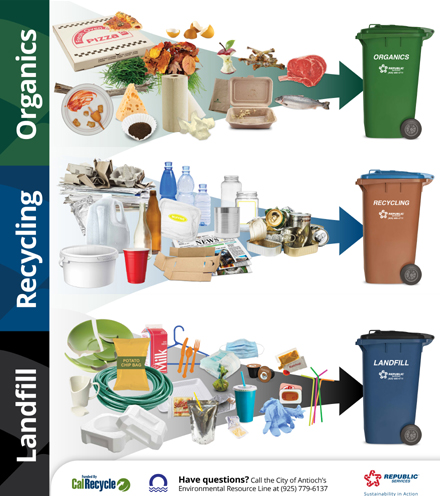
How solid waste collection and recycling companies are responding to COVID-19

Tuesday, March 24th, 2020

“We will continue to serve Californians”

By Trish Roath, Executive Director, Resource Recovery Coalition of California

The member companies of the Resource Recovery Coalition of California (Resource Coalition) provide solid waste collection and processing services in California. During these uncertain times, and as an essential industry, we believe it’s important to do our part in the effort to fight COVID-19 as well as provide a sense of routine for all Californians.

As an industry, we have taken the following steps:

  • Resource Coalition members are working diligently with their local jurisdiction partners to continue to provide service to avoid any additional public health and safety hazards caused by uncollected waste.
  • Resource Coalition members have been provided a guidance document on how to ensure worker safety, based on CDC and OSHA guidelines, during the COVID-19 pandemic.
  • Many solid waste and recycling companies have already implemented work from home policies for office staff where possible to prevent the spread of infection and keep employees safe.
  • All solid waste and recycling facilities have been advised to consider suspending nonessential on-site activities. This may include activities such as facility tours, public drop-off, in-person bill pay, and other similar activities. Notice will be provided to customers that all best efforts will be taken to address questions and concerns via phone, email, or website communication.

“The Resource Coalition acknowledges that this is an unprecedented situation and we are fully committed to fulfilling our duties as an essential industry,” said Trish Roath, Executive Director of the Resource Coalition. “Our members are committed to working together with their cities and counties to provide safe solid waste collection and processing service through this crisis and beyond.”

For more information on how the solid waste collection and processing industry serves Californians, please visit www.resourcecoalition.org.