35th Annual Antioch Kids Fishing Derby Saturday, Oct. 14
Friday, September 29th, 2023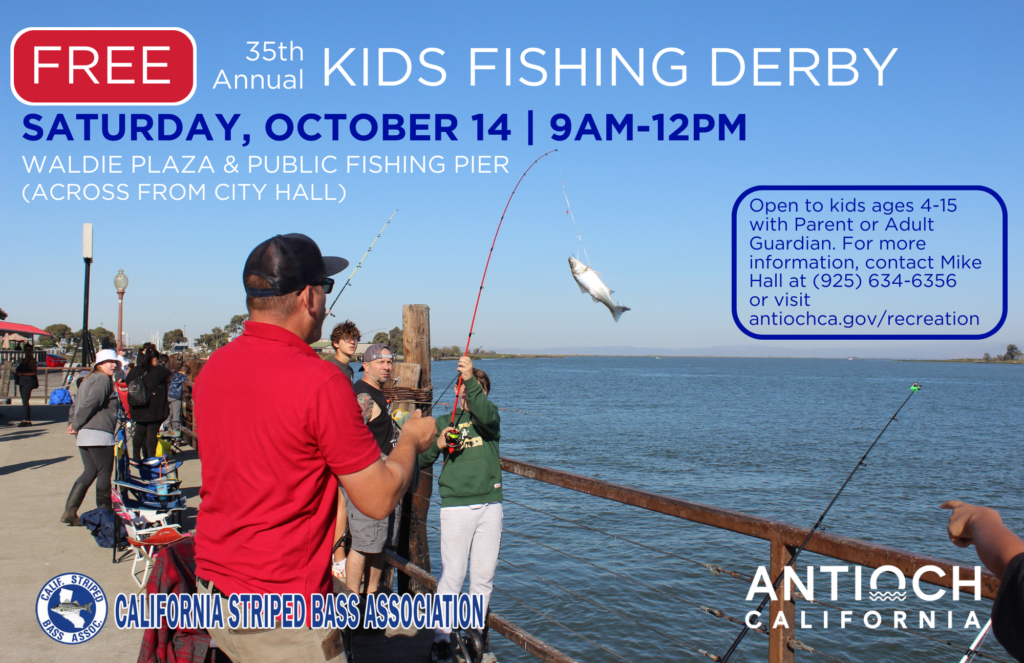
For kids ages 4-15 at the Uril E. “Compy” Compomizzo Fishing Pier at the end of H Street near Waldie Plaza in historic, downtown Rivertown.











For kids ages 4-15 at the Uril E. “Compy” Compomizzo Fishing Pier at the end of H Street near Waldie Plaza in historic, downtown Rivertown.
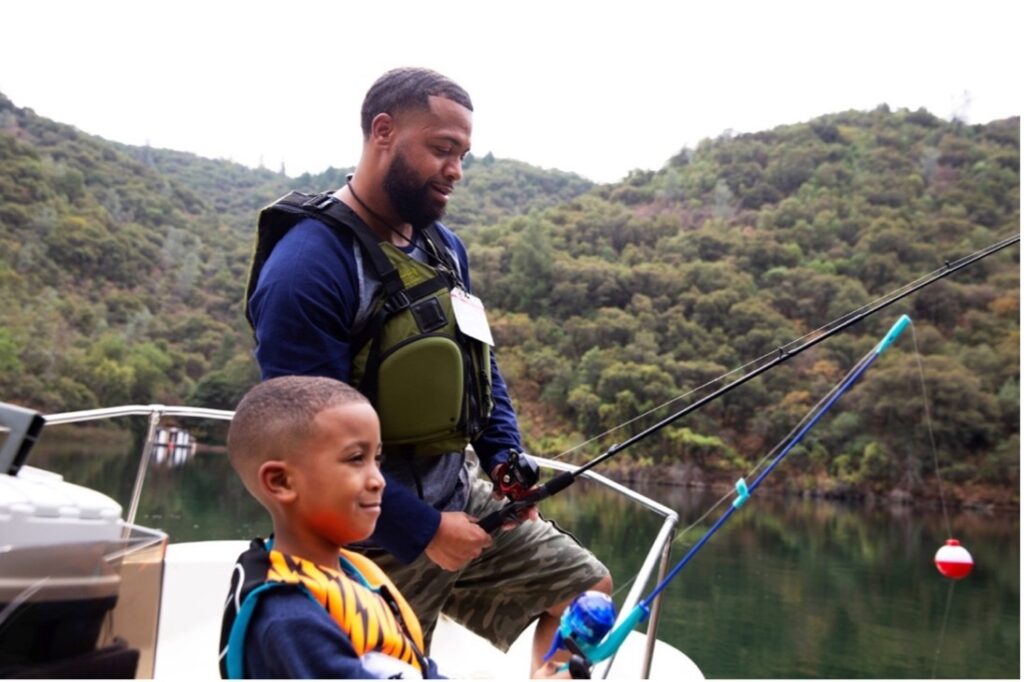
SACRAMENTO, Calif.— With the unofficial end of summer approaching this Labor Day holiday weekend, California State Parks’ Division of Boating and Waterways (DBW) is reminding boaters and water enthusiasts to take extra precautions to stay safe and prevent tragedies on the water. Taking a boating safety course, wearing a life jacket while recreating in the water and actively supervising children when in or near a body of water are simple actions all can take to help improve safety on California’s waterways.
Here are some key safety tips:
Download helpful boating apps to your phone. The BoatCA App is a free mobile app with information on boating facilities, life jacket loan stations, laws, boat registration and more.
Subscribe to California State Parks News online at parks.ca.gov/newsroom.
The California Department of Parks and Recreation, popularly known as State Parks, and the programs supported by its Office of Historic Preservation and divisions of Boating and Waterways and Off-Highway Motor Vehicle Recreation provide for the health, inspiration and education of the people of California by helping to preserve the state’s extraordinary biological diversity, protecting its most valued natural and cultural resources, and creating opportunities for high-quality outdoor recreation. Learn more at parks.ca.gov.
Creating the Blueprint is a key step in developing Plan Bay Area 2050+.
Public engagement is a fundamental element of the plan update process.
September 6th workshop in Contra Costa; Deadline for comment: September 7, 2023
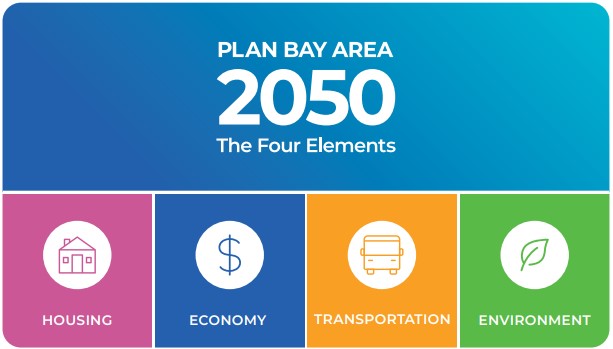
The Plan Bay Area 2050+ Blueprint will integrate strategies across the four elements of the plan — the economy, the environment, housing and transportation — to create a more equitable and resilient future for all.
Beginning in summer 2023 and wrapping up in late 2024, staff will develop the Blueprint over two phases: the Draft Blueprint and the Final Blueprint. Given Plan Bay Area 2050’s solid foundation of 35 strategies, the Draft Blueprint phase for Plan Bay Area 2050+ will focus on making targeted refinements to select plan strategies. (See Plan Bay Area 2050 Executive Summary)
Assumptions for the select Blueprint strategies will be refined to reflect ongoing implementation efforts from Plan Bay Area 2050, while also leveraging findings from previous planning efforts that may be relevant to the post-COVID environment.
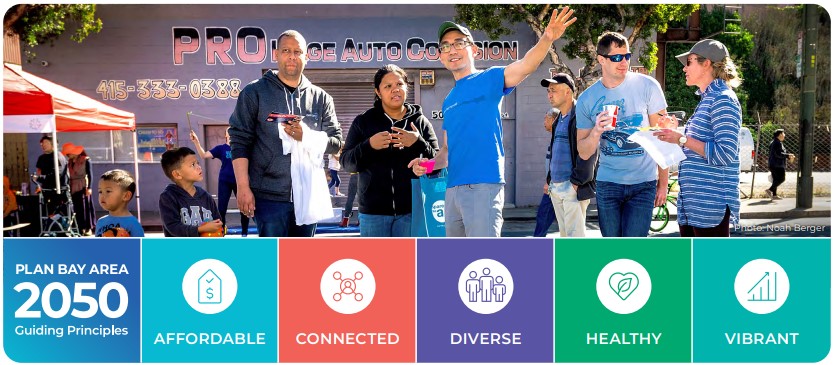
Equity and performance analyses will also be conducted during the Draft Blueprint phase to evaluate how the plan’s strategies are supporting progress towards making the Bay Area more affordable, connected, diverse, healthy and vibrant for all.
Furthermore, Transit 2050+ — the comprehensive re-thinking of the six transit-related strategies in Plan Bay Area 2050’s transportation element — will develop an integrated regional transit network that will be incorporated into the Final Blueprint.
While still remaining fiscally constrained per federal planning requirements, the focused plan update approach will consider whether to pursue targeted updates to — or to reaffirm — the Regional Growth Forecast (while maintaining its forecast methodology), as well as to the External Forces, the Growth Geographies and the Needs and Revenue Forecasts.
Culminating in late 2024, the Metropolitan Transportation Commission (MTC) and the Association of Bay Area Governments (ABAG) will consider adoption of the Final Blueprint, which will then move forward in the plan update process as the preferred alternative for environmental review.
Creating the Blueprint is a key first step toward updating the plan itself, and thus the Blueprint planning phase will require iteration and deep engagement of the public, partners and elected officials.
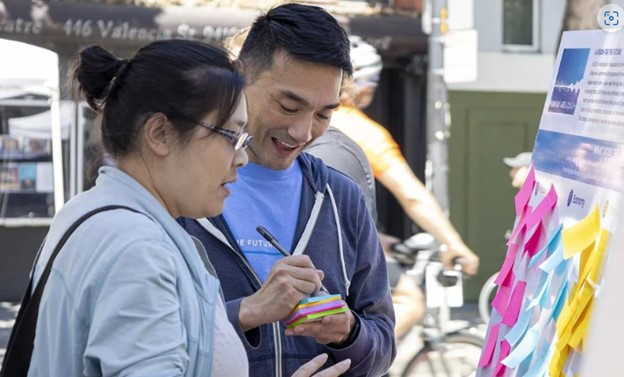
A first step in developing the Blueprint is to better understand what has changed as the region emerges from the pandemic. This summer, MTC and ABAG staff will be traveling across the region to speak to the community to understand how life has changed for individuals as the Bay Area enters the “new normal.”
MTC and ABAG are taking input from community members and partners to help inform the development of the Draft Blueprint.
You can make your voice heard in a variety of ways! Attend a pop-up workshop near you; participate in our survey; or submit comments via email, telephone or mail.
Find an event near you and join the conversation to help staff better understand how the last three years have impacted life across the Bay Area.
Participate in Our Survey
A first step in updating the plan is to better understand what has changed for you as the region emerges from the pandemic. MTC and ABAG want to learn how the “new normal” may be impacting your life.
The survey will close on September 7, 2023.
The survey also will help inform the development of Transit 2050+, a parallel long-range planning effort that will produce a first-of-its-kind plan to re-envision the future of the public transit network in the nine-county Bay Area, and the expenditure plan for a potential transportation revenue measure. The revenue measure is key in advancing implementation of Plan Bay Area.
This summer, MTC and ABAG staff will be traveling across the region to speak to the community to understand how life has changed for individuals as the Bay Area emerges from the pandemic. Attend a pop-up workshop near you and tell us what the “new normal” means to you.
Contra Costa County
Diablo Valley College — Pleasant Hill Campus
Wednesday, September 6, 12 to 3 p.m.
321 Golf Club Road, Pleasant Hill, CA
About Plan Bay Area
Plan Bay Area is a long-range regional plan jointly developed and adopted by MTC and ABAG every four years.
Funding to benefit regional water supply improvements and protection of critical bird populations
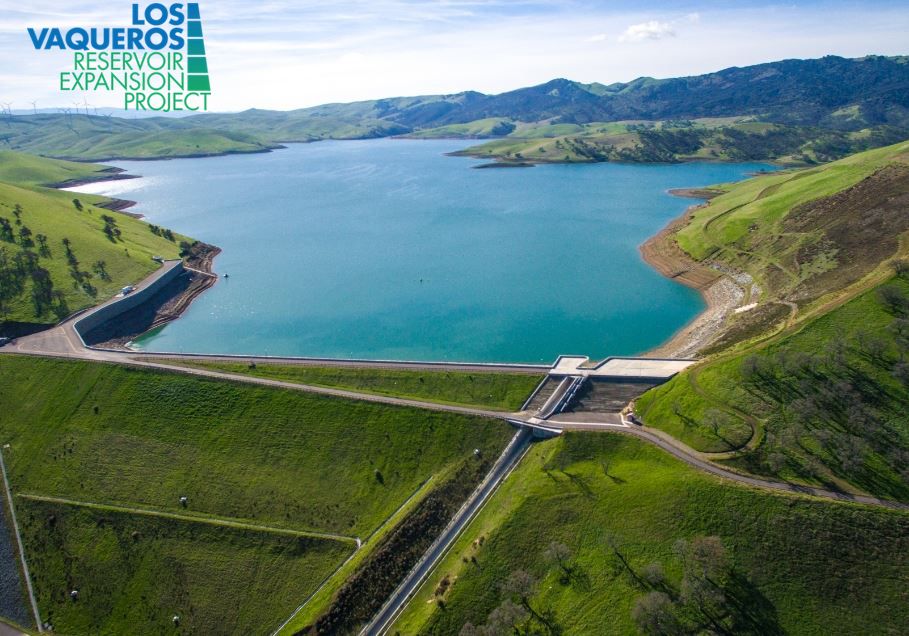
Expansion will increase capacity by 115,000 acre-feet, cost about $1.25 billion
The Los Vaqueros Reservoir Expansion Project Joint Powers Authority today (July 27, 2023) was notified that it will receive $10 million in federal funding from the U.S. Department of the Interior, Bureau of Reclamation. The funding will be used to further the project’s goals of improving Bay Area and Central Valley water supply and supporting wildlife refuges along the Pacific Flyway, a vital migratory route for critical bird populations.
According to the National Audubon Society, each year at least one billion birds migrate along the flyway, which is only a fraction of those that used it a century ago. Wildlife refuges along the Pacific Flyway provide protection against habitat loss, water shortages, diminishing food sources and climate change.
Additionally, the expansion will increase the Los Vaqueros Reservoir capacity from 160,000 acre-feet to 275,000 acre-feet and add new and modified conveyance facilities to provide environmental, water supply reliability, operational flexibility, water quality and recreational benefits.
The dam will be increased by 55 feet from its current height of 226 feet to 281 feet from toe to crest.
“We are grateful to Reclamation for acknowledging the importance of the Los Vaqueros Reservoir Expansion Project and the role it will play in providing water supply reliability for 11 million customers and protection of critical bird populations from the Bay Area to the Central Valley,” said Board Chair Angela Ramirez Holmes. “Our partnership with Reclamation is invaluable and will help ensure quality of life now and for future generations.”
The $10 million allocation today is authorized under the Bipartisan Infrastructure Law, approved by Congress in November 2021, and is in addition to a previously awarded $164 million from all federal sources for the reservoir expansion project. The project was previously authorized for federal funding under the Water Infrastructure Improvements for the Nation (WIIN) Act of 2016.
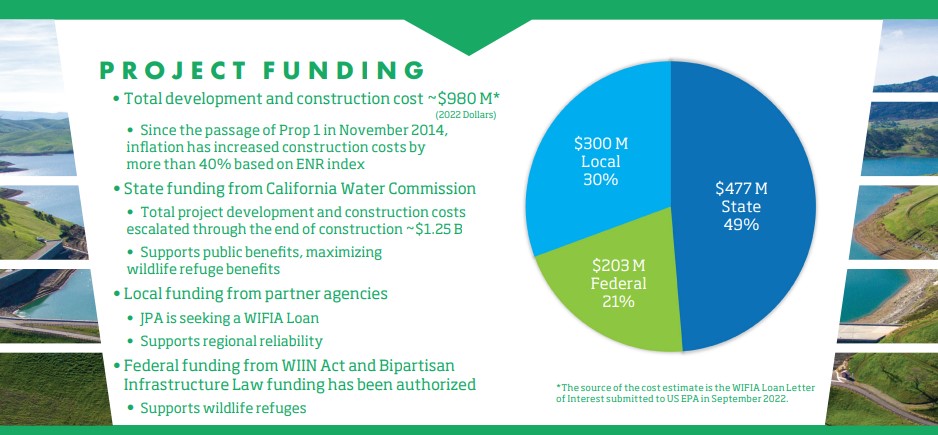
According to the project Fact Sheet, the total development and construction cost of the expansion is budgeted at approximately $980 million in 2022 dollars and $1.25 billion in escalated costs through the end of construction. Construction is expected to last from 2023 through 2030.
“We appreciate the ongoing federal support of this project that is vital to millions of Californians and key wildlife refuges,” said Los Vaqueros Reservoir Joint Powers Authority Executive Director Taryn Ravazzini. “The allocation of these funds marks another milestone and allows the LVR JPA and its members to continue our progress toward regional resilience.”
About the LVRJPA
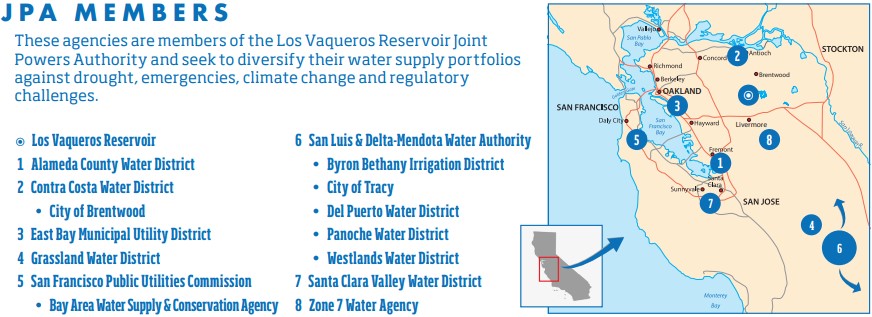
The Los Vaqueros Reservoir Joint Powers Authority (JPA) was formed in 2021 and provides governance and administration for the Phase 2 Los Vaqueros Reservoir Expansion Project (Project). The Los Vaqueros Reservoir is an off-stream reservoir owned and operated by the Contra Costa Water District.
The Project will increase Bay Area and Central Valley water supply reliability, develop water supplies for wildlife refuges, and improve water quality while protecting Delta fisheries and providing additional Delta ecosystem benefits. When completed, it will increase the Los Vaqueros Reservoir capacity from 160,000 acre-feet to 275,000 acre-feet and add new and modified conveyance facilities to provide environmental, water supply reliability, operational flexibility, water quality, and recreational benefits.
Allen D. Payton contributed to this report.
Recovered Monday morning; conflicting information from agencies of what occurred; no investigation by APD
By Allen D. Payton
According to Antioch Police Public Information Liaison Sgt. Price Kendall, on Tuesday, July 25, 2023, the body of the man missing in the river last Friday during a boating mishap was found.
Con Fire spokeswoman, Assistant Fire Chief Tracie Dutter said, “Someone reported a possible deceased male on the rocks near Fulton Shipyard Road on Monday at 7:48 AM. We were requested by PD to assist in recovering the body. We were on scene assisting at about 8:20 a.m. and by 8:40 a.m. the recovery was completed.”
According to Deputy Gonzalez of the Contra Costa County Coroner’s Office, the man was identified as 58-year-old Douglas Cross from San Leandro, based on his driver’s license information.
As previously reported, according to Jimmy Lee, Contra Costa Sheriff’s Office Director of Public Affairs, “On Friday, July 21, 2023, at about 1:51 PM, deputy sheriffs from the Marine Patrol Unit were dispatched to assist the Contra Costa County Fire Protection District and the United States Coast Guard with searching for a missing boater who was apparently trying to push his 20-foot vessel to shore near the Fulton Shipyard on the San Joaquin River. The U.S. Coast Guard and Sheriff’s Office drone team were also involved in the search. The missing boater, who is not being identified at this time, was not located. (See video)
The Marine Patrol Unit continued the search on Saturday, he added.
However, according to Coast Guard Public Affairs Specialist Schnabel, “We suspended the search after searching until around 7:30 pm. One man had fallen overboard from a recreational boat and the other man jumped in after him attempting to get him out of the water leaving the vessel unmanned. Neither had life jackets. One man was recovered by a Good Samaritan and taken to a local boat ramp.”
Asked if an investigation was being conducted to determine what occurred and if the other man had been interviewed to get his side of the story, Sgt. Kendall responded, “No investigation is being conducted by the Antioch Police Department.”
Lee was asked the same question but did not respond prior to publication time. Please check back later for any updates to this report.
By Allen D. Payton
07/22/23 UPDATE #2: According to Jimmy Lee, Contra Costa Sheriff’s Office Director of Public Affairs, “On Friday, July 21, 2023, at about 1:51 PM, deputy sheriffs from the Marine Patrol Unit were dispatched to assist the Contra Costa County Fire Protection District and the United States Coast Guard with searching for a missing boater who was apparently trying to push his 20-foot vessel to shore near the Fulton Shipyard on the San Joaquin River. The U.S. Coast Guard and Sheriff’s Office drone team were also involved in the search. The missing boater, who is not being identified at this time, was not located. The Marine Patrol Unit will continue the search today.”
07/22/23 UPDATE #1: According to Coast Guard Public Affairs Specialist Schnabel, “We suspended the search after searching until around 7:30 pm. One man had fallen overboard from a recreational boat and the other man jumped in after him attempting to get him out of the water leaving the vessel unmanned. Neither had life jackets. One man was recovered by a Good Samaritan and taken to a local boat ramp.”
———
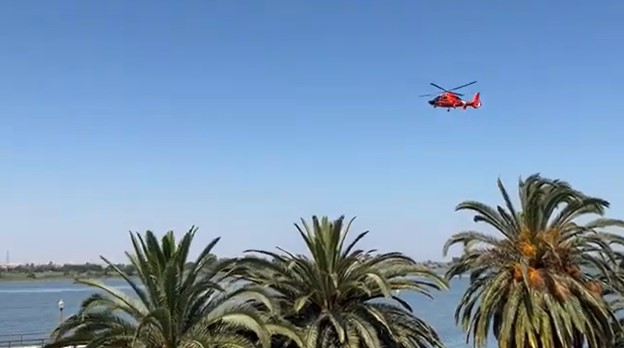
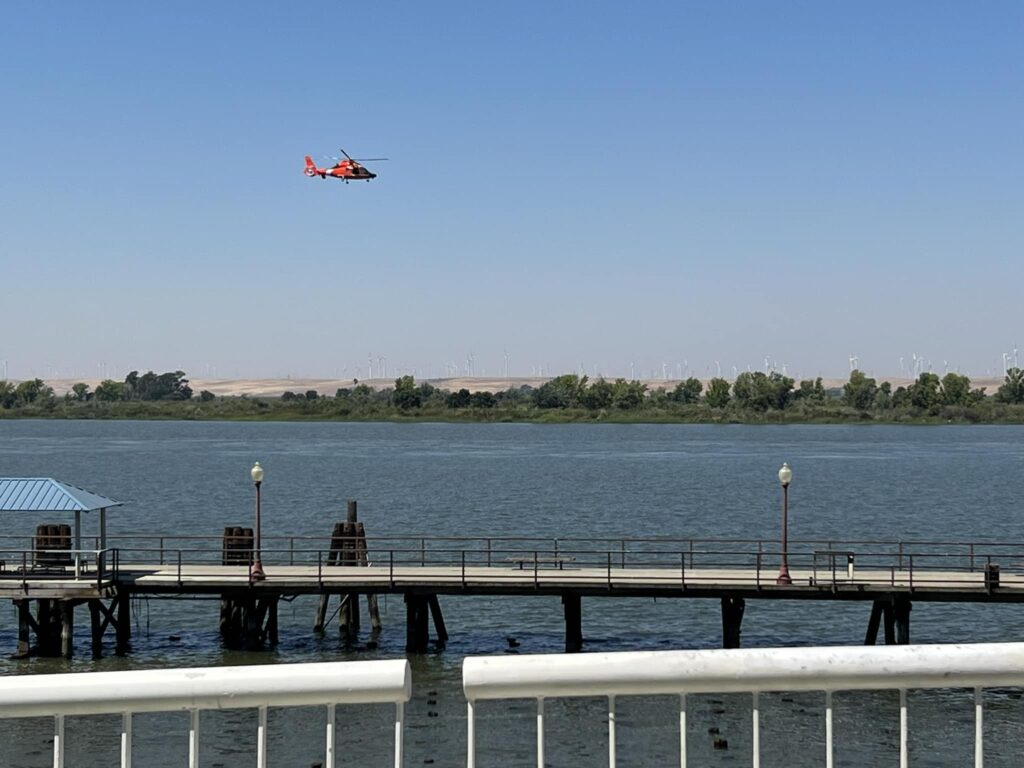
A helicopter could be seen flying over the river and Waldie Plaza along the Antioch waterfront Friday afternoon. According to Con Fire PIO Steve Hill, “We responded in the noon hour to reports of a 55-year-old man in the water. In spite of searches by us, Sheriff’s Office Marine program and the Coast Guard we were unable to locate him. We are clearing at this hour, the Coast Guard remains on scene.”
As of 4:25 PM Coast Guard 11th District Public Affairs Specialist Hunter Schnabel said, “the search is ongoing for a male. We received a report from another male who was swimming with him after he got back to shore and called in a panic.”
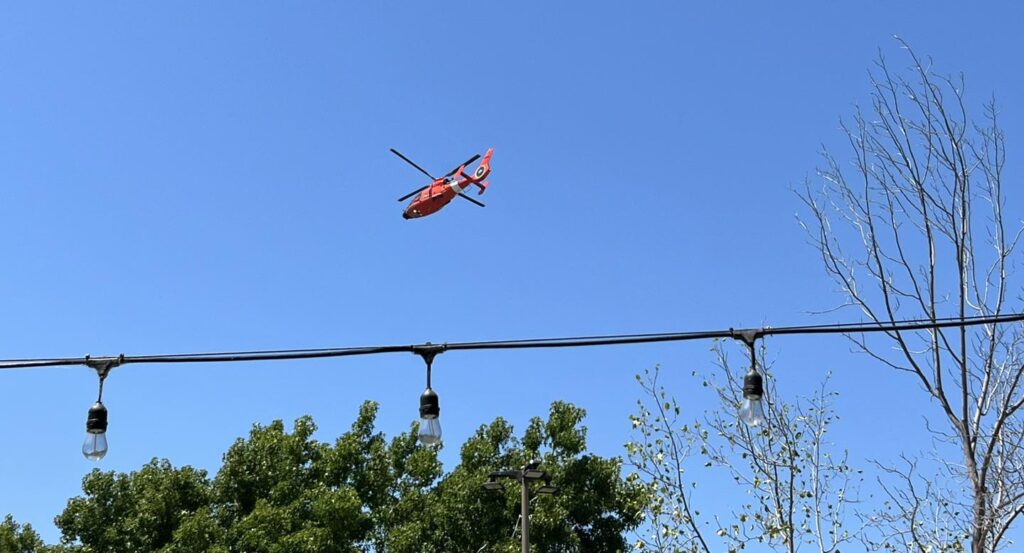
“We have Station Rio Vista and Air San Francisco’s MH65 Dolphins (helicopters) in the search,” he added.
Please check back later for any updates to this report.
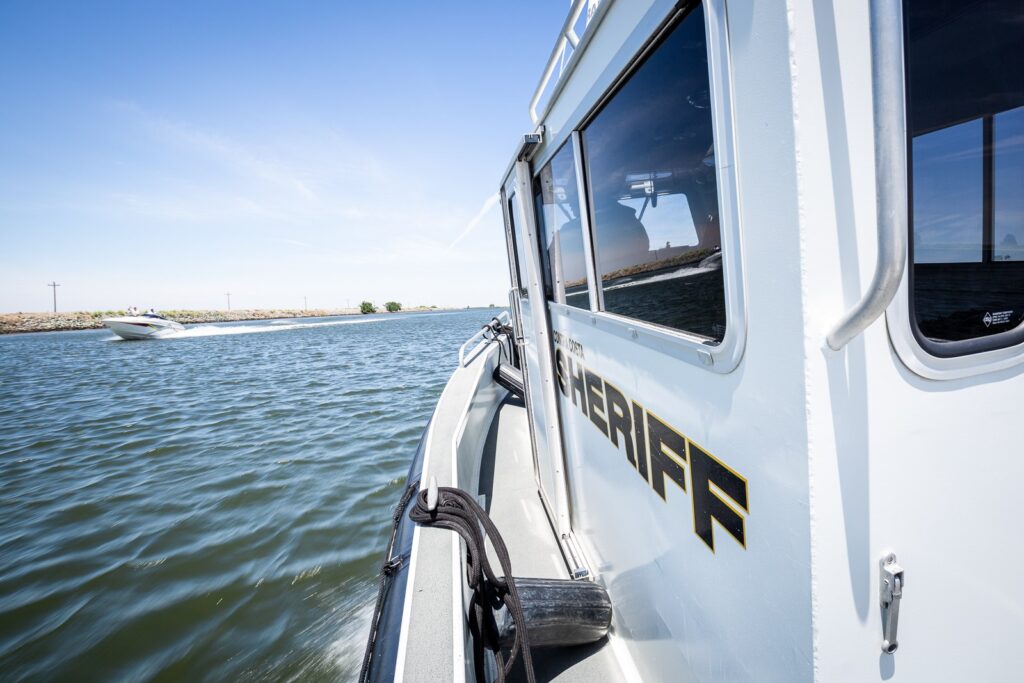
The Memorial Day holiday weekend traditionally marks the start of boating season on the Delta. A large number of people are expected to be on the water this weekend and throughout the summer to go fishing, boating or take part in water sports, like water-skiing.
“We want all boaters and those on the Delta to enjoy themselves, but to be safe,” said Contra Costa Sheriff David Livingston. “By following the laws and regulations, wearing a life-jacket, avoiding alcohol, and boating safely, you could help avoid an accident or tragedy on the water.”
The Contra Costa County Office of the Sheriff Marine Ser-vices Unit would like to remind all boaters to be safe, alert, and obey the rules. Here are some important rules and tips:
-Anyone 50 or under who oper-ates a vessel that is propelled by an engine, regardless of whether the engine is the principal source of propulsion, must have in their possession a California Boater Card issued by the state. By 2025, anyone operating a motorized vessel will be required to possess a California Boater Card. For more information on the California Boater Card, go to www.dbw.ca.gov.
-All vessels, including stand-up paddle boards (SUPs), must have a U.S. Coast Guard approved life jacket for each person. The life jacket must fit the person intending to wear it. Children under 13 must always wear a life jacket while aboard any vessel, regardless of length, unless they are surrounded by an enclosed cabin or bulkhead. We encourage every-one, regardless of age, to wear a personal floatation device at all times when on the water.
-You must be at least 16 years old to operate a power boat or personal watercraft. All persons on a personal watercraft are required to wear an approved life jacket.
-Boats 16 feet and larger are required to have a life ring or square type 4 throwable flotation device which must be immediately accessible.
-Always travel at a safe speed. Slow down in narrow channels and blind areas and navigate on the right side of the waterway. In crossing situations, the boat on the right has the right of way.
-The operator of a vessel involved in towing a skier must display, or cause to be displayed, a red or orange water ski flag to indicate: a downed skier, a skier in the water preparing to ski, a ski line extended for the vessel, or a ski in the water in the vicinity of the vessel.
-Blue Light law — Any vessel approaching, overtaking, being approached, or being overtaken by a moving law enforcement or emergency vessel operating with a siren or an illuminated blue light, or any vessel approaching a stationary law enforcement vessel displaying an illumi-nated blue light, shall immediately slow to a speed sufficient to maintain steerage. Boaters cannot make a wake near a law enforcement vessel displaying a blue light.
-Always have an emergency kit that includes a flashlight, warm clothing, cell phone, VHF radio and chart. For emergencies on the water, boaters should call 911 or Sheriff’s Dispatch at (925) 646-2441. Be sure to file a float plan before you depart. Go to this link for more information on float plans and how to fill one out:
-Be aware of potential carbon monoxide poisoning that can occur when the motor is running while occupying the swim platform or in vicinity of the vessel’s transom.
Boating under the influence (B.U.I.) enforcement is a high priority. Those arrested for B.U.I. will face similar consequences as those who drive a motor vehicle under the influence, including fines and possible jail time.
The ‘ABC’s of Boating’, a handbook of boating rules, is available from most boating shops. Boaters can go to the California Division of Boating and Waterways website at www.dbw.ca.gov for information on boating safety and the California Boater Card. If anyone has any questions about boating safety, please contact the Marine Services Unit at (925) 427-8507.
Source: Restore the Delta
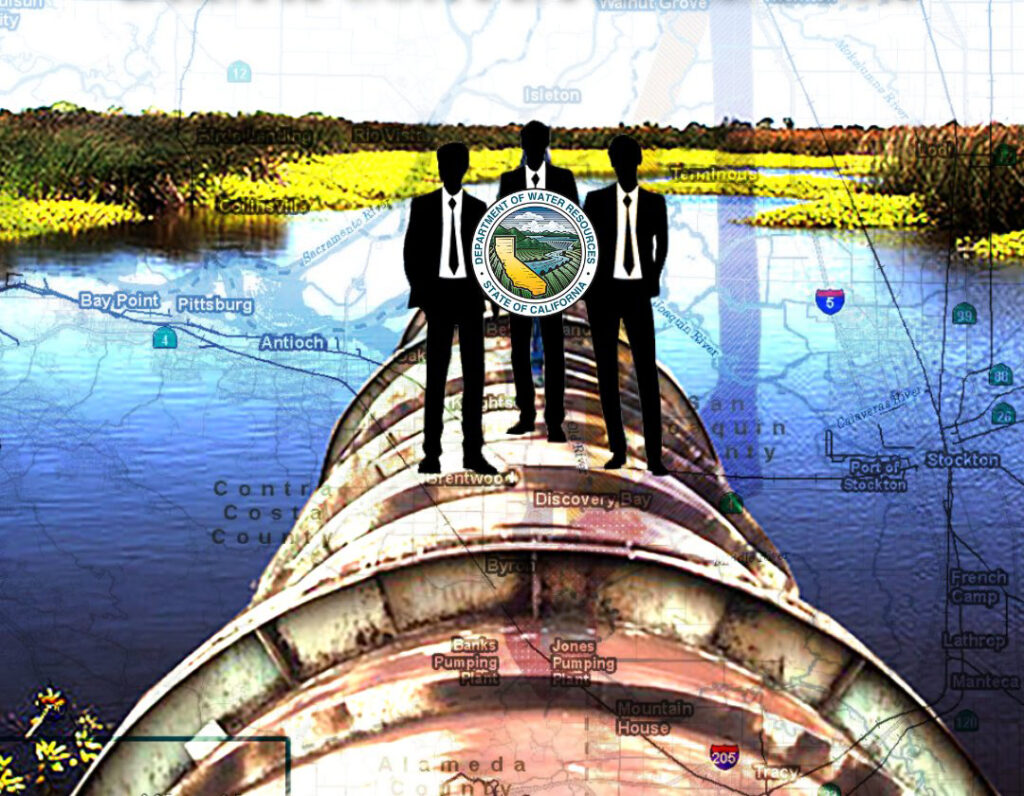
 The proposed Delta Conveyance Project (Delta Tunnel) would construct new water intake facilities on the Sacramento River in the north Delta to fill a single tunnel with diverted freshwater flows. That water would be shipped to large farming operations and water wholesalers south of the Delta. The Delta Conveyance project would divert up to 6,000 cubic feet of water per second. The project is estimated to cost between $16-40 billion and won’t be completed until at least 2040.
After the Draft Environmental Impact Report for the Delta Conveyance Project was released in July, the comment period was extended to today, Friday, December 16, 2022. The Draft EIR was prepared by the state Department of Water Resources (DWR) as the lead agency to comply with the requirements of the California Environmental Quality Act by evaluating a range of alternatives to the proposed project and disclosing potential environmental effects of the proposed project and alternatives, and associated mitigation measures for potentially significant impacts.
No decisions will be made on whether to approve the project until the conclusion of the environmental review process, after consideration of public comments submitted on the Draft EIR and issuances of a Final EIR. At that time, DWR will determine whether to approve the proposed project an alternative or no project.
On Wednesday, Dec. 14, 2022, Restore the Delta submitted detailed comments on the DEIR to the DWR.
“The California Department of Water Resources should be embarrassed by the lack of climate change planning in the DEIR for the proposed Delta Tunnel. The DEIR was out of date for climate change science when it was released in July 2022,” said Tim Stroshane, Policy Analyst, Restore the Delta. “If completed in 2040 it will be obsolete, then. Meanwhile, California will have spent big money on a project the state will be unable to use as Delta water levels rise. Instead, we should invest in the resilience of Delta environmental justice communities and the rest of the state for flood and water supplies, reducing the big projects’ reliance on the Delta for future water needs, using water use efficiency and water recycling, and increasing local and regional water supply self-sufficiency to ward off drought and megafloods.”
“DWR has learned nothing since California WaterFix. Their sales pitch, that the tunnel is a climate project, is built on incomplete data and faulty analysis,” said Barbara Barrigan-Parrilla, Executive Director of Restore the Delta. “They have continued their pattern of erasing how the project will impact Delta urban environmental justice communities. And they are minimizing how construction will ruin small Delta farming towns, and the natural resources essential to the cultural and spiritual practices of historic Delta tribes. The tunnel is a failed idea that nobody supports, except for the Department of Water Resources.”
Read the comment letter and attachments by Restore the Delta.
Environmental impact of Tunnel:
“Reviewing the Executive Summary, we count 17 significant and unavoidable impacts of the proposed Tunnel project on the environment. Among these impacts will be loss of prime agricultural farmland, loss of local non-tribal cultural resources, transportation and air quality impacts, and painful loss of tribal cultural resources. There are other impacts omitted, belittled, or greenwashed by the Tunnel DEIR.”
Flow and salinity impacts when Tunnel in operation:
“The Tunnel Project has region-scale impacts on the Delta, should it be built. The Tunnel DEIRacknowledges that a major operational impact will be, reducing Sacramento River flows (and hence flows to its distributaries in north and central Delta channels) and reducing the estuary’s ability to repel tidal salt waters which are ever-present (see Attachment 9 to this letter). Such operational impacts will have economic and ecological impact on the Delta region, and a Community Benefits Program must be developed to mitigate the economic and ecological effects of Tunnel operations on Delta communities, especially environmental justice communities.”
Failure to consider alternatives:
“DWR in particular is hide-bound in its loyalty to a Delta conveyance approach eclipsed by the emerging and growing effects of extreme heat and extreme storms.
“A huge failure of imagination by DWR is on display in this DEIR. Each of these alternatives is vulnerable to the slings and arrows of expected climate change effects, which we will go into further below when commenting on project modeling methods and results. But what we see displayed in the Tunnel DEIR is a complete failure of state water officials to imagine alternative approaches these last few years since the demise of California WaterFix in early 2019.”
Faulty consideration of Delta Environmental Justice impacts:
“We are deeply disappointed that DWR resorted to ignoring its ‘Your Delta, Your Voice’ Survey as a basis for informing how and what kind of environmental, environmental justice, and community impacts the Delta Tunnel Project would impose on the Delta EJ community both of the direct Legal Delta and of the Delta Region as a whole. It is plainly obvious that 1) the Legal Delta as well as the Delta Region are bona fide environmental justice communities, with relatively small proportions of white and wealthy populations; 2) Delta residents AND Delta region community members rely substantially on the Delta directly, and the north Delta in particular, for subsistence fishing, and it is thus an environmental impact to have both fishing spots taken away from anglers and fish removed from the vicinity for North Delta Intakes construction activities; and 3) in the operational phase, lost flows in the Delta will increase salinity in the Delta as it reduces flows in north and central Delta channels, and thereby contributing to the spread of harmful algal blooms which will disproportionately injure Delta people who rely on fishing and broad outdoor activities to enjoy the Delta. In sum, the Delta Tunnel Project will harm such beneficial users of water as fish, outdoor water-contact recreation, and environmental justice communities.”
About Restore the Delta
Restore the Delta (RTD) is a grassroots campaign of residents and organizations committed to restoring the Sacramento-San Joaquin Delta so that fisheries, communities, and family farming can thrive there together again; so that water quality is protected for all communities, particularly environmental justice communities; and so that Delta environmental justice communities are protected from flood and drought impacts resulting from climate change while gaining improved public access to clean waterways. Ultimately our goal is to connect communities to our area rivers and to empower communities to become the guardians of the estuary through participation in government planning and waterway monitoring. RTD advocates for local Delta stakeholders to ensure that they have a direct impact on water management decisions affecting the well-being of their communities, and water sustainability policies for all Californians.
ICYMI 12/10/22: Delta Tunnel Meeting, Greenhouse Gaslighting, HABs in 2022
Allen D. Payton contributed to this report.
CA Boating and Waterways reminds public to boat responsibly over Labor Day weekend
Thursday, August 31st, 2023Los Vaqueros Reservoir Expansion Project receives $10 million from Bureau of Reclamation
Thursday, July 27th, 2023Body found in river identified as San Leandro man missing while boating last Friday
Tuesday, July 25th, 2023In response to DEIR Restore the Delta claims water tunnel “will not save the Delta”
Friday, December 16th, 2022












© 2026 Antioch Herald - Entries (RSS) - Comments (RSS) - Log in
Theme design by Christian Gnoth - 