







Archive for the ‘Delta & Environment’ Category

Keep Antioch Beautiful Day annual, citywide cleanup, Sat., April 23

Thursday, April 7th, 2016

KAB-2016_FlyerFor the month of April the Antioch Police Department is encouraging citizens to participate in the citywide, KEEP ANTIOCH BEAUTIFUL DAY clean up event April 23, 2016 from 8:30am-11:00am. This is a collaborative community effort, which involves active participation from the Antioch Police Crime Prevention Commission; Neighborhood Watch Program; Volunteers in Police Service; Keep Antioch Beautiful Committee; community volunteers, and the Public Works Department.

Check in sites for the April 23, 2016 citywide cleanup are at the following locations:

Nick Rodriguez Community Center, Turner Elementary, Mission Elementary, Carmen Dragon Elementary, Park Middle School, Antioch High School and Deer Valley High School

The targeted areas are within walking distance. Excluding inclement weather, future Neighborhood Cleanup events are scheduled for the first Saturday of every month and the locations will be announced in advance.

For a list of locations and to sign up visit http://art4antioch.org//Keep-Antioch-Beautiful.asp or call 779-6137.

Sponsored by City of Antioch, Republic Services, Honeywell, NRG, Antioch Unified School District, Walmart, East Bay Regional Park District, Central Self Storage, Arts & Cultural Foundation of Antioch, Pinky’s Klassy Kar Wash, Dick Straub (in Memorium), Police Crime Prevention Commission, Paradise Skate & Paintball Park and Undead Bettys Roller Derby.

Residents urged to speak against Contra Costa Water District deal on Delta Tunnels, Wed., April 6

Friday, April 1st, 2016

Restore the Delta says to tell the Contra Costa Water Board “Say no to back room deals that sell out Delta water quality for the region”

By Barbara Barrigan-Parrilla, Executive Director, Restore the Delta

The Contra Costa Water District Board of Directors will soon be reviewing the settlement agreement that they recently signed with the Delta Tunnels plan effort. The settlement drops CCWD’s protest against the tunnels plan in exchange for a separate pipeline to deliver drinking water to its customers. We are urging all concerned residents to attend the meeting.

This may be your only opportunity to register a public comment on how you feel about CCWD’s self-interested approach to secure a water supply at the expense of the community it serves.

What: CCWD Public Board Meeting

When: Wednesday, April 6, 2016, 6:30 to 9:00 pm. (Come at 6:00 pm if you would like to organize with us prior to the meeting)

Where: 1331 Concord Avenue, Concord   

The Contra Costa Water District is choosing to exchange its present contract for Delta water deliveries for an intake above the Delta that will remove even more fresh water from the estuary. This not only puts all other Delta communities at risk for even worse water quality, but also leaves their own customers within their own district with degraded Delta water for other uses. Additionally, their decision leaves the San Francisco Bay Estuary with degraded water quality which will negatively impact that magnificent ecosystem.

Contra Costa County residents recreate in high numbers in the Delta, live around its water ways, and have regular contact with the water.  Environmental justice communities and recreational anglers fish Delta waterways for sustenance and professional tournaments, and Contra Costa County farmers depend on quality Delta water for their businesses.

Furthermore, the impacts will be exacerbated for residents in Discovery Bay for all water uses — from toxic algal blooms to waterways polluted with salt, Selenium and human carcinogens. Reducing flow through the Delta will put the estuary in a state of “permanent drought.”

CCWD’s willingness to settle is an indictment of how bad the Delta Tunnels plan really is. The Tunnels Project will have egregious water quality impacts in the Delta. CCWD should drop the settlement, and rejoin the unified opposition to the Tunnels plan launched by the entire Bay-Delta community, not cut a self-serving back room deal!

Lastly, Restore the Delta and collaborating environmental groups have in the past supported an expansion of Los Vaqueros Reservoir (and an intertie between Contra Costa Water District and Santa Clara Valley Water District) as ways to meet water needs for the greater Bay Area.  However, we are reconsidering our support of such measures seeing that Contra Costa Water District would now become a party to depriving the Bay-Delta estuary of needed flows through the Delta tunnels project. CCWD is effectively transforming the expansion of Los Vaqueros from a solution to a tool of the Bay-Delta estuary water grab.

Read our opposition to this settlement here. If you have questions, about this alert, please feel free to call our office at 209-475-9550.  We will see you, our members, at 6 pm in order to organize before the meeting on April 6, 2016. If you cannot make the meeting, submit a public comment here.

Thank you for your continued support.

The Contra Costa Water District service area includes Antioch, Bay Point, Brentwood (portion), Clayton, Clyde, Concord, Martinez (portion), Oakley, Pittsburg, Pleasant Hill (portion), Port Costa and Walnut Creek (portion). To find your Director on the Board visit http://www.ccwater.com/426/Division-Map—Find-Your-Director.  If you can’t attend the meeting you can also email your Director by visiting http://www.ccwater.com/416/Board-of-Directors . and clicking on their name and then link to contact them. Antioch is represented by Directors Bette Boatmun and Connstance Holdaway.

Contra Costa Water District signs agreement with Department of Water Resources on water from Delta Tunnels

Wednesday, March 30th, 2016

The Contra Costa Water District (CCWD) announced, Tuesday that they have signed a settlement agreement with the California Department of Water Resources (DWR) that will protect its customers, facilities, and operations if the Bay Delta Conservation Plan / California WaterFix (CWF), aka the “twin tunnels,” is built. The agreement is an insurance policy to protect the unique water quality and supply issues raised by CCWD.

Since studies began in 2006 to evaluate alternative conveyance strategies for Delta water serving those dependent on the export pumps in the south Delta, CCWD has publicly raised concerns about several issues including potential impacts to the operation of its facilities in the Delta that provide high quality water service to its customers. The state approached CCWD to discuss the water quality and supply concerns unique to CCWD and an agreement was reached that will provide protections for CCWD’s customers if the project is built.

“We take our role to protect our customers seriously and cannot gamble with the future of our water supply or quality,” said General Manager Jerry Brown. “Should this project move forward without these assurances in place, CCWD’s facilities and operations would be negatively impacted. We are confident this is an iron-clad insurance policy for our customers, we wouldn’t have reached an agreement otherwise.”

Key to this settlement is the fact that it will not result in rate increases for CCWD customers nor redirect any potential impacts to other areas. It is a legally binding agreement to protect CCWD’s ability to use the facilities its customers have invested over $1 billion in the past 20 years.

“We are confident knowing we have taken actions to protect our customer’s future if the tunnels are ever constructed,” commented Brown. “The state is committing to a significant investment to ensure CCWD customers will be made whole, and this agreement protects our ability to deliver high quality water to those we serve.”

“We’re pleased to have reached an agreement with CCWD that is good for their customers and good for the 25 million Californians who depend upon the State Water Project,” said DWR Director Mark Cowin. “We appreciate CCWD’s reasonable, efficient, and effective approach to resolving concerns about California WaterFix.”

CCWD is not a proponent of the CWF. This settlement does not change that position, but instead is a way to safeguard CCWD and those it serves if a larger statewide plan is ever implemented. CCWD will remain an active participant in finding statewide solutions and continue to protect the drinking water interests of our customers.

The Board of Directors will review the details of the agreement at the April 6 Board Meeting held at 1331 Concord Ave. in Concord at 6:30 p.m.

For further details related to this settlement, please visit http://www.ccwater.com/317/Bay-Delta-Conservation-Plan-Comments.

Diane Burgis receives Women Improving the Environment Award from the Contra Costa Women’s Hall of Fame

Wednesday, March 23rd, 2016

Diane Burgis, a trustee on the East Bay Regional Parks District Board and Executive Director of Friends of the Marsh Creek Watershed received the Women Improving the Environment Award from the Contra Costa Women’s Hall of Fame, Tuesday night in Concord.

The Board of Supervisors established the Contra Costa Women’s Hall of Fame in October 1997 to acknowledge those exceptional, multifaceted women who have enhanced life in Contra Costa County through their careers and volunteer activities.

The honorees have made a difference through their efforts towards equity, innovation, service or achievement in commerce or community outreach.

Burgis was nominated by Susan Morgan, a Director on the Ironhouse Sanitary District Board.  “Through Diane Burgis’ leadership as Executive Director of the Friends of the Marsh Creek Watershed, the protection of natural resources including creeks, water quality and open space has become a priority to our community and its leaders,” said Morgan.  “Much of Diane’s work has been funded part time and she was able to accomplish great things for our environment and the Watershed by working beyond her paid hours and by recruiting and encouraging support from volunteers in the community.”

Marsh Creek is one of the fastest urbanizing watersheds in California, and the creek flows for 30 miles through the rapidly growing communities of Brentwood, Oakley and Antioch in eastern Contra Costa County and into the Sacramento-San Joaquin Delta.

“I am honored to receive this award on behalf of the many volunteers who contribute their time and talent to protecting, conserving and restoring the Marsh Creek Watershed,” said Burgis.

Burgis is a candidate for County Supervisor in District 3 in the June election. This is the second honor for her since she entered the race.

Viewing party of Open Roads with Doug McConnell featuring a segment on Marsh Creek, Sunday

Wednesday, March 16th, 2016

Friends of Marsh Creek WatershedBy Friends of Marsh Creek Watershed

Join us Sunday March 20th at 6PM for a viewing party of Open Roads with Doug McConnell featuring a segment on Marsh Creek.  Friends of Marsh Creek Watershed invited our friends from Save Mount Diablo, the John Marsh Historical Trust & the Independence High School Outdoor Wetlands Learning (OWL) Program to participate in a quick look at Marsh Creek top to bottom.

We will have food and soft drinks for $10.  This is a family event!

You can attend without eating just sign up for a free ticket.

When: Sunday, March 20, 2016 from 6:00 PM to 8:30 PM (PDT) – Add to Calendar

Where: Providence Bar & Eatery – 2085 Main Street, Oakley, CA 94561 – View Map

Southern California water agency to purchase Delta islands, could advance Delta Tunnels project

Thursday, March 10th, 2016

At a closed session board meeting Wednesday morning, the Metropolitan Water District of Southern California authorized the purchase of four islands in the San Francisco Bay-Delta for an undisclosed sum.

The deal is highly controversial in Northern California as it would put Southern California’s most powerful water agency in control of a group of Sacramento-San Joaquin Delta islands that can serve as water storage areas or entry points for the proposed $15 billion Delta Tunnels projects.
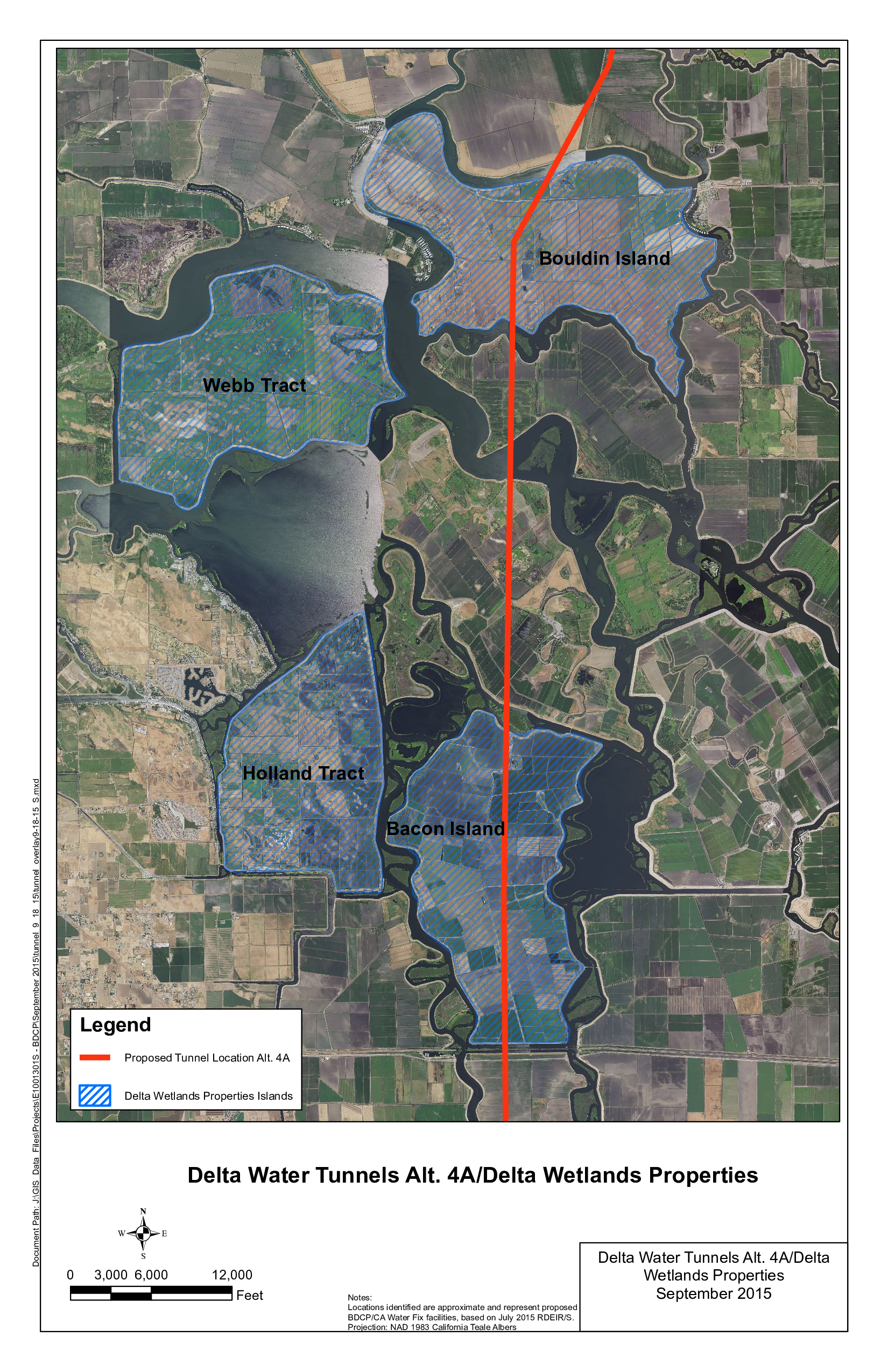
For months MWD has been considering the purchase of islands now used for farming. The islands mirror the path of the plan for the Delta Tunnels proposal.

The four island deal includes Bouldin Island, Webb Tract, Holland Tract, and Bacon Island. They cover approximately 20,000 acres of the Delta. Here (and below) is a map of the islands in the path of the Delta Tunnels.

Barbara Barrigan-Parrilla, executive director of Restore the Delta spoke on the matter.

“It is troubling for the Delta region that Metropolitan Water District is going to acquire such a significant portion of Delta land and Delta water rights,” she said. “They have the resources to change law and policies statewide to maximize their access to Delta water in their favor. They will own two islands that are directly in the path of the proposed Delta Tunnels project, eliminating eminent domain concerns for that portion of tunnels construction. We believe that having MWD as a neighbor is an existential threat to the future of the Delta and Delta communities.”
Delta Tunnels opponents note that after nine years and a quarter of a billion dollars spent on the proposal, Delta Tunnel backers have still has not produced a legally acceptable plan that can pass environmental standards. On October 30, 2015 the U.S. Environmental Protection Agency issued the Draft Environmental Impact Report a failing grade of “Inadequate” due to lack of science about the impacts on the Delta ecosystem and endangered species.

For more information on the Restore the Delta visit www.restorethedelta.org.
tunnel_overlay9-18-15_S-1

Annual Super Bowl weekend Sturgeon Derby in Bay Point, Feb 6 & 7

Thursday, February 4th, 2016
courtesy of originalsturgeonderby.com

courtesy of originalsturgeonderby.com

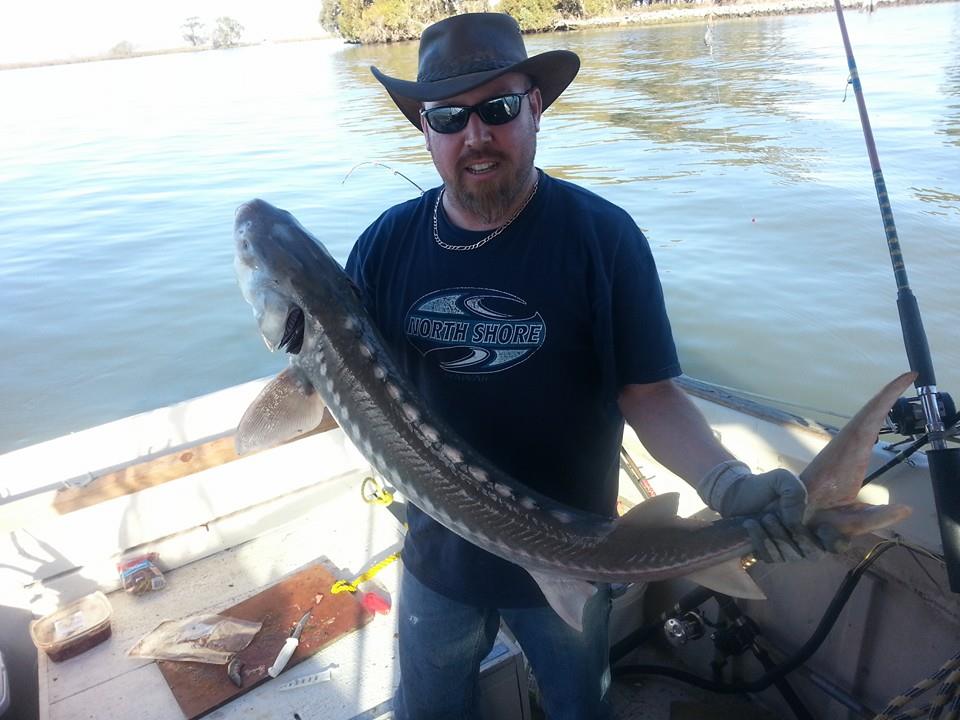
Sturgeon DerbyLost Anchor Bait & Tackle in Antioch is gearing up for their busiest weekend of the year, in preparation of the 32nd Original Sturgeon Derby, Feb 6 & 7, held each year on Super Bowl weekend. Over 1,100 anglers are expected to be in East County for the derby.

To get your bait and supplies for the derby, stop by the store at 908 West 2nd Street in Antioch’s historic, downtown Rivertown. Then sign up for the derby at McAvoy Harbor at 1001 McAvoy Road in Bay Point.

“We are flying in lots of bait this evening,” said Steffen Masters, owner of Lost Anchor. “So we should be all set up and ready to go Friday and Saturday.”

Call them for the details at 925 384-5005.

The derby is sponsored by the Foundation Sportsman’s Club in Bay Point. For more information visit www.originalsturgeonderby.com.

Rep. McNerney blasts “WaterFix” tunnels plan, foes claim it will devastate the Delta region, a waste of money

Tuesday, October 6th, 2015

Stockton, CA – On Tuesday, standing in the heart of the Sacramento-San Joaquin River Delta, Congressman Jerry McNerney (CA-09) held a press conference where he voiced his opposition to what he described as Governor Jerry Brown’s “WaterFix” tunnels plan, and explained why this ill-advised plan would devastate the Delta’s fragile ecosystem and hurt the families, farmers, and businesses in the region. He stressed his position while the public comment period for the plan‘s environmental review documents remains open through the end of October. The Congressman also highlighted why the plan is not the right solution for managing California’s water supply, and the need to pursue alternative, forward-thinking solutions.

Red flags have been raised across the board on the Governor’s tunnels plan that does nothing to fix the state’s existing water supply management and severe drought problems. From the underlying science and environmental impacts to the projected financial costs, this ‘fix’ is riddled with uncertainty every step of the way,” said McNerney. “The only thing clear is that the tunnels are a repackaging of old ideas that waste billions of dollars and threaten the way of life for an entire region without creating a single new drop of water.”

The Governor’s plan requires the construction of two enormous tunnels, 40 feet in diameter and 30 miles long, and would use three intakes to get water from the Sacramento River. The plan also calls for additional water pumps to be built at an expanded Clifton Court Forebay, an existing reservoir near Tracy. The new and existing pumps would maintain optimal water levels in the forebay and move water from the new tunnel outlets, through San Joaquin County, to existing canals that distribute water across the state.

Yet, these environmental review project documents show significant financial concerns and negative impacts for the Delta region. At a cost of approximately $16 billion, the tunnels would yield a minimal return on investment when it comes to new water supply. Every water user in the Delta could be injured from the changes in water quality, quantity, and levels as a result of the tunnels. The potential increase in salinity and the resulting contamination to crops grown in the Delta region is also a major concern. State contractors are also making plans to acquire as many as 300 farms in the Delta in order to construct the tunnels.

Construction from the tunnels would cause serious disruption and irreparable damage to farms, communities, and the environment. While we cannot afford to waste money on this wrong, outdated approach, we also cannot just say no,” added McNerney. “We should be using our resources to fund innovative, forward-thinking solutions that create new water and take pressure off the Delta by boosting regional self-sufficiency across the state.”

Speakers at the press conference included: Barbara Barrigan-Parrilla, Executive Director of Restore the Delta; Jeffery Michael, Director of the Center for Business and Policy Research at University of the Pacific; and Tom Zuckerman, third generation Delta farmer, among other regional stakeholders.

Fourteen years of proposed tunnel construction will decimate the Delta’s $5.2 billion annual agricultural economy, and destroy family farms dating back to the 1850’s. 500,000 acres of Delta farms cannot survive dewatering & construction running 24-hours a day, seven days a week, for fourteen years,” said Barbara Barrigan-Parrilla, Executive Director of Restore the Delta. “Farming families cannot survive being left for fourteen years with homes with no water service, no access to their property, and no farming income.”

According to the current documents, the Tunnels will deliver little to no new water, and that assumption is critical because it delivers little to no new water to those paying the $17 billion tab,” said Jeffrey Michael, Director of the Center for Business and Policy Research at the University of the Pacific. “The Tunnels project described in the environmental impact report is not financially feasible. It makes no economic sense for the water agencies sponsoring the project, and certainly makes no economic sense for the state as a whole.”

The current drought reveals the stupidity of blowing $15 to $50 billion on tunnels which don’t increase the water supply instead of conservation, groundwater storage in wet years, and recycling projects leading to regional self-sufficiency at a far cheaper cost,” said Tom Zuckerman, a third generation Delta farmer.

Last month, McNerney, along with Northern California House Democrats, sent a letter to Governor Jerry Brown expressing their concerns with the “WaterFix” tunnels plan. The letter argues that the multibillion-dollar tunnels fail to increase water supply, devastate an already fragile Delta ecosystem, and divert funding from more effective statewide water solutions for California. The letter also urges the Governor to focus on forward-thinking solutions like conservation, efficiency, recycling, stormwater capture, and groundwater recharge.

In July of this year, McNerney also voiced his concerns over the irreversible damage the “WaterFix” tunnels plan would cause to the Delta region.

He has pursued and expanding bold, innovative, technological solutions that create more water and address the energy-water nexus as a part of a comprehensive approach to address California’s severe drought crisis.

In August of this year, McNerney hosted a California Drought Solutions Forum that brought together farmers, water technology innovators, policy makers, state government, academia, and others to discuss how to advance the crucial water and energy efficient technological solutions that are needed to respond to the ongoing drought.

He has also introduced bipartisan legislation to establish a smart water management pilot program meant to spur innovative projects. And, the Congressman introduced legislation calling on Congress to authorize 27 regional water recycling projects that can create water for irrigation, agriculture, conservation, and increase the potable water supply.

Congressman Jerry McNerney represents California’s 9th Congressional District that includes portions of Antioch, East Contra Costa County, and San Joaquin and Sacramento Counties. For more information on Rep. McNerney’s work, follow him on Facebook and on Twitter @RepMcNerney.