Archive for the ‘Delta & Environment’ Category

Diane Burgis receives Women Improving the Environment Award from the Contra Costa Women’s Hall of Fame

Wednesday, March 23rd, 2016

Diane Burgis, a trustee on the East Bay Regional Parks District Board and Executive Director of Friends of the Marsh Creek Watershed received the Women Improving the Environment Award from the Contra Costa Women’s Hall of Fame, Tuesday night in Concord.

The Board of Supervisors established the Contra Costa Women’s Hall of Fame in October 1997 to acknowledge those exceptional, multifaceted women who have enhanced life in Contra Costa County through their careers and volunteer activities.

The honorees have made a difference through their efforts towards equity, innovation, service or achievement in commerce or community outreach.

Burgis was nominated by Susan Morgan, a Director on the Ironhouse Sanitary District Board.  “Through Diane Burgis’ leadership as Executive Director of the Friends of the Marsh Creek Watershed, the protection of natural resources including creeks, water quality and open space has become a priority to our community and its leaders,” said Morgan.  “Much of Diane’s work has been funded part time and she was able to accomplish great things for our environment and the Watershed by working beyond her paid hours and by recruiting and encouraging support from volunteers in the community.”

Marsh Creek is one of the fastest urbanizing watersheds in California, and the creek flows for 30 miles through the rapidly growing communities of Brentwood, Oakley and Antioch in eastern Contra Costa County and into the Sacramento-San Joaquin Delta.

“I am honored to receive this award on behalf of the many volunteers who contribute their time and talent to protecting, conserving and restoring the Marsh Creek Watershed,” said Burgis.

Burgis is a candidate for County Supervisor in District 3 in the June election. This is the second honor for her since she entered the race.

Viewing party of Open Roads with Doug McConnell featuring a segment on Marsh Creek, Sunday

Wednesday, March 16th, 2016

Friends of Marsh Creek WatershedBy Friends of Marsh Creek Watershed

Join us Sunday March 20th at 6PM for a viewing party of Open Roads with Doug McConnell featuring a segment on Marsh Creek.  Friends of Marsh Creek Watershed invited our friends from Save Mount Diablo, the John Marsh Historical Trust & the Independence High School Outdoor Wetlands Learning (OWL) Program to participate in a quick look at Marsh Creek top to bottom.

We will have food and soft drinks for $10.  This is a family event!

You can attend without eating just sign up for a free ticket.

When: Sunday, March 20, 2016 from 6:00 PM to 8:30 PM (PDT) – Add to Calendar

Where: Providence Bar & Eatery – 2085 Main Street, Oakley, CA 94561 – View Map

Southern California water agency to purchase Delta islands, could advance Delta Tunnels project

Thursday, March 10th, 2016

At a closed session board meeting Wednesday morning, the Metropolitan Water District of Southern California authorized the purchase of four islands in the San Francisco Bay-Delta for an undisclosed sum.

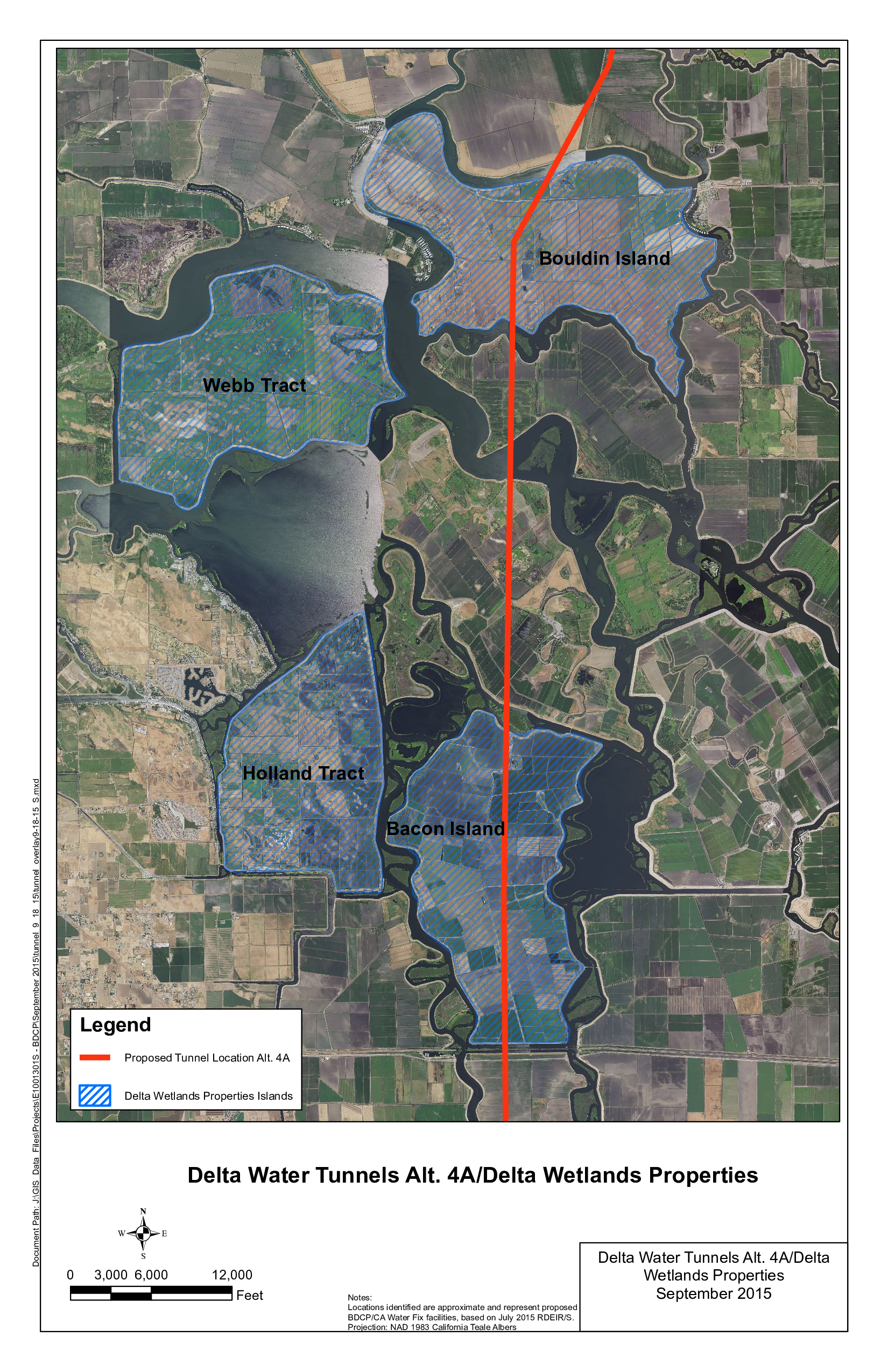
The deal is highly controversial in Northern California as it would put Southern California’s most powerful water agency in control of a group of Sacramento-San Joaquin Delta islands that can serve as water storage areas or entry points for the proposed $15 billion Delta Tunnels projects.
For months MWD has been considering the purchase of islands now used for farming. The islands mirror the path of the plan for the Delta Tunnels proposal.

The four island deal includes Bouldin Island, Webb Tract, Holland Tract, and Bacon Island. They cover approximately 20,000 acres of the Delta. Here (and below) is a map of the islands in the path of the Delta Tunnels.

Barbara Barrigan-Parrilla, executive director of Restore the Delta spoke on the matter.

“It is troubling for the Delta region that Metropolitan Water District is going to acquire such a significant portion of Delta land and Delta water rights,” she said. “They have the resources to change law and policies statewide to maximize their access to Delta water in their favor. They will own two islands that are directly in the path of the proposed Delta Tunnels project, eliminating eminent domain concerns for that portion of tunnels construction. We believe that having MWD as a neighbor is an existential threat to the future of the Delta and Delta communities.”
Delta Tunnels opponents note that after nine years and a quarter of a billion dollars spent on the proposal, Delta Tunnel backers have still has not produced a legally acceptable plan that can pass environmental standards. On October 30, 2015 the U.S. Environmental Protection Agency issued the Draft Environmental Impact Report a failing grade of “Inadequate” due to lack of science about the impacts on the Delta ecosystem and endangered species.

For more information on the Restore the Delta visit www.restorethedelta.org.

tunnel_overlay9-18-15_S-1

Annual Super Bowl weekend Sturgeon Derby in Bay Point, Feb 6 & 7

Thursday, February 4th, 2016
courtesy of originalsturgeonderby.com

courtesy of originalsturgeonderby.com

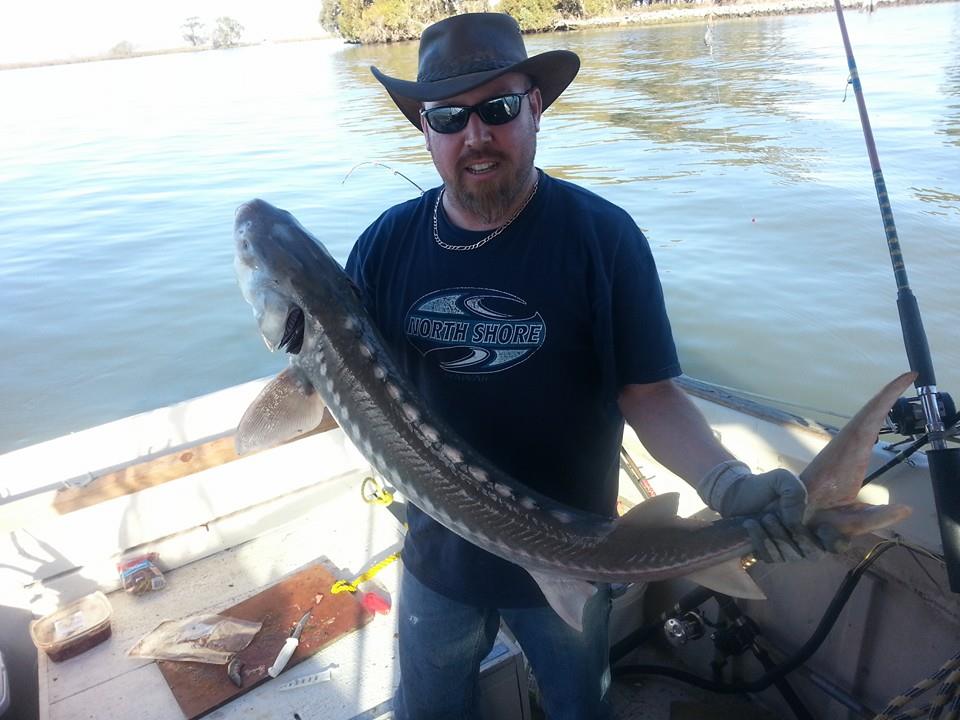
Sturgeon DerbyLost Anchor Bait & Tackle in Antioch is gearing up for their busiest weekend of the year, in preparation of the 32nd Original Sturgeon Derby, Feb 6 & 7, held each year on Super Bowl weekend. Over 1,100 anglers are expected to be in East County for the derby.

To get your bait and supplies for the derby, stop by the store at 908 West 2nd Street in Antioch’s historic, downtown Rivertown. Then sign up for the derby at McAvoy Harbor at 1001 McAvoy Road in Bay Point.

“We are flying in lots of bait this evening,” said Steffen Masters, owner of Lost Anchor. “So we should be all set up and ready to go Friday and Saturday.”

Call them for the details at 925 384-5005.

The derby is sponsored by the Foundation Sportsman’s Club in Bay Point. For more information visit www.originalsturgeonderby.com.

Rep. McNerney blasts “WaterFix” tunnels plan, foes claim it will devastate the Delta region, a waste of money

Tuesday, October 6th, 2015

Stockton, CA – On Tuesday, standing in the heart of the Sacramento-San Joaquin River Delta, Congressman Jerry McNerney (CA-09) held a press conference where he voiced his opposition to what he described as Governor Jerry Brown’s “WaterFix” tunnels plan, and explained why this ill-advised plan would devastate the Delta’s fragile ecosystem and hurt the families, farmers, and businesses in the region. He stressed his position while the public comment period for the plan‘s environmental review documents remains open through the end of October. The Congressman also highlighted why the plan is not the right solution for managing California’s water supply, and the need to pursue alternative, forward-thinking solutions.

Red flags have been raised across the board on the Governor’s tunnels plan that does nothing to fix the state’s existing water supply management and severe drought problems. From the underlying science and environmental impacts to the projected financial costs, this ‘fix’ is riddled with uncertainty every step of the way,” said McNerney. “The only thing clear is that the tunnels are a repackaging of old ideas that waste billions of dollars and threaten the way of life for an entire region without creating a single new drop of water.”

The Governor’s plan requires the construction of two enormous tunnels, 40 feet in diameter and 30 miles long, and would use three intakes to get water from the Sacramento River. The plan also calls for additional water pumps to be built at an expanded Clifton Court Forebay, an existing reservoir near Tracy. The new and existing pumps would maintain optimal water levels in the forebay and move water from the new tunnel outlets, through San Joaquin County, to existing canals that distribute water across the state.

Yet, these environmental review project documents show significant financial concerns and negative impacts for the Delta region. At a cost of approximately $16 billion, the tunnels would yield a minimal return on investment when it comes to new water supply. Every water user in the Delta could be injured from the changes in water quality, quantity, and levels as a result of the tunnels. The potential increase in salinity and the resulting contamination to crops grown in the Delta region is also a major concern. State contractors are also making plans to acquire as many as 300 farms in the Delta in order to construct the tunnels.

Construction from the tunnels would cause serious disruption and irreparable damage to farms, communities, and the environment. While we cannot afford to waste money on this wrong, outdated approach, we also cannot just say no,” added McNerney. “We should be using our resources to fund innovative, forward-thinking solutions that create new water and take pressure off the Delta by boosting regional self-sufficiency across the state.”

Speakers at the press conference included: Barbara Barrigan-Parrilla, Executive Director of Restore the Delta; Jeffery Michael, Director of the Center for Business and Policy Research at University of the Pacific; and Tom Zuckerman, third generation Delta farmer, among other regional stakeholders.

Fourteen years of proposed tunnel construction will decimate the Delta’s $5.2 billion annual agricultural economy, and destroy family farms dating back to the 1850’s. 500,000 acres of Delta farms cannot survive dewatering & construction running 24-hours a day, seven days a week, for fourteen years,” said Barbara Barrigan-Parrilla, Executive Director of Restore the Delta. “Farming families cannot survive being left for fourteen years with homes with no water service, no access to their property, and no farming income.”

According to the current documents, the Tunnels will deliver little to no new water, and that assumption is critical because it delivers little to no new water to those paying the $17 billion tab,” said Jeffrey Michael, Director of the Center for Business and Policy Research at the University of the Pacific. “The Tunnels project described in the environmental impact report is not financially feasible. It makes no economic sense for the water agencies sponsoring the project, and certainly makes no economic sense for the state as a whole.”

The current drought reveals the stupidity of blowing $15 to $50 billion on tunnels which don’t increase the water supply instead of conservation, groundwater storage in wet years, and recycling projects leading to regional self-sufficiency at a far cheaper cost,” said Tom Zuckerman, a third generation Delta farmer.

Last month, McNerney, along with Northern California House Democrats, sent a letter to Governor Jerry Brown expressing their concerns with the “WaterFix” tunnels plan. The letter argues that the multibillion-dollar tunnels fail to increase water supply, devastate an already fragile Delta ecosystem, and divert funding from more effective statewide water solutions for California. The letter also urges the Governor to focus on forward-thinking solutions like conservation, efficiency, recycling, stormwater capture, and groundwater recharge.

In July of this year, McNerney also voiced his concerns over the irreversible damage the “WaterFix” tunnels plan would cause to the Delta region.

He has pursued and expanding bold, innovative, technological solutions that create more water and address the energy-water nexus as a part of a comprehensive approach to address California’s severe drought crisis.

In August of this year, McNerney hosted a California Drought Solutions Forum that brought together farmers, water technology innovators, policy makers, state government, academia, and others to discuss how to advance the crucial water and energy efficient technological solutions that are needed to respond to the ongoing drought.

He has also introduced bipartisan legislation to establish a smart water management pilot program meant to spur innovative projects. And, the Congressman introduced legislation calling on Congress to authorize 27 regional water recycling projects that can create water for irrigation, agriculture, conservation, and increase the potable water supply.

Congressman Jerry McNerney represents California’s 9th Congressional District that includes portions of Antioch, East Contra Costa County, and San Joaquin and Sacramento Counties. For more information on Rep. McNerney’s work, follow him on Facebook and on Twitter @RepMcNerney.


Volunteers needed for annual California Coastal Cleanup Day in Antioch, Saturday, Sept. 19

Wednesday, September 16th, 2015

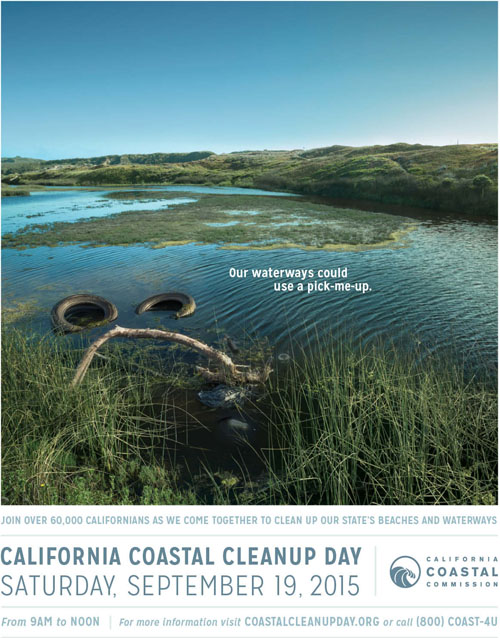
Coastal Cleanup 2015The 32nd Annual California Coastal Cleanup Day, the state’s largest volunteer event, will take place on Saturday, September 19th 2015 from 9:00 AM to Noon. The event is expected to draw more than 70,000 volunteers who will combat marine debris at over 800 locations throughout the state by removing the trash that has accumulated on California’s beaches and inland shorelines over the past year. Get out there, join the effort in Antioch. There are three locations to choose from: Antioch Marina, Prewett Park & Fulton Shipyard. Register and choose your location by visiting http://www.ci.antioch.ca.us/Environment/Coastal-Cleanup-Day/.

Restore the Delta offering bus rides to Sacramento for Tuesday public hearings on Delta Tunnels

Sunday, July 26th, 2015

By Barbara Barrigan-Parilla, Restore the Delta

One of two public hearings on the Delta tunnels project will be held in Sacramento on Tuesday, July 28. They are making it an open house so that they don’t have to listen to public comments or respond to the outrage of hundreds of thousands of Californians who oppose the destruction the largest estuary on the west coast of the Americas.

Help us transform the open house.

Our goal: a video of how large we really are to share with the Secretary Jewell at the Department of the Interior and with President Obama. We will provide you with insightful questions to ask, help you craft your own thoughts, and plan some spirited, yet respectful activities to transform their dull open house into a party to oppose the tunnels. Let’s win this thing once and for all! We need to pack the “public hearings” on the Delta Tunnels!!

Mark your calendars for Tuesday in Sacramento — that’s where we will be from 3:00 to 5:30 p.m at the Sheraton Grand Hotel in downtown.

Restore the Delta is hosting buses to the “Open House”/Public Hearings on the new Delta Tunnels Environmental Impact Report.

Sacramento Hearing: Tuesday July 28, 2015

3-5pm Sheraton Grand Hotel, 1230 J Street, Sacramento

Buses to Event:

Antioch: 1:30pm – 115 Lauritzen Ln, Oakley

Discovery Bay: 1:30pm – 871 Marina Blvd.

RSVP to Jennifer@restorethedelta.org or 209-475-9550

If you cannot make the July 28 date from 3:00p to 7:00p, there is a second public meeting on July 29 in Walnut Grove (see here).

Rep. McNerney calls on Congress to authorize regional water recycling projects

Monday, July 6th, 2015

Antioch, CA – Recognizing that water recycling is a critical part of a larger, comprehensive approach to addressing California’s drought crisis, Congressman Jerry McNerney (CA-09) announced on Thursday, July 2, that he would introduce legislation calling on Congress to authorize 27 additional regional water recycling projects. To highlight this announcement, McNerney toured Delta Diablo, the site for one of the water recycling projects he believes needs to be authorized.

I’m calling on Congress and introducing legislation to authorize more regional water projects – because expanding water recycling is one component of a comprehensive solution needed to address California’s long-term drought challenges,” said McNerney. “In this extreme drought, California communities a struggling to conserve the limited water available. That’s why it’s important to continue investing in water recycling technologies that treat wastewater and augment current supplies. Funding these projects creates additional water supplies available to ease pressure off the Delta, irrigate public spaces, grow crops, increase the potable water supply, and support environmental restoration.”

These 27 projects, when funded, can provide over 100,000 acre feet of new water – enough water to meet the needs for over half a million residents. These water projects need Congressional authorization in order to compete for Title XVI construction funds through the Bureau of Reclamation.

We thank Congressman McNerney for his leadership in introducing legislation which will proactively support new drought-tolerant water sources while protecting the Delta.” said Gary Darling, spokesperson for the Western Recycled Water Coalition.

Developing recycled water reduces dependence on Delta supplies. Recycled water projects like Delta Diablo improve water supply reliability, and reduce wastewater discharge into the fragile Bay-Delta environment.

When constructed, the Delta Diablo Recycled Water Project will provide more than 4,000 acre-feet per year of recycled water to municipal, commercial, and industrial users in Antioch and Pittsburg – equivalent to meeting the water needs of 16,000 households.

We need to look at bold, forward-thinking solutions that use new technology and scientific advancements to improve the management and conservation of California’s water supply. This will better prepare communities for severe drought conditions in the future,” added McNerney.

List of 27 Water Recycling Projects

Delta Diablo recycled water project – serving Antioch

Delta Diablo high purity water treatment facility – serving Antioch

Brentwood recycled water project

Ironhouse Sanitary District Cypress recycled water project – serving Oakley

Ironhouse Sanitary District industrial recycled water project – serving Oakley

Ironhouse Sanitary District direct potable reuse project – serving Oakley

Benicia recycled water project to Valero refinery

Central Dublin recycled water distribution and retrofit project

Central Redwood City recycled water project

Concord recycled water project

Contra Costa County refinery recycled water project, phase 1

Dublin recycled water expansion project

Fresno east central recycled water facility

Fresno downtown recycled water distribution

Fresno southwest recycled water distribution

Hayward recycled water project

Monterey peninsula groundwater replenishment project, phase 1

Mountain View recycled water project.

North Valley regional recycled water project

Palo Alto recycled water pipeline project

Pleasanton recycled water project

Potable Reuse in Santa Clara County, phase 1

San Jose Water Company recycled water project

Sunnyvale continuous recycled water production project

West Bay Sanitary District Recycled Water Project

Wolfe Road recycled water project

Yountville recycled water project