Archive for the ‘Business’ Category

Antioch Council approves $435,000 small business relief package

Wednesday, August 26th, 2020

$15,000 for outdoor dining in downtown Rivertown; $15,000 for Chamber of Commerce to administer

By Allen Payton

During their meeting on Tuesday, August 25, 2020, the Antioch City Council approved allocating $300,000 in CARES Act funds allocation of $300,000 in CARES Act funding and reprogramming of $120,000 in the Economic Development Department budget towards COVID-19 small business relief including $15,000 for the Antioch Chamber of Commerce for the purpose of administering the small business grant program.

Economic Development Director Kwame Reed provided the staff presentation.

The Business License Tax Relief will be allocated as a reduction or as a rebate (after the full cost of the renewal has been paid) of $100 on the renewal of existing Antioch businesses.

To be eligible for the relief the business must meet the qualifications below:

  • Have a current/active business license as of March 17, 2020
  • Have paid or will have paid for a renewal prior to March 16, 2021
  • Have no more than 50 employees
  • Do not have a national-brand affiliation

This is a one-time relief and only eligible to one owner per business.

Small Business Grants will be funded by the City’s CARES Act allocation. The CARES Act states that payments from the Fund may be used to cover costs associated with the provisions of grants to small businesses to reimburse the costs of business interruption caused by required closures. Businesses will be able to apply for $5,000 grants. This amount will allow 60 grants to be provided to support eligible Antioch small businesses.

To be eligible, business must:

  • Have a physical location in the Antioch city limits
  • Hold a current Antioch business license for one (1) year prior to January 1, 2020
  • No more than 25 employees
  • Demonstrate they were unable to operate due to the Shelter Orders or sales were down more than 25% from the previous quarter or the same quarter last year Priority will be given to retail, personal service businesses, restaurants, and businesses that have not received federal assistance (PPP, EIDL, etc.).

No public comments were received.

Mayor Sean Wright recused himself, since he’s both a small business owner and the COO of the Antioch Chamber of Commerce. Mayor Pro Tem Joy Motts then acted in his place in overseeing discussion of the item.

Councilman Lamar Thorpe said, “I’m excited about this, and particular that the Chamber plays a role. My only question is oversight. Where does that rest? I appreciate the Chamber. But they do have some ideologues, out there. So, I want to make sure the oversight is the city and not those who have a political agenda.”

“The economic program manager and I will have oversight of the funding,” Reed said. “The funding will come from the City not the Chamber.”

“I am happy to hear this will be for all businesses that fit the criteria not just Chamber members,” Wilson said. She then asked if members of the Economic Development Commission will be involved.

The EDC was the commission to develop the program and made a presentation on what they labeled the “COVID-19 Recovery, Retention, and Thriving Plan” to the City Council on August 11, 2020.

Reed responded that he will check with the EDC Chairman to decide. “But we don’t want to slow down the process.”

Wilson then asked about the timeline.

“Ultimately it will be two weeks once the information has been established and created,” Reed said. “We are pushing for the applications to be due early October.”

Councilwoman Lori Ogorchock thanked, “Kwame and the commission for doing this.”

She asked about those businesses, such as hair salons and barber shops, that aren’t open, “can they still apply and hold on to those funds?”

“Yes,” Reed replied.

Motts said she was concerned that all businesses receive the information. “Did you say a one-week application period?”

“Yes,” Reed responded.

“I’m going to request council will consider an amendment…and that is for an establishment for outdoor dining for downtown,” Motts then asked. “It’s $15,000 from the CARES Act in emergency funds that I’m asking for…for barricades. We have a private investor investing millions of dollars in downtown…we have some significant wins. It would be great if the city could support their efforts.”

Thorpe then asked about outdoor dining in downtown. “It seems to me they’ll have to block off some parking. I don’t think that will cost $15,000 to the city.”

“I’ve checked with the city manager and it does require the purchase of barricades,” Motts said. “It might require the closing of one of the streets. But, for the streets that are open, we have to make sure there are barricades.

Ogorchock then asked, “that’s going to be coming up on the agenda (under Item 11), can we be discussing this, now Attorney Smith?”

“I was thinking whether this fit within the scope of the discussion, but I hadn’t come to a conclusion,” City Attorney Thomas Smith said.

“This should come under the Waterfront Committee later in the agenda,” Ogorchock said.

“That’s just about dissolving the Waterfront Committee,” Thorpe stated. “I’m not sure if this fits within the scope of this discussion.”

“To the extent that this creates barriers to accommodate outdoor dining it would be legitimate for the discussion of the CARES Act,” said City Manager Ron Bernal.

“Given that, it can fall within that scope…the talk about the expense of $15,000,” Smith said.

“It’s not my desire to take away but to add,” Motts shared.

“To spend $15,000 to block off some parking spaces…but if it does, it does,” said Thorpe.

“I just wanted to add that as City Manager Bernal mentioned, if a business wants to apply for a grant for putting out barriers for outdoor dining they can,” Reed explained. “At this time, I don’t believe there has been any additional funding allocated for this particular venture.”

“This came out of a committee, out of our Waterfront Committee,” Motts explained. “We’re already half-way through August and this won’t happen until October. There will come a time when outdoor dining won’t be feasible. I think this request is pretty reasonable.”

Thorp then asked Bernal, “assuming a restaurant in downtown came to the city and asked to set aside parking spaces in front of their business, you have a right to do that, right?”

“Yes,” Bernal responded. “The cost Mayor Pro Tem Motts came up with is to put out water filled barrels in case cars might run into them. The cost of putting out barriers of about 120 feet in length is about $10,000. I put in another $5,000 for putting them out, as a conservative estimate.”

“I didn’t think we were going to go purchase barriers,” Thorpe stated.

“I’m personally fine with Joy’s recommendation,” he added.

“I’m fine with the idea of outdoor dining,” Wilson said. “With the recommendations that the Economic Development Commission brought forward that it doesn’t take away from that. I’m concerned if we carve away it will impact their recommendations.”

“If the $15,000 is in addition to not part of this funding from the CARES Act, I’m unclear about that,” said Attorney Smith.

“So, the increase in funding from $300,000 to $315,000 does exist in the CARES Act,” Bernal said. “Director Reed brought back a budget $60,000 more than what he had originally.” So, the council can add the $15,000 to the budget.

“My recommendation would be to increase it to $315,000,” Motts said.

“Is it something that we’re going to have to come back and look at,,,which restaurants are going to get it, or will it be out of the $5,000 grant?” Ogorchock asked.

“I believe this would be a separate thing,” Motts said.

Thorpe then said, “the resolution is for $315,000, we’re not taking it from anywhere else. With that I will make a motion.”

“I’m not done with my question,” Ogorchock said.

“You can’t continue once a motion is made,” Thorpe said.

“It doesn’t matter,” Ogorchock responded.

“Yes, it does matter,” said Thorpe.

“The city would actually go out and purchase the barricades,” Reed said. “It would be coming through the CARES Act that the city could utilize.”

“Thank you,” Ogorchock responded.

“I will read the motion,” Thorpe then said. He then moved approval of allocating $315,000 for the business relief program.

Ogorchock seconded the motion and it passed on a 4-0 vote.

In Memoriam: Antioch FastSigns owner Randy Sabatte loses battle with cancer, goes home to be with the Lord at 60

Tuesday, August 4th, 2020

Member of the Berkeley Farms Dairy business family.

Randall Allen “Randy” Sabatte

January 3, 1960 – July 23, 2020

On Thursday, July 23, 2020, Randall Allen Sabatte passed away after a short battle with cancer. He went home to be with the Lord at the age of 60.

Randy was born on January 3, 1960, in Oakland, CA. He graduated from Washington High School in Fremont in 1978. His career path took him from real estate to working at the family business, Berkeley Farms Dairy, to eventually owning his own franchise business with FastSigns in Antioch, California.

One of his most memorable jobs was frying chicken at Kentucky Fried Chicken where he met the love of his life, Debbie Renee Hunter. Randy and Debbie shared a spiritual journey together in marriage for 38 years after marrying on October 17, 1981. They traveled extensively between ski slopes, the Grand Caymans, cruises in the Caribbean, Alaska, snorkeling in Mexico and most recently to Wyoming in a blizzard on a snowmobile. One of their proudest accomplishments was raising their three beautiful children – one daughter, Kristin, and two sons, Michael and Joel.  Randy adored his four grandchildren Esmae, Adelynn, Sage, and Jack (and one on the way he would call, “Jeff”).

Randy had a strong passion for volunteering and serving his local community, especially working with small businesses to help them achieve their individual goals in growing their own brands. Many in the community admired and respected Randy for his humble, kind spirit and his love for taking on any challenge.  He tackled any project whether it be big or small with enthusiasm. The expression of his artistic talents and attention to detail resulted in products that were admired and valued by many. Randy highly valued the relationships he worked hard to build with his clients. He went out of his way to keep his customers and own staff happy.

Randy shared his faith with teens and adults alike through the ministry of Young Life. He and Debbie were part of the team that helped launch Young Life in Brentwood, CA in 2006. He had Young Life clubs in his living room where 30-40 teens would gather weekly. He served as a volunteer leader, committee member, donor, and behind-the-scenes specialist. Because of their involvement in this ministry, Randy and Debbie’s home was an open door to many.

Randy loved the outdoors including camping, jeeping, running, snowboarding, and coaching for his sons’ teams (soccer/baseball/Boy Scouts).  Randy was a kid at heart.  He loved being around and helping children. He was known as The Leprechaun, Olaf, and “Mr. Debbie” at Apple Tree Christian Preschool, the business Debbie owns.

Randy is survived by his parents Norman Sabatte and Joanne Spiller, Pete Spiller; wife of 38 years Debbie; daughter Kristin (Kevin) Hazelton; son Michael (Chelsea); son Joel (Jessica); sisters Denise Sabatte-Pedersen, Janine Sabatte-Caspillo, Deanne Sabatte, and his five grandchildren: Esmae, Adelynn, Sage, Jack (+1 on the way).

A celebration of life service will be held on August 13, 2020 at Golden Hills Community Church in Brentwood at 9:00am. Check in begins at 8:30am for temperature scans. Bring your own chair and mask. In lieu of flowers and/or gifts, Randy requested donations would be made to Young Life’s Woodleaf camp, a ministry he was very passionate about. giving.younglife.org/randysabatte


New Name. Same Game. Delta Conveyance Project – tunnel moves forward – Part 2: Stakeholders & Opposition

Saturday, July 18th, 2020

County residents opposed to project work to limit impact and secure benefits if it is built

“I feel in a lot of ways this committee is just going through the motions. I’m starting to feel like a pawn in a chess game.” – Antioch resident Jim Cox.

By Allen Payton

What was planned as two tunnels beneath the California Delta to divert fresh water from north of the Delta to areas south, is now a single tunnel plan that is referred to as the Delta Conveyance Project (DCP). The effort is being led by the Delta Conveyance Design and Construction Authority (DCA) which was formed by and makes recommendation to the California Department of Water Resources (DWR).

In the first part of this two-part series, you read about the background and latest efforts to move the project forward. In this part, you will hear from local voices who serve on the Stakeholders Engagement Committee (SEC) and what they are doing to both fight the tunnel, and if it is built to limit its impact and to secure any benefits for our county and the Delta.
Stakeholders Engagement Committee – Local Voices

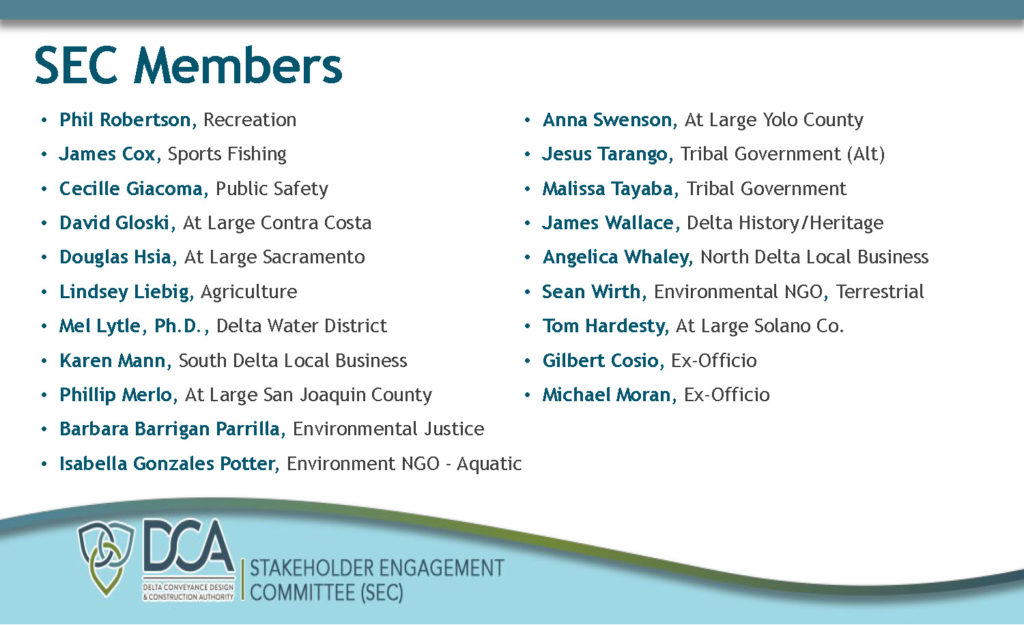
Because Contra Costa County and the water districts in the county either oppose or are neutral on the Delta tunnel project, no agency from the county is part of the DCA. But there are three people who live and one who works in Contra Costa County and serve on the Stakeholder Engagement Committee. They are Bethel Island resident and retired engineer David Gloski, Discovery Bay resident and real estate appraiser Karen Mann, Antioch resident Jim Cox, a retired fishing boat captain, and Oakland resident Michael Moran, who works for the East Bay Regional Park District as Supervising Naturalist at Big Break Regional Shoreline Visitor Center at the Delta in Oakley.

David Gloski, The Engineer – At Large Member

“I don’t want to understate that I’m against it and I appreciate the people fighting it,” said Gloski, who volunteered to be part of the SEC at the urging of others who also oppose the tunnel. “But I, having a home on the water and having an engineering background – and this DCA SEC group is more engineering focused – we want to make sure they don’t screw anything up.”

“The majority of the people on the stakeholder committee are probably against the tunnel,” he stated. “It includes the lady (Barbara Barrigan-Parrilla) from Restore the Delta. We’ve been effective in preventing them from doing things that don’t make sense and would negatively affect people in Contra Costa.”

“To me, they walk and chew gum at the same time. They’re working on designs and plans without having the permits. They have to do some of it or they don’t know what they’re asking to permit,” Gloski explained. “Similarly, we aren’t doing ourselves any benefit by just opposing it. Because if it does go through, we can get a lot of things done, like new roads, and parks. But you have to participate.”

“I’ve raised my hand to say, ‘if you’re going to build it, let’s get good things out of it, and make sure they don’t screw things up,” he reiterated. “I think the county is mistaken for not being more involved. The DCA made changes because of our inputs. Unfortunately, I’m not sure the inputs are the best from the county’s perspective. For example, an original plan included road and bridge improvements which were eliminated when we were successful in having a maintenance shaft moved further away from Discover Bay. So, you might have won the battle but lost the war.”

“I think we might benefit from more representatives. But right now, the county is just fighting it,” Gloski added.

To give your input to David Gloski, you can join his Facebook page, David Gloski DCA Stakeholder.

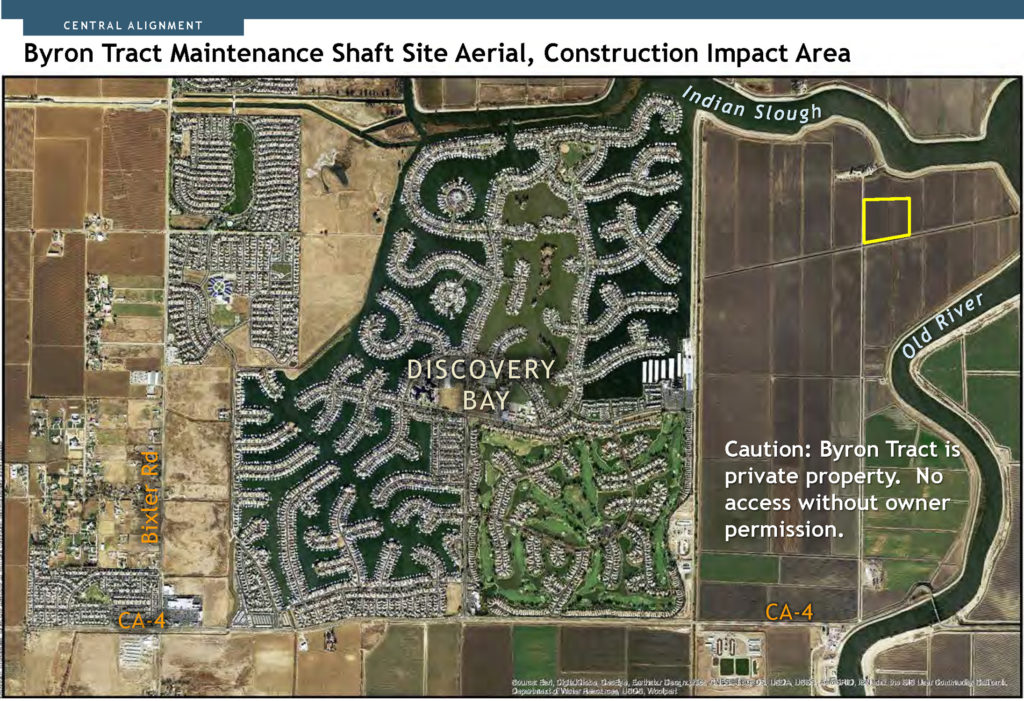
Mann expressed her concern for the location and proximity to Discovery Bay of one potential Maintenance Shaft. From DCA 2020-05-27-UpdatedMapBooks.

Karen Mann – South Delta Local Business

Mann, an appraiser in Discovery Bay, is another member of the stakeholders committee who opposes the tunnel, as the issue literally hits close to home for her like Gloski.

“I’m fighting for our Delta,” she said. “As I’m talking to you my grandchildren are loading the boat, because that’s what we do as a family. We spend time on the Delta.”

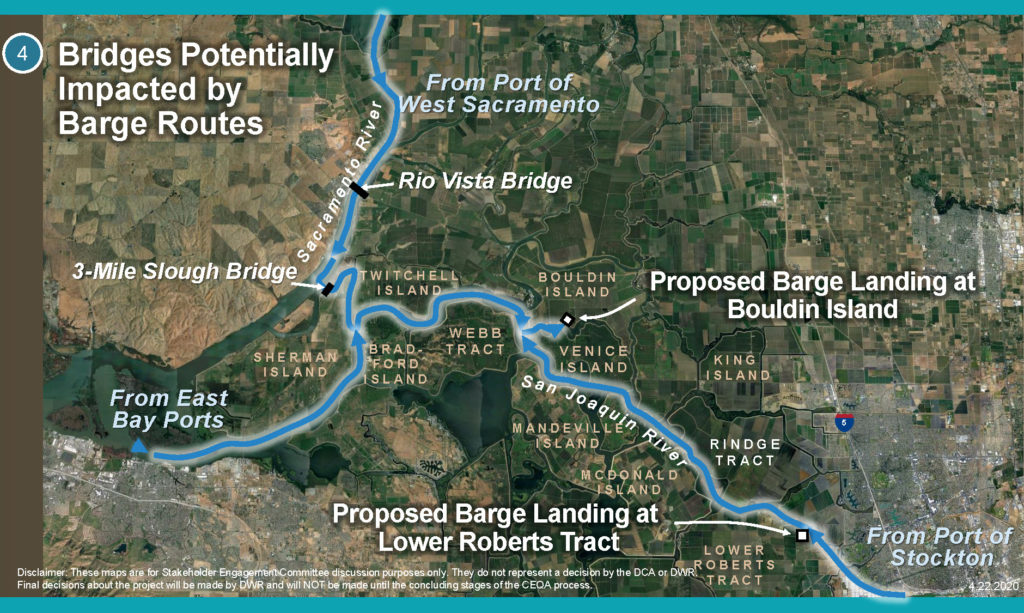
“I’m an active boater. I skipper my own 37-foot boat. I’m a very able-bodied skipper. My dad had me at the helm since I was 9 or 10 years old in San Pablo Bay,” Mann explained. “So, I’ve described to this group the terror that I had when I encountered a barge in the middle of Old River. That left me about 25’ (to get by it). My boat is 12-feet-wide. I could feel the propellers of the tugboat drawing me toward that barge. My boat weighs 22,000 lbs. Imagine if that was a ski boat with inexperienced skiers or a family with a father and his kids on board.”

“The number of barges every day that they were talking about loading, I told them ‘you better think twice. You will have lives of families and boaters on your hands,’” she continued.

Effort to Postpone Meetings & Work Due to COVID-19 Unsuccessful

“Through this whole pandemic thing, myself and a bunch of others have said ‘let’s hold off on these meetings’ because we can’t meet with our people,” Mann stated. “The chief engineer said, ‘we’re going to move forward, and we hate to leave you behind. But that’s how it goes. Governor Newsom wants this going.’”

“I piped up and said ‘it appears to me Gov. Newsom his been very busy with this pandemic thing and his three-hour-long press conferences each day, and the Delta tunnel is probably not at the forefront of his thinking,” she shared.  “For us to be told, ‘no, that’s out of the question, we’re on a timeline’, this is just not right.”

According to a report by the Sacramento News & Review, the effort to postpone the committee meetings and the work got a Sacramento County Supervisor and the Delta Protection Commission involved.

“The dust-up has caused Sacramento County Supervisor Don Nottoli to challenge one state official about transparency, while the Delta Protection Commission has officially asked California planners to halt their work on the tunnel during the virus outbreak. So far, that hasn’t happened,” reported the SN&R.

Contra Costa County Supervisor Diane Burgis serves on the Delta Protection Commission, which  “is supposed to safeguard the environmental and community health of the estuary as part of California’s landmark 1992 Delta Protection Act.”

But the committee meetings are continuing, just online for now, as most if not all other government meetings are currently throughout the state.

No Project Funding or Route, Yet

“I asked them where are we getting the money from? Apparently, there’s no checkbook. There’s no limit. There’s no talk about expenses. It’s like carte blanch. Money is no object,” Mann stated. “There isn’t an official route, yet. Because they’re trying to decide if there is going to be a central corridor which would be within 600 feet of the Discovery Bay water treatment plan and homes on the golf course.”

“That’s not the best of it,” she continued. “The best of it is they’re using their maps of that central location they would have taken that tunnel underneath the only waste treatment plant in the area.”

“They would also be going through our artesian wells,” Mann added.

“If there were any problems, “they would shut off the water and waste treatment for Discovery Bay. How could we live here? We’re not a third world country,” she said with a laugh.

“I’ve been very passionate about those two items,” Mann stated.

She, Cox and Moran all expressed concerns about trucks on Highway 4 east of Discovery Bay and how the committee’s efforts got that stopped.

“There was also going to be a maintenance shaft near Discovery Bay which would require truck traffic on Highway 4. Heavy duty trucks carrying the muck and dirt. Those bridges are old and couldn’t handle it,” she explained.

“Now they’re talking about using the eastern corridor closer to Stockton. But they told us ‘don’t get too excited. Nothing is decided. We’ll take your recommendations, but we will make our own decisions.’” That didn’t sit well with Mann.

“Is this how government is supposed to work?” she asked. “I will say they did listen on the barge issue. I think health and safety got them.”

Fire Marshal, DB Town Manager Shocked

“We took that information to the fire marshal and Discovery Bay Town Manager and they were shocked,” Mann shared. “Neither one of them knew about any of it. They both wrote impassioned letters. We have three fire stations that serve 128 square miles. The engineers thought we had nine stations.”

“So, who’s going to handle the issues…with a project like this?” she asked. “Someone’s going to get hurt and they’re going to need EMT’s. I guarantee you one of their trucks will have an accident and block traffic for hours, if not kill someone.”

“I’ve been sending the chief engineer photos of truck accidents and concerns that we have for our health and safety,” she continued. They had no idea of traffic count. They’re using traffic counts from five years ago from San Joaquin County and they don’t keep track of traffic on Highway 4 and the bridges in our county. So, their traffic counts are completely inaccurate.

“So, I’m wondering who’s really in charge here,” Mann said. “We’re supposed to trust them with building a tunnel 150 feet under ground? If they don’t have this basic information how can they handle the bigger issues?”

“The Delta has been something in my family since I was a child,” she shared. “It’s a way to keep families together. So, when you say Delta you’re talking about families. This life is too short, and you have to enjoy it while it lasts.”

Mann is both a residential and commercial appraiser, which is why she represents the business community on the committee.

She’s also the president of Save the California Delta Alliance.

“We have an attorney that got them to back out of the other tunnel project,” Mann shared.

“It’s just a bunch of homeowners. This is our home. The waterway is our backyard. Our playground. Don’t mess with it,” she concluded before heading out into the Delta for the weekend on the family boat.
From 2020-04-22-SECMeetingPresentation.

“Same Old Song and Dance” on Fish Protections Says a Frustrated Jim Cox – Sports Fishing

Antioch resident Jim Cox ran a six-pack, sport fishing charter boat for 23 years and has been in the Delta since the early 1980’s and is now retired.

“I’m there representing fishing interests,” he shared. “It’s been a very frustrating thing to be involved in. They want us to come back with input from our constituents. The most common thing I hear is ‘what’s going to happen with Clifton Court?’”

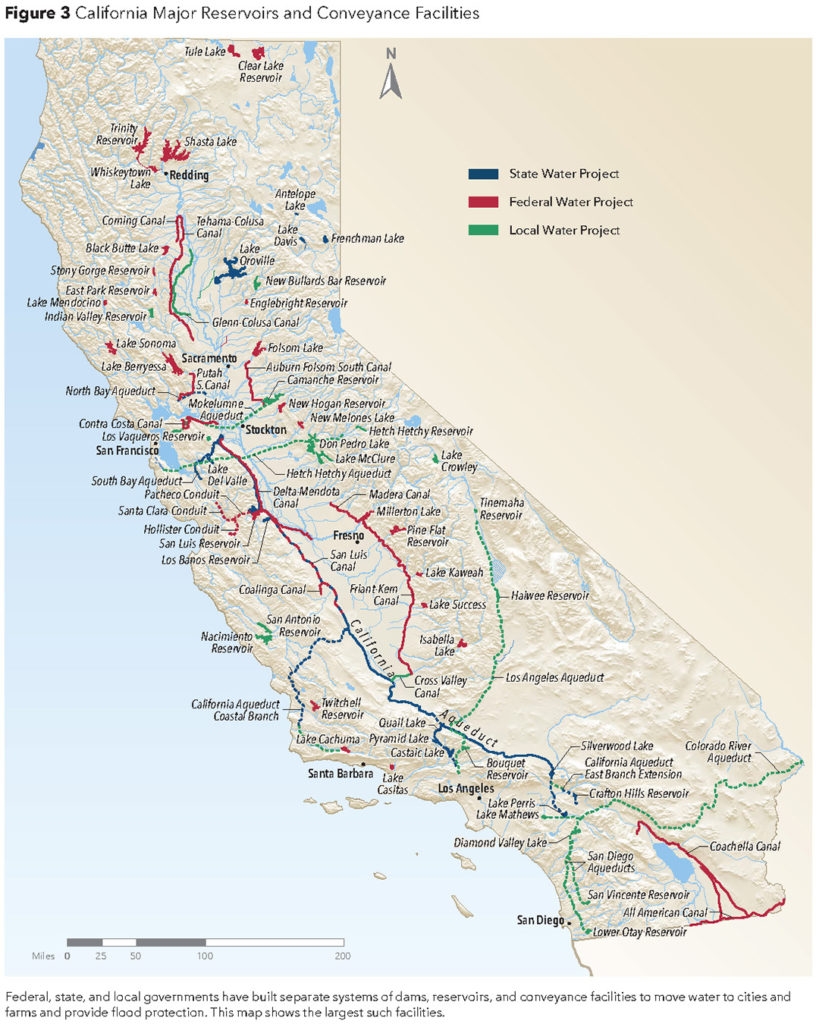
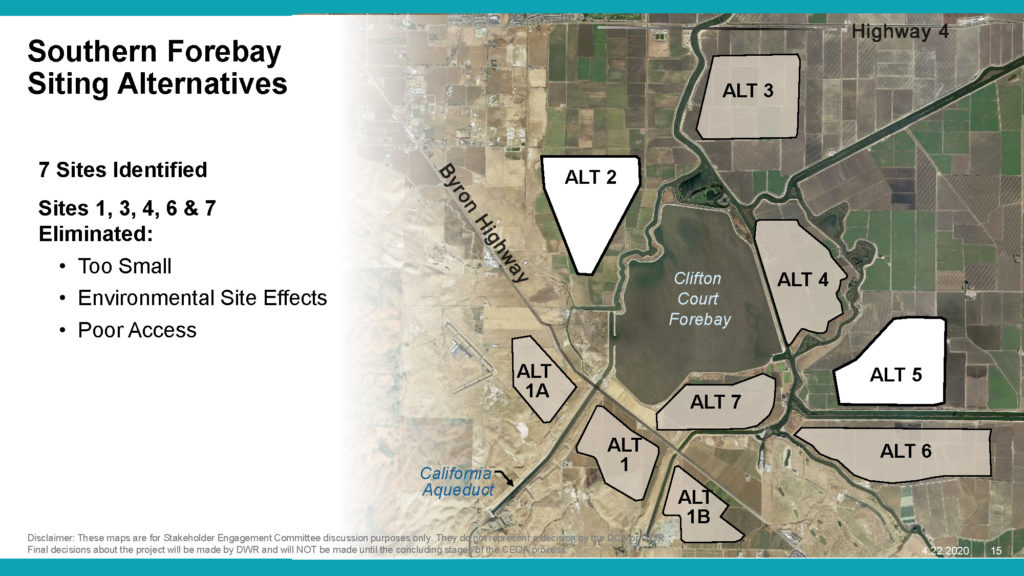
The Clifton Court Forebay is where the water is collected south of the Delta before being pumped further south.

Delta Smelt. Photo from DCA SEC.

“When the current is flowing in there, it’s so strong the fish can’t get out,” Cox explained. “The screens on the pumps are not designed that well. Estimates are anywhere from 15-50,000 striped bass that are trapped in there. They’re only 8 or 9 inches but they’re fully matured fish.”

“They say Clifton Court Forebay is a separate project,” he continued. “I’ve had conversations with Terry Buckman from DWR. The Delta Improvement Act of 2009 has the two goals of habitat restoration and less reliance for water supply. They’re definitely focused on the water supply.”

“They call it EcoRestore, which is part of DWR and the ironic thing is they say ‘we’re not working on that for another year or so.’ This committee will be disbanded before then,” Cox stated.

“This is the same song and dance that fishermen have been told for the past 25 years,” he complained. “In 1994 there was the CalFed agreement. The water contractors were supposed to build state of the art screens across Clifton Court so fish couldn’t get in. But it’s still never been built. “

‘Most of these DWR folks are in their 40’s so they weren’t around…and they’re taking the word for it from others at DWR,” said Cox.

“The real problem is predation (preying of one animal on another), primarily for striped bass,” he continued. “It is a problem because the current flows in there, year-round, 24 hours a day. Larger fish just stick around at the entrance and pick off the smaller fish. They try to make it sound like it’s the striped bass. It’s not. It’s the fact they never built the screens.”

“We were told Fish and Game have plans to remove predators. They have no plans for any such thing. They say it’s a useless idea. Once you get rid of one predator another species will move in,” Cox shared. “Then they said the problem is the outer screens. There aren’t any outer screens. It consists of rabbit wire fence to keep boats and floating logs out of Clifton Court. It has nothing to do with fish.”

“They won’t say anything of how they’re going to make it better. This is why it’s becoming a frustrating endeavor for me,” he stated. “On the one hand they are being responsive to some complaints. But it all revolves around building the tunnel.”
From 2020-04-22-SECMeetingPresentation.

“They won’t even listen to the fishermen. I’ve been tempted to resign a couple times over this. But, if I’m not there who’s going to bring this up?” Cox asked, rhetorically. “First, they talked about having the committee a year. But now they’re talking about extending it.”

“It’s very frustrating trying to get them to listen,” he added.

On finances Cox said “we get told things in bits and pieces. The plan is for all of this to be paid for by the water users, the water contractors. The fine print is they’ve agreed to this in theory, but not in reality. They’re not going to agree to anything until they see the final plan. Over the last year, they’ve been trying to do what took them three years originally on the twin tunnels, to finalize this plan, to be able to move forward.”

“When this COVID thing hit, they said everyone wants to continue to work on this. That’s BS,” he said echoing Karen Mann’s comments. “No one wanted to continue to do this. But they kept pushing on this because they have financing deadlines. So, nope. They’re going to keep on going.”

“I feel in a lot of ways this committee is just going through the motions. I’m starting to feel like a pawn in a chess game,” he said with a chuckle.

Another financial issue Cox shared about was the pay for the DCA’s executive director Kathryn Mallon, who is earning $47,000 per month in her role. That’s in spite of the $54 billion deficit the state is projecting due to the impacts of the COVID-19 pandemic.

Another report by the Sacramento News & Review covers that issue and the opposition from the water agencies that are expected to reimburse the state for her compensation.
Proximity of proposed sites to existing recreation facilities. Arrow points to Big Break in Oakley. From 2020-04-22-SECMeetingPresentation.

Parks District Employee Offers Different Perspective: Mike Moran – Ex-Officio

Mike Moran, although an Oakland resident, represents Contra Costa County interests on the SEC, having worked in Eastern Contra Costa County for 26 years, as of August 1st. He works for the East Bay Regional Park District at the Big Break Regional Shoreline in Oakley.

“Big Break was an asparagus farm that flooded in 1927,” he shared. It’s a 1,688 acre park that’s mostly under water. The East County trail runs through there. Plus, they have a 1,200 square foot model of the Delta on the ground.

“In my position at the park commission and the SEC, we don’t take a pro or a con on this issue. We try to interpret this thing and why it’s being proposed, why it’s being opposed, and not just build it or don’t build it,” Moran explained. “I’m an ex-officio giving folks’ perspective from the East Bay Regional Parks point of view. There’s not a direct correlation on the tunnel.”

“We have land out here and we have folks paying taxes to get access to that land. So, what does this mean? What is the impact going to be where our constituents live?” he asked.

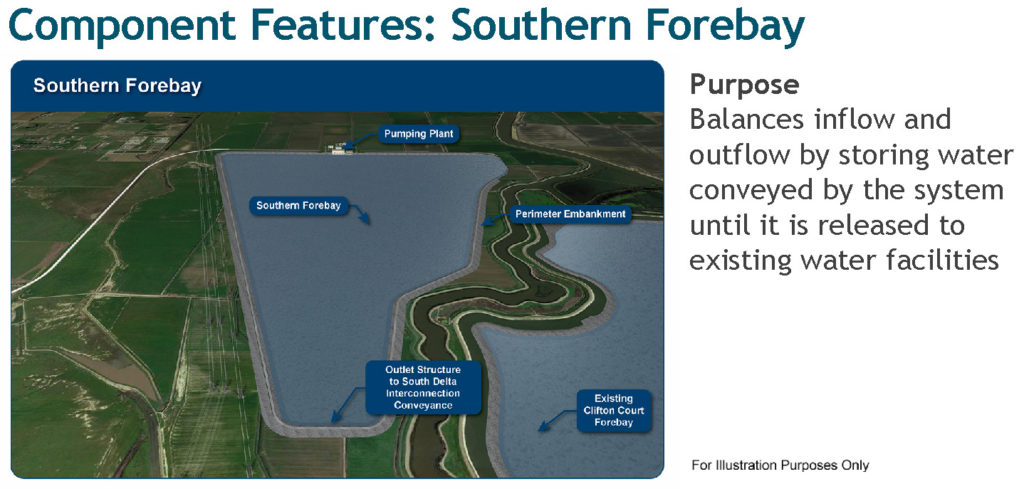
Proposed new Southern Forebay adjacent to Clifton Court Forebay. From 2019-12-11-DeltaConveyanceSystemOverview.

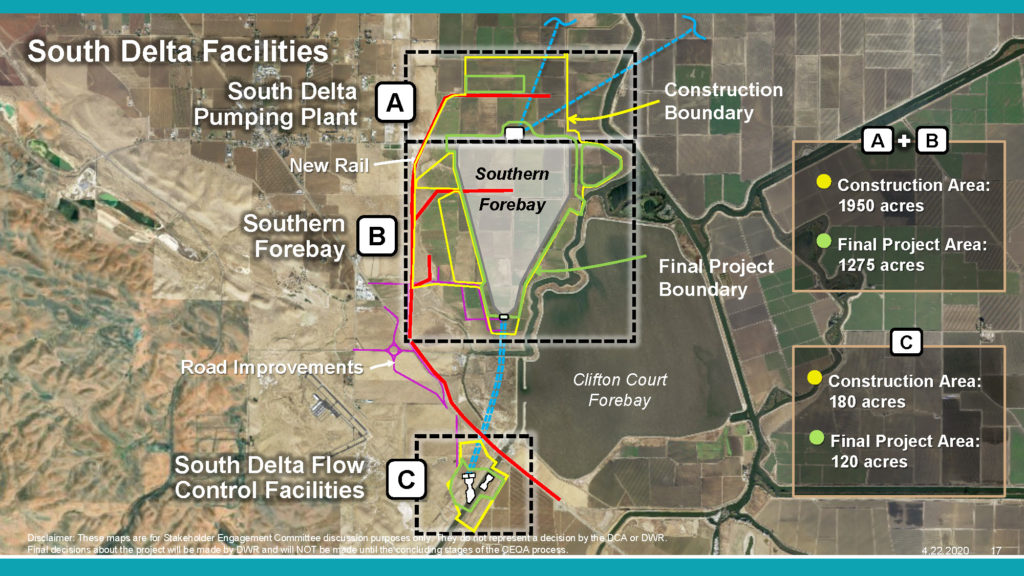
Moran also studied fisheries in grad school. Asked about the fish and Clifton Court Forebay that Jim Cox is concerned about, he said, “It’s part of the state water project, right now. The new forebay would be right next to Clifton Court, built to the west.”

However, Cox responded with, “The fact is that they still intend to use Clifton Court fifty-percent of the time. If the tunnel water was the only water heading into the canal then it would be fine, but that is not the case. Clifton Court will still be part of the water system and that is why I feel improvements to it should be part of the project, not a separate project.”

“The Harvey Banks Pumping Plant is part of the State Water Project. That water is sent through the California Aqueduct and the South Bay Aqueduct serving Alameda and Santa Clara Counties,” Moran explained.

“The feds will require an Environmental Impact Study on the project because it affects federal waters. That’s the Jones Pumping Plant, which is part of the federal water project. That water is pumped through the Delta Mendota Canal,” he shared.

“At the Clifton Court Forebay, as the water is drawn in, there’s a screen that screens out the fish. But it’s old school. It’s an old screen,” Moran explained. “Jim’s saying if we’re going to put in these high-tech screens north of the Delta, let’s do it at Clifton Court.”
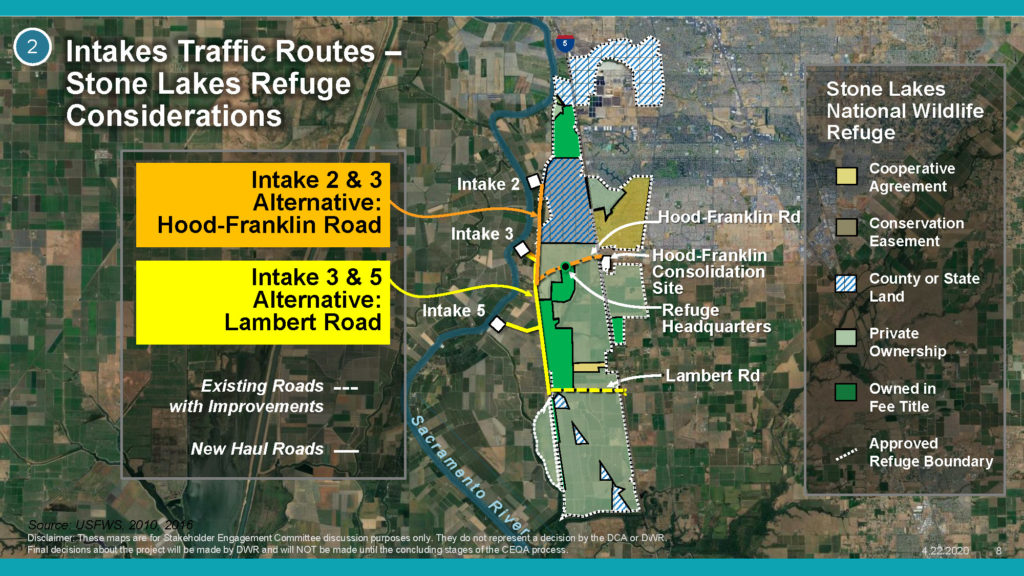
Proposed intakes near Hood. From 2020-04-22-SECMeetingPresentation.

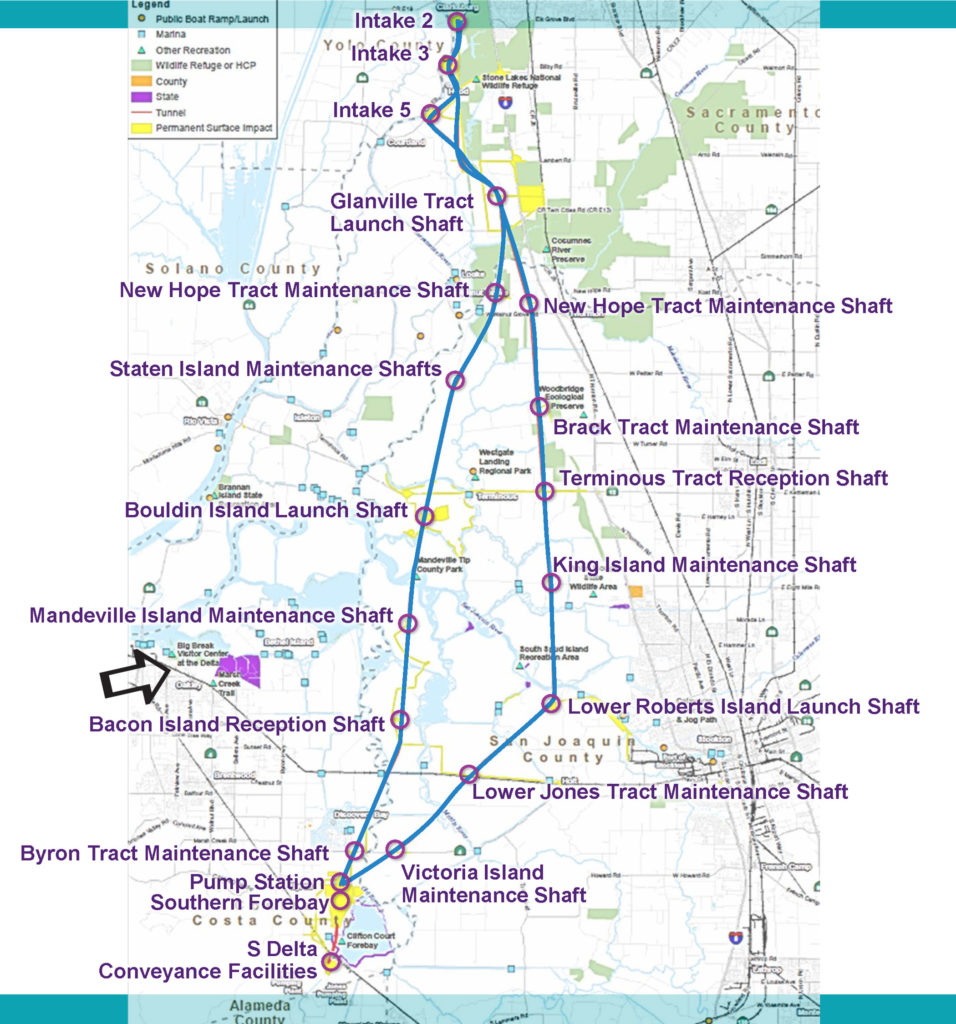
“The screening for the proposed tunnel will be located in Hood (north of Elk Grove) on the eastern side of the Sacramento River. There will be three intakes and those would have brand new, top of the line fish screens,” he continued. “So, no fish will be put in that tunnel beyond those screens.”

“That’s one of the selling points for this whole project,” Moran stated. “What we have now, is the diversion is over the surface across the Delta. So, we’re bringing in both water and fish.”

He provided some history to the diversion of Delta water.

“The idea of diverting water, moving water from the north and east, through the Delta is from the 1910’s,” Moran shared. “A lot of the facilities we have now, are not the same thing, but they’re based on Robert Marshall’s plans. He ran the national parks and was pushing this big project of moving water around California. So, that’s part of the rationale of what we have, now.”
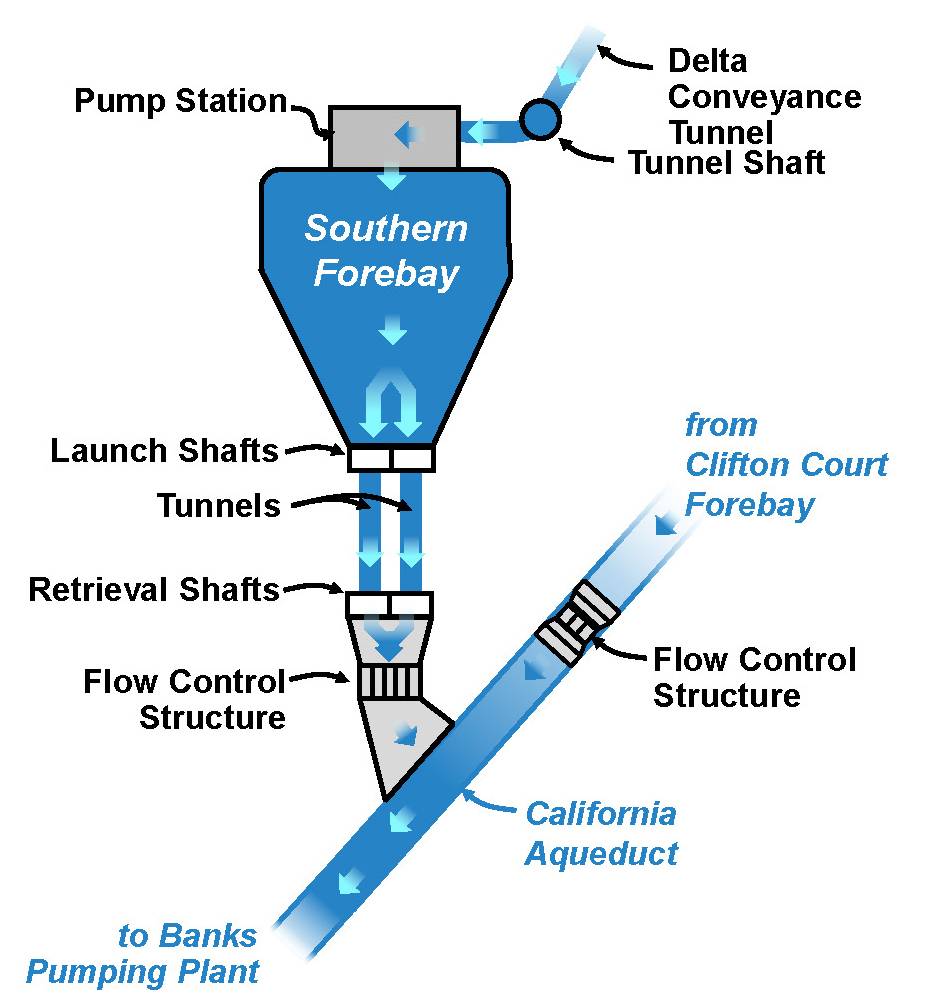
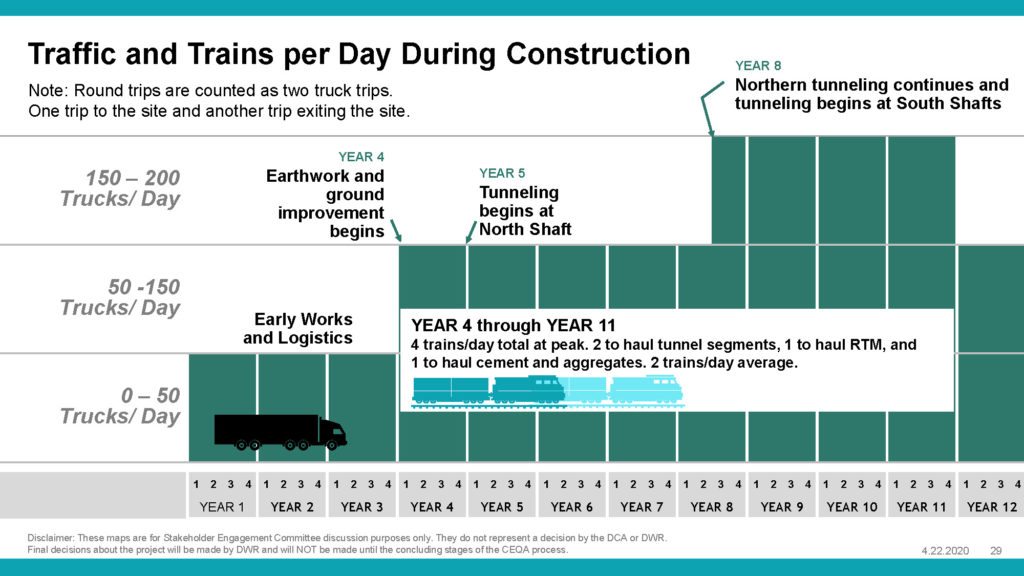
Proposed South Delta Facilities. From 2020-04-22-SECMeetingPresentation.

He also shared that “Antioch sued upstream water users in 1921 because of too much saltwater. So, this is nothing new.”

“Antioch is way ahead of the game putting in a brackish water plant. That’s a big, bold move,” Moran state. “But what are we going to do with saltwater intrusion up to CCWD?” (See related article)

Asked how the tunnel is a solution to the saltwater intrusion he answered, “It’s coming. If we divert or not, saltwater is coming. How do we prepare for that? In Antioch we build a desal plant. For those south of the Delta it’s a tunnel.”

“The way we’re doing things now, is water flows from the Sacramento River to the rest of the Delta. The pumps in Byron then pump it south,” Moran continued. “This water used to flow down the river and out into the Bay. Sometimes during the year, we have reverse flow, with the water from both the Sacramento and San Joaquin Rivers. When folks started taking water out in the Central Valley, less water comes out of the San Joaquin River. It was dry for 60 miles as recently as 1994. That was rectified through a court case.”
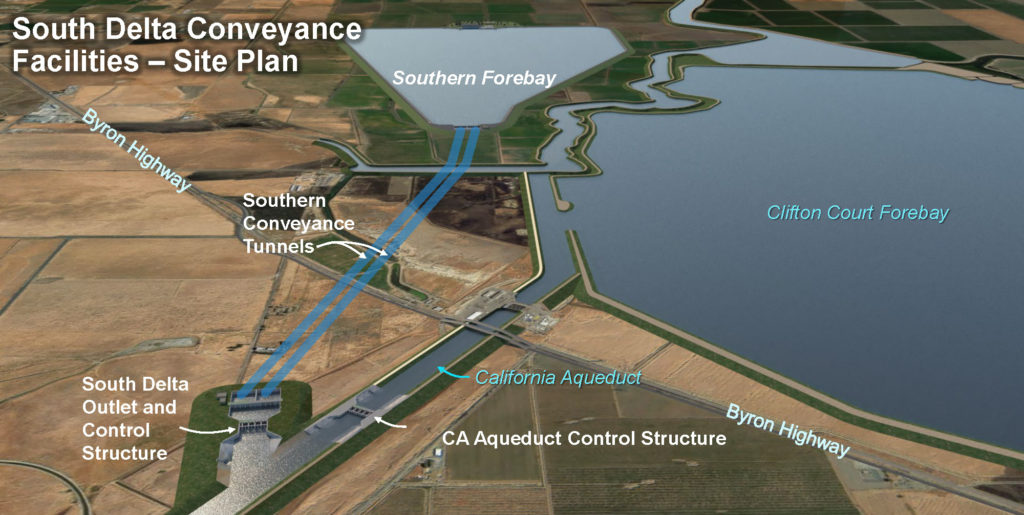
Proposed South Delta Conveyance Facilities Site Plan. From 2020-04-22-SECMeetingPresentation.

Because the San Joaquin River is diverted before it reaches and “punches through the Delta”, farmers in the Delta have been relying on Sacramento River water.

“The Sacramento River, high quality, great water, it’s pulled down to the pumps. Not all the water, it’s less than half,” he said. “That goes against the natural flow and messes up the ecology.”

“We’ve gotten a lot of benefit over the past 100 years,” with the current system, Moran shared.

“So, if we don’t do something, if saltwater comes up, or if a levee breaks or a beaver chews through, that’s going to stop the flow of water.”
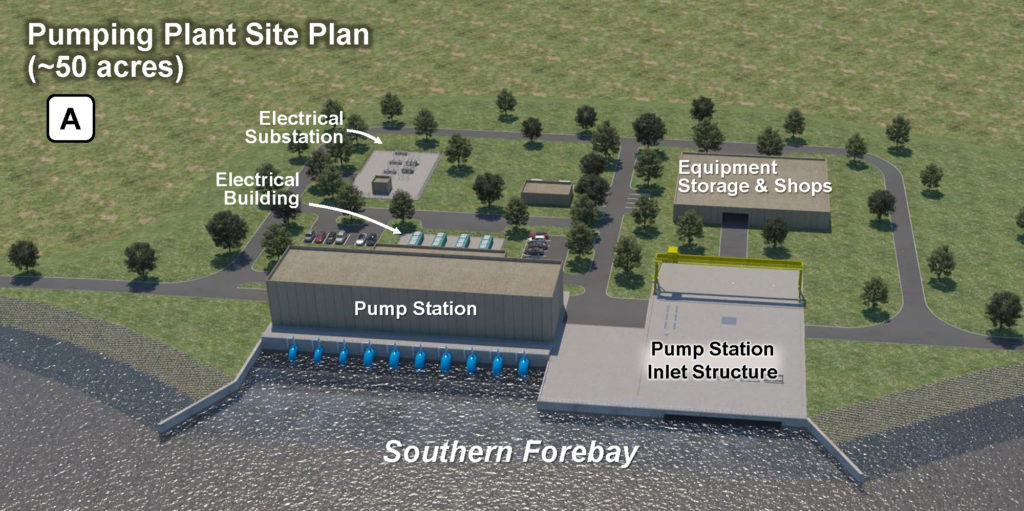
Rendering of proposed Pumping Plant Site Plan at the Southern Forebay. From 2020-04-22-SECMeetingPresentation.

“Much of the land in the Delta is under sea level because of that peat soil, which is great for farming,” he explained. “But because of decisions made over 100 years ago, because people in the Delta communities and economies, and their way of life, it’s not sustainable.”

“We’re only taking water out when there’s enough to come through,” said Moran. “Like we’re doing, now when there’s Delta Smelt at the pumps, and we have water quality going down the tubes, the feds tell them to stop pumping.”

“It’s these local folks who are members of the committee saying, ‘wait a minute, we have lives that will be affected, too,’” he shared about his fellow SEC members. “The premise is let’s pretend this is getting built. If that’s the case, all you folks around the Delta who have this local experience and expertise, to advise the experts from the DWR.”

“So, that the water can be used all year round. That’s the point of it,” Moran continued. “Is there enough storage south of the Delta? If you’re going to pump water out of the Delta where are you going to store it? There’s the San Luis Reservoir, are we going to raise the height?”
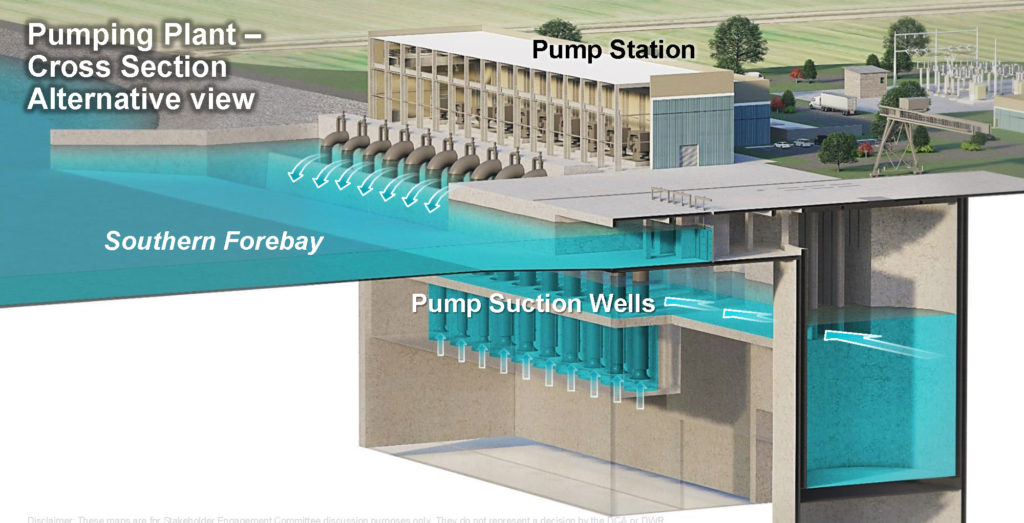
Rendering of proposed Pumping Plant at the Southern Forebay. From 2020-04-22-SECMeetingPresentation.

“Every governor has dealt with it, but Newsom is getting more traction,” he shared. “They have this portfolio plan which includes storage, moving water and ground water restoration. Not just sticking straws in the Delta and sucking it.”

“When it’s a common pool and we all have to drink out of the Delta and we all have to be responsible for it including maintaining the levees, and agriculture in the Delta,” Moran concluded.

No Committee Member Supports the Tunnel

Asked about the members of the stakeholders committee and how they were chosen, Nazli Parvizi, the Stakeholder Engagement lead for the DCA, said, “There is not a single member on the committee who supports this project. That’s based on what they wrote in their applications and others, what they’ve said over and over during the meetings.”

“It was an individual application. Not everybody represents their area of work. The requirement was if you live, work or recreate in the Delta in certain categories,” she explained. “If you have an ag person you balance it out with an environmental person. So, I think we have a good broad representation.”

“What we’re excited about Karen…she’s as reliable a source on waterways and boating as Jim Cox would be,” Parvizi shared.

“It’s not a voting body. We don’t make decisions as the DCA,” she explained. “We try to come up with the best engineering and design, the concepts and drawings and give them to Department of Water and it’s up to them.”

“We’re doing our best to take into account the Delta as place,” Parvizi continued. “So, they don’t just make sense from an engineering standpoint, but also as Delta as place. The folks who lead the DCA are representatives from DWR and the agencies that are members of the DCA. Kathryn Mallon, the Executive Director of the DCA is listening and took into consideration the Delta as place. The SEC is the result of that.”

About the committee members’ involvement, she said, “It’s trying to make the best of the worst, while at the same time trying to make sure it doesn’t happen. Karen has done a great job for Discovery Bay and boaters.”

“So, fight on your own time, protest, sue us, whatever and we’re OK with that and several are suing us,” said Parvizi. “We do want to make sure we are respectful of what you care about. They give us incredibly valuable feedback.”

“They fight their war, but on the battles they’re very collaborative,” she stated. “We give them all this information, being transparent as possible and half of them send it to their lawyers, which is fine. But they tell us which is better, A, B or C, and we make our recommendations to DWR.”

“We haven’t seen two groups fight it out,” Parvizi said, and explained how the members of the SEC work collaboratively. “If you move it (the tunnel) this way, it’s good for fish, but if you move it here, it’s good for birds. Or it’s good for animals. But if you put it here, it’s good for business.”

“We can come up with the pros and cons and I think that’s very valuable,” she added.

Opposition Efforts Continue

Efforts continue to stop the new Delta tunnel by groups such as Restore the Delta that have been fighting since the twin tunnels plan was first proposed. They along with Contra Costa County and the other members of the Delta Counties Coalition, Delta residents, Delta business owners, tribal representatives, fishing and non-governmental organizations and other Delta community-based organizations have all asked the Department of Water Resources (DWR) to pause Delta tunnel planning processes that require public participation due to the impact of the coronavirus pandemic. The Department of Water Resources has refused.

Contra Costa is represented on the DCC by County Supervisor Karen Mitchoff.
In their letter dated April 7, 2020, the DCC wrote California Natural Resources Agency Secretary Wade Crowfoot, “The Delta Counties Coalition (DCC) respectfully requests that you direct the Department of Water Resources (DWR) to pause all Delta Conveyance Project planning and engineering design processes that require Delta stakeholder engagement during the COVID-19 crisis, until the public can fully participate. We request that you ask the Delta Conveyance Design and Construction Authority (DCA) to pause its processes that require public participation, including Stakeholder Engagement Committee meetings, so that the Delta tunnel engineering design can be informed by meaningful public input. We also ask that you direct DWR and other resource agencies to extend public comment periods by at least 45 days beyond the end of the declared emergency.” 2020-04-07-Delta Counties Coalition-Letter-to-Secty-Crowfoot-re-Stay

The Secretary Crowfoot and the Department of Water Resources has refused, but have instead allowed the DCA and SEC to hold their meetings online.

Upcoming Meetings

The next meeting of the 20-member DCA Stakeholder Engagement Committee will be held on Wednesday, July 22, 2020 from 3-6 PM. Topics are expected to include: Scoping Update (DWR), Rehabilitation of construction impacted land, Final temporary and permanent boundaries, and Intakes Update (*subject to change). Ring Central Video Conference. Information Join from PC, Mac, Linux, iOS or Android: https://meetings.ringcentral.com/j/1489140415;  iPhone one-tap: US: +1(916)2627278,,1489140415#; or Telephone: US: +1(623)4049000 Meeting ID: 148 914 0415.

Ways to Stay Informed

To stay informed of plans and progress on the Delta Conveyance Project visit https://water.ca.gov/Programs/State-Water-Project/Delta-Conveyance; Twitter @CA_DWR; email DeltaConveyance@water.ca.gov; or call the Project Hotline at 866.924.9955.


Governor Newsom uses “dimmer switch” to shut down most of California, again

Monday, July 13th, 2020

Governor Gavin Newsom provides an update on the state’s response to #COVID19.

Posted by California Governor on Monday, July 13, 2020

“We’re turning back into a modification mode of our stay-at-home order.” – Gov. Newsom

Order affects some activities, businesses in Contra Costa County

By Allen Payton

“Looking at the conditions…based on the trend lines, based on the science…increased positivity rates…increased hospitalizations,” California Governor Gavin Newsom announced today he is using a “dimmer switch” for statewide actions.

“We are requiring all counties to close their indoor activities, including restaurants, wineries, tasting rooms, movie theaters, family entertainment centers, zoos and museums, card rooms and the shuttering of all bars,” he stated.

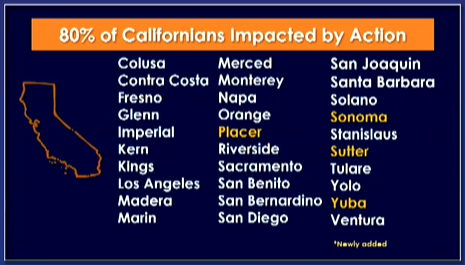
It applies to all counties, not just those on the monitoring list. However, all of those activities have already been closed in Contra Costa County, so that part of Newsom’s order doesn’t affect those in our county.

The governor called for the expansion of “opportunities for outdoor operations,” but didn’t elaborate.

He shared additional sectors that must be shuttered in the counties on the monitoring list, of which Contra Costa County is one.

“For all the counties on the monitoring list we are directing they close indoor operations in additional sectors: fitness centers, places of worship, offices for non-critical sectors, personal care services, that includes hair salons and barber shops, and indoor malls” Newsom stated.

“It’s a dynamic list. Counties come on, counties come off,” he said.

Newsome spoke of the increasing number of cases, positivity rate, hospitalizations and ICU admissions.

“As of yesterday, in the latest reporting periods, we had 8,358 cases. For the seven-day average there were 8,211 new cases per day,” he shared. “So, you see that seven-day average trending up.”

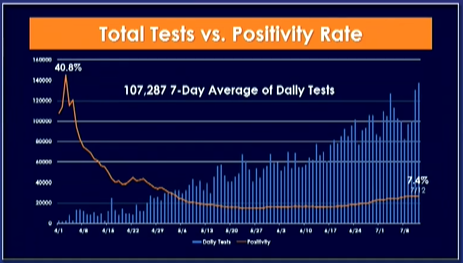
“The positivity rate has settled in and…over a 14-day period is 7.4%, over a 7-day period it’s 7.7%,” he explained. “This represents a 21% increase in positivity rate over a seven-day period.”

He also spoke of an increase in hospitalizations and ICU admissions.

“We’re seeing a modest reduction in the rate of growth…in the total number of people hospitalized,” Newsom stated.

“That represents a 20% increase over a two-week period, last week it was a 39% increase over a two-week period,” he said.

Newsom then reiterated the wearing of masks, and said, “we’ll get through this” and thanked everyone “from the bottom of my heart for your perseverance, for your patience” and called on Californians to “our need to maintain our vigilance” and “continue to do the good work we’ve done as a state…so we can work through this, get to the other side more resilient, more capable than ever.”

Newsom then held a question and answer session.

According to a County Health Services press release, California COVID-19 closures affect some Contra Costa businesses.

Due to a sharp rise in COVID-19 activity, California Governor Gavin Newsom today announced the temporary closure of several types of indoor businesses and activities.

Effective immediately, all counties must close dine-in restaurants, bars, wineries and tasting rooms, movie theaters, family entertainment centers such as bowling alleys and arcades, zoos and museums, and cardrooms.

None of these types of businesses had previously reopened under Contra Costa County’s social distancing ordinance and must remain closed under the state order.

Breweries, brewpubs and pubs must “close all operations indoor and outdoor statewide,” according to the state’s COVID-19 web page.

Additionally, Gov. Newsom required counties that have remained on the California Department of Public Health’s county monitoring list for three or more consecutive days to close additional businesses and activities, effective immediately.

Contra Costa does meet the criteria, so this part of the governor’s order does apply to the county. Some businesses and activities that had previously been permitted in the county are affected:

  • Offices for “non-essential” business sectors, as determined by the state – visit ca.govfor more information when it becomes available.
  • Hair salons and barber shops
  • Indoor malls

All of these businesses and activities are required by the state to close today unless their operation can be modified to be outside or by pickup.

Other businesses and activities required by the state to close in watch-list counties include indoor worship services and indoor protests, which Contra Costa also suspended with its own local order effective today.

Fitness centers and personal care services, such as nail salons and tattoo parlors, were also named in the state order but had not previously reopened in the county.

For more information about today’s order from California, visit covid19.ca.gov.

Contra Costa Health Services urges everyone to continue taking simple steps to protect themselves from COVID-19: Follow the social distancing order, and wear a face covering when you leave home or when you are near other people. Wash your hands thoroughly and frequently, and always stay home from work or school if you are not feeling well.

Visit cchealth.org/coronavirus for local information about Contra Costa’s response to the COVID-19 pandemic.


Shopping, food & fun at Rivertown Small Business Grand Re-Opening Saturday

Tuesday, July 7th, 2020

Contra Costa County off state’s Watch List as of Friday evening

Friday, July 3rd, 2020

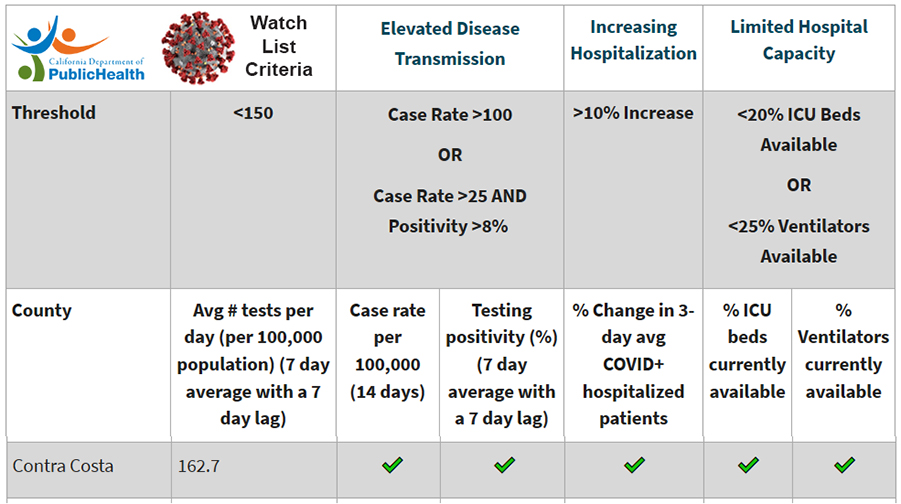
Check marks indicate a county has fallen below the monitoring level for that criteria.

County health officials evaluating local data to determine any further business reopening

By Allen Payton

As of Friday night, according to the California Department of Public Health (CDPH) COVID-19 website, Contra Costa County is no longer on the state’s Watch List for monitoring cases.

The state monitors three criteria, which includes elevated disease transmission with a case rate of more than 100 or a case rate of greater than 25 and positivity of more than 8%; increasing hospitalization of more than 10%, and limited hospital capacity with less than 20% of ICU beds available or less than 25% of ventilators available.

Contra Costa has fallen below the criteria which flags counties for inclusion on the watch list.

Asked if there had been an announcement about this new information since our county was included in the list as of Governor Newsom’s announcement on Wednesday, July 1, Contra Costa Health Services spokesman Karl Fischer responded, “No. Counties go on and off the watch list with some regularity, including ours.”

Asked if those businesses that were supposed to reopen on Wednesday would now be allowed to reopen on Monday, Fischer responded, “No determination has been made about changing the reopening timeline. We are evaluating the local data.”

A description of the data being monitored can be found in the Understanding the Data Being Monitored section. The data chart is updated and posted daily.

Governor allows local governments to extend renter protections through Sept. 30, marriage licenses via videoconferencing, more

Wednesday, July 1st, 2020

SACRAMENTO — On Tuesday, June 30, 2020 California Governor Gavin Newsom issued an executive order extending authorization for local governments to halt evictions for renters impacted by the COVID-19 pandemic, through September 30. Currently Contra Costa County’s urgency ordinance preventing evictions and rent increases expires on July 15.

The order also addresses a variety of issues in response to the pandemic, by extending provisions in earlier orders which allow adults to obtain marriage licenses via videoconferencing rather than in-person during the pandemic; waive eligibility re-determinations for Californians who participate in Medi-Cal, to ensure they maintain their health coverage; suspend face-to-face visits for eligibility for foster care; and permit In-Home Supportive Services (IHSS) program caseworkers to continue caring for older adults and individuals with disabilities through video-conferencing assessments.

The order also extends waivers temporarily broadening the capability of counties to enroll persons into the California Work Opportunity and Responsibility to Kids (CalWORKs) program, allowing for self-attestation of pregnancy and conditions of eligibility, and waiving in-person identification requirements.

In addition, the order extends provisions allowing for mail-in renewals of driver’s licenses and identification cards, to limit in-person transactions at the Department of Motor Vehicles, and extends timeframes related to the payment of real estate license application and renewal fees and continuing education requirements for licensees.

The text of the Governor’s executive order can be found here and a copy can be found here.

Hold that beer: Contra Costa to postpone COVID-19 reopening timeline due to spike in cases, although expected

Monday, June 29th, 2020

Decision on bars made Sunday; gyms, nail salons, bowling alleys, arcades, hotels, museums, plus massage, body waxing and tattoo businesses will also remain closed

As Contra Costa Health Services (CCHS) warned the public of the possibility on Friday, they have decided to delay the opening of businesses and activities previously planned for July 1 until the COVID-19 outbreak in Contra Costa is better contained.

The county is closely monitoring recent data showing COVID-19 activity increasing in the community, as it is statewide and throughout the country.

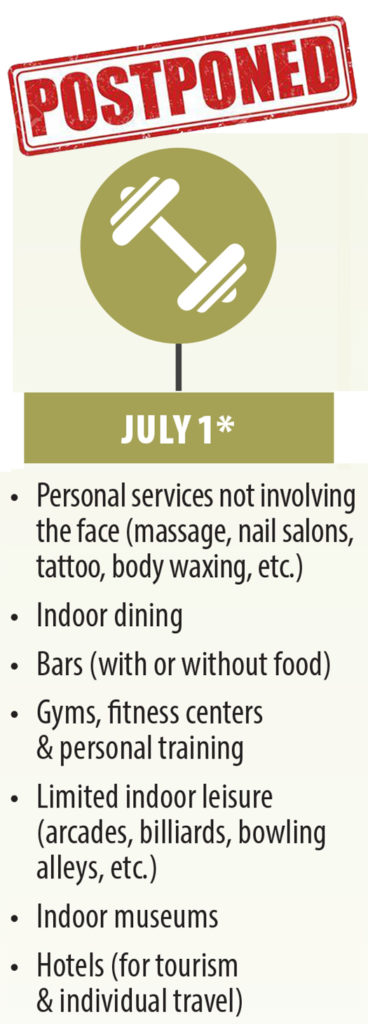
On Sunday, Gov. Gavin Newsom recommended that Contra Costa County, along with several other counties in the state, not reopen bars. Contra Costa is one of 15 counties on the state’s County Monitoring List. The county’s timeline had previously cleared bars (with or without food), gyms, fitness centers, personal training, massage, nail salons, tattoo, body waxing and other personal services not involving the face, indoor dining, limited indoor leisure (arcades, billiards, bowling alleys, etc.), indoor museums and hotels for tourism & individual travel to reopen July 1.

When asked Sunday about the impact of Newsom’s recommendations, Kim McCarl, Communications Assistant for Contra Costa Health Services responded, “As you know, we released a statement on Friday indicating that we would make an announcement about our timeline going forward on Monday. That is still our plan.  Bars are not currently open in Contra Costa County. We appreciate the governor’s recommendation and will certainly take it into consideration as we determine next steps. We’ll have more tomorrow.”

However, Board of Supervisors Chair Candace Andersen told KPIX5 CBS News, on Sunday that “We were slated to open them on July 1, but given the governor’s announcement, we will definitely not be opening bars on July 1st,” citing contact tracing as one of the biggest challenges. “It is very difficult in a bar where you have lots of people interacting,” she continued. “Whereas in other settings, a workplace, even a hair salon where you know who’s coming, who’s going, where you can then alert them when they have been exposed to someone with COVID-19.”

Asked if she and the board had the authority to make that decision or if it was still in the hands of County Health Director Dr. Chris Farnitano and why it wasn’t shared with all the media, yesterday, Andersen responded, “I spoke with Dr. Farnitano yesterday and he told me that while we were not making a determination about the other July 1 activities until today, he was going to recommend that we follow the Governor’s guidelines regarding not opening bars. Based upon that information, I responded to the media inquiries received.”

With the sharp rise in community spread and hospitalizations, it does not make sense at this time to open additional business sectors that could further accelerate community transmission. These businesses and activities will remain closed in Contra Costa until county data indicate that the spread of the virus has slowed, as measured by at least a week of stable case numbers, hospitalizations and percent of tests that are positive. Trends will be monitored and evaluated daily.

Decision Based on Statistics

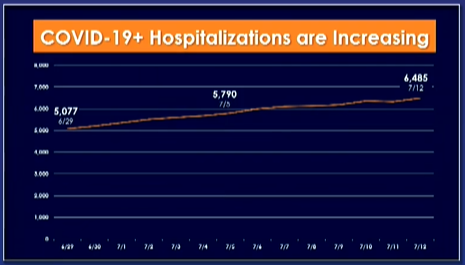
The seven-day average number of COVID-19 patients in hospitals in the county has increased by 75% from June 15 to June 29.

The seven-day average number of newly identified COVID-19 cases has increased from 38 a day to 87 a day. The percentage of COVID-19 tests that came back positive has also increased from 4% to 6%. This suggests the change is not simply due to more testing, but a true increase in community spread.

More Young People Testing Positive

We are also seeing a shift with more young people testing positive. In June, 55 percent of people testing positive in Contra Costa were 40 years and younger, compared to 38 percent for that group in April. It’s a sign that younger people are playing a major role in driving the increase in new cases and potentially infecting vulnerable individuals.

Many people who carry and spread the virus have no symptoms themselves. That is why it’s important for everyone to avoid social gatherings, observe physical distancing and wear masks or face coverings when around others.

Widespread testing is necessary to slow the spread of COVID-19 so we can safely reopen the economy. Testing is the only way to find out if you are carrying the virus and interrupt its spread. People can spread the virus without knowing they are sick.

While Contra Costa have seen an increase in the numbers of people being tested over the past several weeks, we highly encourage everyone who lives and works in the county to get tested, even if they have no symptoms.

This morning, CCHS opened its eighth community COVID-19 testing site at Kennedy High School in Richmond. To make an appointment for a fast, convenient, no-cost test at any site in Contra Costa, call 1-844-421-0804 or visit cchealth.org/coronavirus – online scheduling is available at most sites.

The following questions were sent to Board Chair Andersen and county health services communications staff immediately prior to publication time:

Can someone please ask Dr. Farnitano, with all the recent reopening and protests, in which many more than 100 people were in attendance and clearly not social distancing was not practiced, during the previous three weeks, wasn’t the increase in cases and percentages expected?

If so, then why punish everyone for the actions of a few?

Also, since the new cases aren’t overwhelming our hospitals and health care industry with only 38 hospitalized, today – which was the issue we were told from the beginning was the major concern in the need to flatten the curve – and we all know that cases will increase once more businesses are reopened and activities are allowed to resume, why the delay?

UPDATE: In response, McCarl wrote, “New cases are a precursor to increased hospitalizations. We’ve seen the number of people in hospital go up as the percent of tests coming back positive have gone up. The goal is to lower the percent of positive cases before they overwhelm the healthcare system. We do that by staying home, wearing face coverings, maintaining social distance and washing hands.

You are correct that we expect to see numbers go up. It’s the rate in which they are raising that concerns us. A month ago, the percent of positive tests was in the 2-3% range. As of this morning, it’s about 6%. Our goal was under 5%, the criteria for the state monitoring is 8%. The trend is concerning.

In the past three weeks, our contact tracers have identified only a very small number of people who attended any sort of large gathers. Small being low single digits. We are seeing it spread throughout the community so pointing to one group or activity gives others a false sense of security. We all have a part to play in stopping this trend.”

Allen Payton contributed to this report.