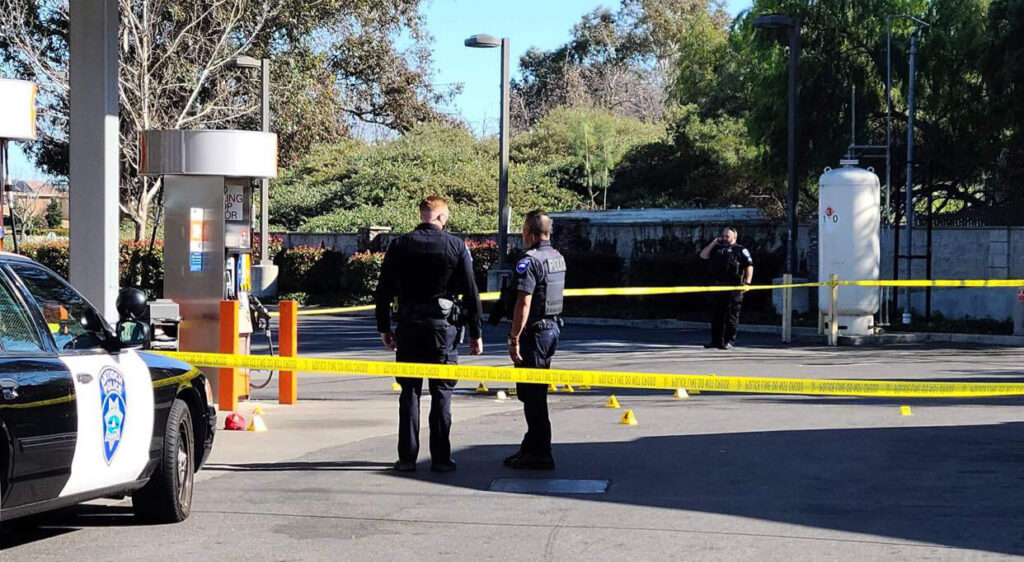
The Antioch City Council members and city staff listen to Police Chief Brooks give his presentation before discussing the various police reforms during the 7-hour special meeting on Friday, Feb. 26, 2021. Video screenshot.
Directs staff to return with policies on each for future votes; no findings offered to support need; council majority says no to new high-tech tasers that automatically activate body cameras; Mayor Thorpe says department receives 20 to 40 complaints per year
Councilwoman Torres-Walker continues her anti-police rhetoric with comments like “I would not support putting any youth in the room with a department that is currently in reform” and “We should not be at war with our community. We don’t want to see storm troopers on the streets of our communities.”
By Allen Payton
During their special council meeting on police reforms, Friday night the Antioch City Council, voted to support all the proposals Mayor Lamar Thorpe put forward, in spite of being provided very little data to support the need and although the police chief reported the department was already implementing all the reforms from President Obama’s blueprint on policing. Most passed on 5-0 votes, some on 3-2 votes with District 2 Councilman Mike Barbanica and District 3 Councilwoman Lori Ogorchock opposing, and one vote of 4-1 with Ogorchock casting the lone opposing vote. Each motion, most of them made by District 1 Councilwoman Tamisha Torres-Walker, were to direct the city manager and staff to develop policies on each item for the council to vote on during future meetings, but did not ask for data, evidence or findings to demonstrate the need for any of the proposed reforms.
For the body and police car cameras, which had the support of all members of the public who offered their comments and all council members, they directed city staff to return with a proposal including costs for the council to approve, which could happen as soon as their next meeting on March 9.
The only motion to fail was made by Barbanica and seconded by Ogorchock to add tasers with Bluetooth technology that when deployed, automatically activate a police officer’s body camera. Even though it was explained by Antioch Police Chief T Brooks that they’re part of the same package with body and dash cams, and without explanation, Thorpe, Torres-Walker and Wilson voted against the motion.
The council heard over 300 public comments on the eight agenda items, most of them about the response to mental health crises, which resulted in the meeting lasting more than seven hours, until after midnight.
Opening Remarks by Council Members
Opening comments were offered by the council members in order of district number following the mayor’s.
“Today, marks our first step in building a police department that every segment of our community can trust. We know that the police is the community and the community is the police. In that spirit, community voices are a critical component in improving the perception of police legitimacy and fairness.
Please understand, when special-interest groups label any critique of our police department as opposition (like anti-police, cop haters, defunders, abolitionist, etc.), they are deliberately obscuring the distinction between undue attacks and legitimate criticism of practices and/or policies. To that end, this resistance to transparency and accountability, reduces police legitimacy among different segments of our community, making individuals less likely to report crimes or work with law enforcement to solve crimes.
I’m asking council members to have the same foresight voters did in November of 2020; instead of falling into the trappings of those who seek to divide us with ‘pro’ and ‘anti’ law enforcement political rhetoric. Voters recognized that ‘reform’ is synonymous with progress, improvement, betterment, refinement and adaptation.
Today’s measures, in my opinion, are common sense solutions that will provide our police department with the necessary tools to do their job in a manner that will allow for our community to feel safe and respect, and equally, will allow for more members of our community to see law enforcement officers as public servants.
Our job this evening is to adopt a framework for police reform so that we may begin our work as policy makers. In short, we’re designing a blueprint around police reform.
As part of this process, council members will be allowed to take a few minutes to make opening statements.”
He then mentioned that over 200 public comments had been submitted.
“Please note, for the public, that whether or not your comment is read, it will be part of the public record,” Thorpe added. (That approach was later changed, after the city attorney told him all the written public comments submitted before 3:00 p.m. had to be read).
“Change is never easy…we are willing to risk the lives of others to do so,” said District 1 Councilwoman Tamisha Torres-Walker. “Bounded in oppression as slavery for those who refuse to move forward and look forward.”
“I have heard over the past week that the world is watching,” she continued. “Like the world watched the lifeless body of Michael Brown in the street in Ferguson for four hours and…George Floyd. Justice for people in dark bodies has been delayed for decades.”
“We have begun to repair the breach of trust with this city department,” Torres-Walker said.
She then spoke of the need for “credible violence prevention solutions,” and said, “I am asking the city council…to establish an office of public safety…to redefine what will make our city safe.”
“Change is hard but it’s necessary,” Torres-Walker added.
2/28/21 UPDATE: Torres-Walker posted the following prepared opening remarks on her council Facebook page on Sunday:
“The world is watching. Like the world watched Michael Brown’s lifeless body lay in a Ferguson street for four hours. Like the word watched George Floyd for what we now know was 7 minutes and 46 seconds pleaded for his life and call for his mother.
There is no swift justice. Justice for Black people, people in dark bodies, and poor people has been delayed and or differed for centuries and today is no different.
What we are doing today is the floor and not the ceiling.
With the establishment of an independent police oversight commission, demilitarization of the Antioch Police Department, body cameras and dash cameras as well as independent investigations into police use of force, misconduct, and harassment we have just begun to repair the breach of trust between this city department and the community it serves.
I also want to acknowledge at this moment the families and individuals in our community that have been impacted by gun-related violence not just in the past few days but over the last few years this to must be addressed with credible violence prevention strategies, resources, and good public policy.”
District 2 Councilman Mike Barbanica spoke next, offering his condolences to the family of the man who died in police custody, early Wednesday morning, assuring them that an independent investigation is underway and that the report will be made public. He then thanked those who had reached out to him, this week and offered their input for tonight’s meeting.
“I want to make sure our decisions are based on people who reside within our community. I look forward to hearing from our citizens,” District 3 Councilman Lori Ogorchock.
“The last few months have been hard on Antioch. Change is coming,” said District 4 Councilwoman and Mayor Pro Tem Monica Wilson. “We cannot keep on the same course but should always look for ways to improve.” She spoke of “the perfect storm of innovative thinking, the audacity to consider reform and the public support for systemic change.”
“When I first got elected mayor, the chief and I had a great meeting about the reforms he was making in his department,” Thorpe said. “He expressed to me he was a willing…partner.”
Police Chief’s Presentation
Chief Brooks then offered a presentation on what his department is doing to implement reforms.
“We at the Antioch Police Department are constantly looking for ways to improve,” he said. “We have some of the best and brightest” working for the department.
Brooks mentioned “having healthy, happy and well-trained officers.”
He spoke about officer wellness and evidence based and intelligence policing. “This allows us to build trust by working with neighborhood residents.”
“If you look at these items, tonight…extensive community engagement efforts…you’ll see I’ve been following Barack Obama’s blueprint for policing,” he stated.
Mental Health
For the first subject on the meeting’s agenda, mental health, Ben Adam Climer, introduced as a mental health expert, gave a presentation, saying he was “a five-year veteran of the police CAHOOTS team in Eugene, Oregon.” He is now a consultant that helps cities develop the CAHOOTS model, which has been around for over 30 years, he stated.
According to the CAHOOTS website, the program is a non-emergency, first response to residents experiencing mental health, substance use, and homelessness related crises.
The program is funded entirely by the cities of Eugene and Springfield, with a combined population of 230,000, has two vans that operate 24 hours a day.
“No CAHOOTS worker has been injured on the job when interacting with someone in crisis,” he added.
“The EMT…can help us rule out some things that are physical instead of mental health issues…and the ambulance doesn’t have to be called,” Climer explained.
“The CAHOOTS team is sent out pretty much the same way the police and fire department are,” he stated. “Call takers receive the (9-11 call) requests. Almost 95% of the team the police don’t have to go out on the call.”
“The CAHOOTS team members also go out on welfare check calls,” Climer shared.
MCIS and Race – BIPOC communities – it does not rely on the Western model of mental health – with people who might have different cultural or ethnic…
“The team is not part of the police department, but Eugene PD estimates CAHOOTS diverts 8-10% of total police calls,” Climer said.
“In 2018 86% of responses involved no police, 13% were calls for police assistance,” he shared.
On the cost savings Climer shared because of the program there were “just under 3,000 ER (emergency room) diversions and over 2,000 ambulance diversions” and it “saves $8.5 million per year for the local fire” and other agencies.
The program in Eugene and Springfield had “about 29,000 calls in 2019.”
He mentioned the Co-Response Model and that “the CAHOOTS model does not use involuntary holds. It has a medical component. It is cheaper. It is more flexible.”
Climer shared that the CAHOOTS is Para-clinic and Paramedicine and the “crisis workers are not licensed clinicians. They are para-clinical and are able to assess when someone needs to see a licensed clinician.”
“We want to see this model everywhere. I think it would be an amazing thing for any city to have,” he concluded.
“This is just one model, not necessarily what we’re considering…(it’s) for discussion,” Thorpe said.
Barbanica asked what the staffing would be for a city our size.
“I usually recommend that for a city of 100,000 you have one 24-hour unit…with between 11 and 12 employees,” Climer responded.
“Does that include everything,” Barbanica asked.
“It really depends on who ends up doing it,” Climer mentioned, speaking of a non-profit.
“The CAHOOTS team is weird, it has a lot of part-timers and some full-timers,” he added.
Asked about the costs, Climer didn’t offer specifics, but said, “Eugene is getting money for their program from the county.”
He also shared that “the same non-profit and the same team works both cities.”
“Mental health is an important topic…this part of the agenda is discussion of a crisis response team, but also a component of an annual mental health assessment of police and dispatch workers,” Thorpe stated.
“We aren’t voting on anything, tonight. This is just a framework,” he said.
Public Comments
With an estimated 130 written public comments submitted and 170 participants in the audience who wanted to speak on multiple items, the council then discussed limiting the comments.
“The council has to make a decision and we need to get to that point at some point,” Thorpe said. “We may just have to put those into the record.”
“The meeting rules that govern a special meeting aren’t the same as a regular meeting…we don’t have to read all the comments but submit them into the record.” he stated.
But City Attorney Thomas rebuffed that idea saying, “The problem we face here, is when people are given the rules for public comments ahead of time they were told if they submitted their public comment by 3:00 their comment would be read…their comments have to be read.”
“You’re free to set whatever time limit…to get to the business of the council,” he pointed out.
The council then decided to limit public comments to one minute each.
Several comments were from people from outside Antioch.
At the end of the live public comments for the item, Thorpe didn’t like one of the comments accusing him of saying something about “Black on Black crime” and that it was disrespectful of Black people, and it should just be referred to as “crime period.” He responded by saying “that never came out of my mouth” and the council then took a break from the meeting.
Upon returning, City Finance Director Nickie Mastay and City Clerk Ellie Householder read the written public comments submitted for the agenda item.
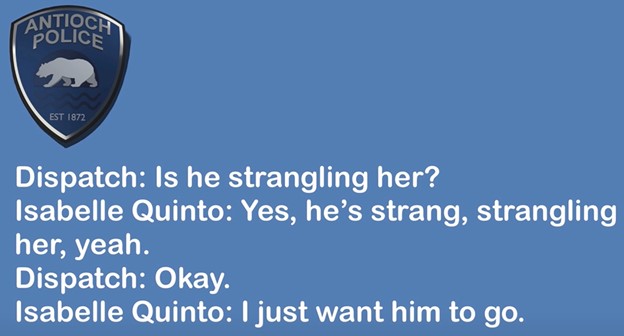
Some were the same form letter about the death of Angelo Quinto, which occurred three days after an interaction with Antioch Police Officers, as part of a national coalitio, of 138 Filipino organizations, including Gabriela Oakland, that claimed to have gathered over 22,000 signatures, mainly from people outside of the city, using the term “murder”. A variety of comments asked that funds be redirected from the police department to pay for a mental health response team and mentioned the Miles Hall Foundation, named for a 23-year-old Black man who died after being shot by Walnut Creek police in 2019 while having a mental health episode, according to a CNN report.
Other comments were critical of the mayor and Torres-Walker for their support of the reforms, and one stating she needed to recuse herself due to her bias. A few members of the public asked for more spending to fight and reduce crime in the city.
Council Discussion on Mental Health
Three hours after the meeting began, and following the public comments on the first agenda item, the city council members then discussed the matter of pursuing a mental health approach, including the possible establishment of a crisis response team, to respond to certain 9-11 calls instead of dispatching police.
Barbanica spoke first saying, “I’m very supportive of something like this enacted. But I’d like to have the city look at the program the county is about to begin…the Community Crisis Response Team. This has been worked on since last fall. It’s countywide and being set up so you can call 9-88. Assembly bill 988…using some tax from cell phones. This is a 24-hour program. The county expects between June and July they’ll launch the program. I’m very supportive of this idea to do this, but being the county already has wheels in motion to do that, we should look at putting our money in that, first. Hopefully, we could get the same response.”
“I just want council to understand that the presentation that we had on CAHOOTS is just a framework,” Thorpe said. “I want the council to decide tonight if a crisis response team is the direction we want to go in. Then we can bring back if we want to go with the county or the CAHOOTS model.”
“I’ve been a community member standing by for the past five years and this isn’t the first time…I’ve heard of a mental health crisis response team be implemented. This council has had the political will. I’m hoping we can do something as expeditiously as possible so
“I spoke with Lavonna Martin, today and she shared what the county is doing,” Ogorchock said. “The main phrase is anyone, anywhere, anytime…and that services are available to all residents of the county. I don’t want to reinvent the wheel. They’ve been working on this since last year.”
Mayor Pro Tem Monica Wilson said, “This has been a long time coming. The point of me reaching out to CAHOOTS…great program. Want to hear more about what the county is doing. We heard from a bunch of programs. We can’t wait any longer. I want this to come back at the next meeting. I’m more than willing and open to hear what others have provided. What’s going on with mental health for half a century since mental health was defunded. We need to move forward.”
“I’m familiar with the county model, as well…we’ve been briefed on this,” Thorpe said. “I’ve sat through the CAHOOTS model three times so I’m familiar with that and the Denver model, as well. I still believe we need to look at mental health evaluations for our police officers and our dispatch workers. What the police chief mentioned earlier, I want to remind our council that’s all voluntary.”
“What you’re saying is it’s available but it’s not mandatory,” Torres-Walker said. “The goal isn’t to give the department more money but make it mandatory to participate in the services that already exist. Is that correct?”
“Correct,” said Thorpe.
Barbanica was not in support of the annual mandatory mental health evaluations. “That’s a big jump. It may run into…problems,” he said.
“I too did not realize that would be part of this conversation,” Ogorchock said. “I’m not in support of the second part of that.”
“We are going to look into these options to come back,” Thorpe explained. “I think the phrase evaluation is not the right one. The mental health and wellness of our officers should not be voluntary. It’s cumulative.”
“If this is the direction our council is going, I’m not sure it can be on March 9th,” Ogorchock said.
“I agree with you. I wouldn’t ask council to put dates on things. Let me and the city manager and the chief figure that out,” Thorpe said. “There may have to be some special meetings in there.”
“I really implore you to bring it back as soon as possible, the mental health response,” Wilson reiterated.
She then made a motion to have staff bring back options for council to decide on mental health crisis response and for mental health evaluations for police and dispatch workers.
“We could have program models and options for mental health crisis response,” City Attorney Smith clarified.
The council approved the motion on a 5-0 vote.
Training
The mayor wanted the council to provide principles for the police “as part of the framework for the training in our department.”
“I support more training. I would just like to see city hall with the chief to develop it,” Barbanica said.
“This is just adding the community voice to it,” Thorpe stated.
“I agree with training. You can train and train as many people as possible. I’ve never heard from many people in law enforcement that any of the training works,” Torres-Walker said. “My clarification is that this training will come out of the current budget of the police department.”
Thorpe responded that there would be no discussion on the budget during the meeting. “In some instances it might be shifting priorities. It’s a matter of establishing it, first. It may not cost anything. It may cost something. We need the feedback, first.”
“I want to get back to something said about police involvement in youth development…the least interaction with law enforcement, especially negatively, is important,” Torres-Walker said. “And I would not support putting any youth in the room with a department that is currently in reform.”
“I want to make sure the chief is involved in this,” Ogorchock said.
Public Comments on Training
Only a few people offered public comments on the matter of police training.
“What training is currently being given? What training is needed,” wrote Antioch resident Sal Sbranti. He than wrote the council needed training to be more professional.
Another referred to the council members as unqualified and “Monday morning quarterbacks” in
Another offered support for implicit bias training, signed by five people.
“How are we going to break down the codes, the codes of silence? another asked
“Training definitely has to happen. Mental health evaluations of officers are needed every year. Drug tests, too including illegal steroids,” another member of the public said. “You can’t train people to be obedient somewhere. Accountability has to come in somewhere…when the training fails, they must be held accountable.”
“Accept the training that we offer,” another said referring to an organization she runs. “Trainings won’t fix the problem. Only consequences fix the problems. I am heartbroken because I live in this city.”
Patricia Ganados spoke about mental health evaluations of police officers saying, “our local officers do deal with stress. The military does it every year. To prevent any more unnecessary deaths in Antioch.”
“On this one I would ask you go back to chief and come back to council with something you’re both comfortable with…with a little more explanation from the chief and yourself,” Ogorchock said.
“So, is the motion to direct city staff to go and get modules that includes everything the mayor said, tonight,” Torres-Walker said.
“Yes,” Thorpe responded.
“I make that emotion,” Torres-Walker said. Wilson seconded the motion.
“As a point of clarification, we are directing the city manager to work with city staff around these issues,” Smith interjected.
Torres-Walker then clarified her motion, to direct city staff to work with the chief of police on a training program.
“I’m kind of surprised we’re making motions on each of these items,” Ogorchock said.
“You can choose to codify it. It’s not a requirement,” Smith said.
The motion passed 5-0.
Demilitarizing Police
Thorpe wants to ban the purchase of additional military equipment. Torres-Walker supported that and wants to ban the use of the equipment the department already has.
Barbanica spoke first saying, “I have thought a lot about this…over the years. Being in the position of being on the street. At first, I wasn’t a big fan of taking military equipment. But the availability of taking certain equipment can have its benefit. I don’t want to have a military force on our street.”
“We currently have three,” he continued. “There are some sites for rifles. There is a vehicle, a rescue vehicle that is bullet proof. And there are some guns that are ceremonial guns.
“I know that vehicle is what’s controversial,” Barbanica stated. “The use of it has to be approved by a ranked individual. That’s when something is going really, really bad. Just look at what has happened in our community, recently.”
He then spoke of the hostage situation at the ARCO station a few years ago.
“That vehicle was used to rescue those hostages,” he explained. “There was another time when an officer was shot in the head and people were taken out of that area in that vehicle. Our officers are facing a lot of heavy fire power out there. We have a duty to make sure our police personnel are protected.”
Public Comments on De-militarization
“Our police should not be outgunned,” wrote Sal Sbranti
“Just today APD officers arrested a man with an assault rifle,” Jesse Zuniga wrote.
“I don’t believe it should be about parades and putting people of color on a tank,” one public commenter said. “I don’t think a tank for everyone of them is the answer.”
“For me you would look at the list of what you need to purchase and what you need to be purchased by APD is body cameras,” another said. “Then you look at what is protective gear, not assaultive gear.”
“Law Enforcement Assistance Administration…they produce programs and funding for law enforcement,” another speaker said. “It is wrong to militarize police departments. Equipment such as tanks are not necessary. Shields and so on…for years and years, police departments were able to defend themselves without that. So, it’s not needed.”
“I’m for getting out of militarization,” said Frank Sterling.
“I would also like to say the militarization of police on our streets directly stems from the war on drugs,” Torres-Walker said. “We should not be at war with our community. We don’t want to see storm troopers on the streets of our communities.”
“I would like to hear from our chief how important the M-WRAP is to our community,” Ogorchock said.
“The military equipment we’ve received…all of those have been given to us for free,” Chief Brooks said. “It is generally used on high-risk search warrants on individuals who are generally armed and dangerous and wanted for murder. It was recently used on a house where individuals were manufacturing assault rifles.”
“It’s used about 10 to 15 times per year,” he continued. “It is not an offensive vehicle. It is not a tank. It’s on the same chassis that’s used for commercial vehicles.”
“It offers a high level of ballistic resistance,” Brooks stated. “It’s mainly used for protection for our officers…when there is a high risk of injury.”
Asked by Ogorchock about the vehicle’s use to assist other police agencies, he responded, “it is an asset that’s used by other agencies, as well. It is requested by outside agencies.”
“Today’s criminals are carrying that are highly sophisticated and use bullets that pierce vehicles,” Ogorchock stated.
“Not to get any more but not to get rid of?” she then asked Thorpe.
“This tank was designed for improvised explosive devices in Iraq. If that’s what we want on our streets, then I’m happy to discuss that,” Thorpe said.
“As the chief said, it’s not a tank,” Ogorchock responded.
“The decision tonight would be directing staff to come back with a policy that the City of Antioch does not want to purchase any military equipment,” Thorpe said.
“I definitely would like to have a larger conversation than this quick Friday night thing,” Wilson said.
“If banning the use of military equipment in our city as well as the use of mutual aid, there have been police departments across this country…where peaceful protesters have been hurt,” Torres-Walker said. “We should not be using military equipment.”
“We should ban even free military equipment. We need to learn to manage well our policing services…so we don’t have to be at war with our citizens,” she continued. “Can we sell the tank? $700K could go a long way for youth services.”
“I agree it’s a bigger conversation,” said Torres-Walker but then made a motion to direct staff to develop a policy to ban the purchase or accepting of military-grade equipment and bring it back to council.
Wilson seconded the motion.
“I wanted to separate out the current use of military equipment from future purchase of military equipment,”
“This places officers in the future, potentially at risk and it’s wrong,” Barbanica said.
“Military equipment wasn’t designed for police departments it was designed for the military,” Thorpe added.
The vote passed 3-2, with Barbanica and Ogorchock voting no.
Torres-Walker then made another motion to direct the city manager to work with the chief to bring this topic back for discussion, an inventory and use of military equipment in our city and in mutual aid efforts.
“Maybe I’m confused. I too wanted to have a larger conversation around all of this,” Wilson then said.
Smith then asked if there was someone who wanted to second the motion.
Wilson then said, “yes, for the purposes of discussion.”
The motion then passed on a 3-2 vote, again with Barbanica and Ogorchock voting against.
Body Worn and Police Car Cameras, Accountability and Transparency
Barbanica started off the conversation on body worn and police car cameras saying, “They are very, very necessary. We need to get these as soon as possible, not only on the police officers but in the cars, as well.”
“I would like to expand this out and include tasers. Because they’re all one package,” he added. “Upon use of a taser, across the United States, officers are already armed with tasers. This would automatically, when a taser is activated it automatically activates the body camera.”
“It is imperative that we do this…to see firsthand what is occurring,” Barbanica continued. “Videos cannot be manipulated by officers. This is long overdue.”
Thorpe then reviewed the other components, independent review of on-duty police complaints.
All of the public comments were in support of body and dash cameras.
“What are you going to do about crime?” one member of the public asked.
Another comment was in support of Barbanica’s proposal to include tasers.
“Accountability is a big part of this…hopefully this should help the police more,” another member of the public said.
Another said he doesn’t believe the Antioch Police Department needs any more funding.
Angelo Quinto’s step-dad spoke in favor of body and dash cams to protect both the police and members of the public. One of Quinto’s aunts also spoke in favor of the cameras…but didn’t want more money provided to the police department to pay for them. Neither wanted the tasers.
Council Discussion
“I’m all for bodycameras,” said Ogorchock.
“I’m all in favor of the use of body cameras, dash cameras…public disbursement of video” Torres-Walker said. “But not necessarily tasers.”
Ogorchock then made a motion to support body cameras and vehicle cameras. Barbanica seconded it.
“And policy direction,” Torres-Walker said.
“A policy would come back, later,” Thorpe said.
The motion passed 5-0
Barbanica then asked about tasers.
“If you want to add tasers, you’re more than welcome,” Thorpe said.
“We already have tasers. It’s about swapping out tasers with Bluetooth technology that automatically triggers the cameras. This is more of a failsafe thing,” Barbanica said. “That’s why I’m so passionate about the tasers.”
“Since we already have them can’t we ask that we get updated costs if they go hand-in-hand?” Ogorchock asked. “It just makes sense.”
Barbanica then made a motion to include tasers within the study from the city manager.
Ogorchock seconded it and then asked if the Chief of Police could do that.
“I’m not an expert in this technology because we haven’t had it. But we have several staff who have come from other agencies that are experts. There is a sole source for body cameras in this county, because of the DA’s office and the way they get the videos as evidence.”
“There is a package deal for it, which does make the costs cheaper,” he continued. “The tasers we have…are older technology. They have upgraded through the years. They not only activate cameras when they’re turned on. But they have technology that downloads more data…show whether or not it was effective when deployed, whether or not there was a connection, whether or not it failed.”
“The old tasers we have are old technology and reached their end of life and are no longer serviceable,” Brooks stated.
He then said he could have a report by the next council meeting or the following.
The motion then failed on a 2-3 with Torres-Walker, Wilson and Thorpe voting no.
Establishing an Independent Review of On Duty Police Officer Complaints
Thorpe wanted to have each officer hand out a card to people they interact with, which includes the process for citizens to make a complaint.
“I understand why we want to be very transparent,” said Barbanica. “We’re coming very close here…we’re almost promoting complaints. Although it’s never admitted, if you think that every time you get out of the car you’re going to have a complaint, you’re going to have a whole lot less activity. I’m not saying that if an officer does something wrong, they shouldn’t be investigated. But when we’re promoting this
“Maybe it is also the case that you can complement an officer, as well,” Attorney Smith offered.
“Oh, yeah. Here’s how you can offer your support,” Thorpe said.
“I thought that all officers were required to provide you with their name and badge number and some kind of card upon request, already,” Torres-Walker said. “If that’s not true, that’s unfortunate. If I’m requesting that information that’s part of the customer service piece. What’s the challenge with that?”
“In this instance I think you’re right, it’s a request,” Thorpe said. “Most people don’t know you can file a complaint…of how an officer interacted with the police. Why wouldn’t we want to tell them? It’s not a secret. Not everyone knows. I thought this would be a pro-active way to let folks know.
“But a real concern, not if I pull you over for speeding or jaywalking,” he continued.
“It is a policy of APD to already give their names and badge number,” Ogorchock said.
“But it’s not the policy today to give out a card,” Thorpe said.
“I’m wondering…not every officer provides their name and badge number upon request,” Torres-Walker said. “If it is a policy…and they deny you the request then they are going against department policy. Maybe this is a public education campaign to residents of what is your rights, what do you have the right to request. Maybe some work around with the chief to make sure our officers are not denying people their request.”
“I’d have to agree on the public education part,” Wilson said. “We need the education piece across the board.”
“I believe if we do this, we are going to have a heck of a time recruiting people,” Barbanica said. “You’re going to see complaints go through the roof. Not all of them will be valid.”
“Maybe you want to have an ad hoc…of how you can have transparency…Oakland has an app,” said Smith.
“If department policy already requires that they give this information to any citizen who requests it, what we need to know is if they’re practicing it,” Torres-Walker said.
“Hopefully soon, we will know this with bodycams,” Barbanica said.
“True,” responded Thorpe.
No motion was made on the matter
Citizens Oversight Commission
The council then discussed forming a citizens oversight commission to handle police complaints.
“An independent oversight commission, what it would look like in Antioch will be different than in other cities, like Oakland and San Francisco. Those are charter cities. Their commission can hire and fire the police chief,” Thorpe said. “Every power that an oversight would have every council has. I think there’s some things that mischaracterize…that we would be investigating police complaints.”
“We get about 20 to 40 a year,” he stated. “We’d get information that’s general in nature. We have the power as a council to investigate anything. A commission would not have that power.”
“We would have to define the authority they would have, how many people would be appointed, their role and all of that,” Torres-Walker said. “And have city staff study and bring something back.”
“We as a council…could review police complaints,” Thorpe stated.
“The current system that we have, we have that ability, now,” Barbanica said. “We can do that with any city department.”
“Yes,” Thorpe responded.
“The chief is very proactive with this, now,” Barbanica continued. “You can see on the website. He’s using outside investigators. The system the way it is, right now, especially the software that the city is using and when we have body cams, it appears it is working.”
“What I’m talking about is a police oversight commission,” Thorpe said. “We don’t get into the specifics because that’s not our role.”
“What we heard out of the Bridging the Gap is in support of this,” Wilson said.
“Or it could be a function of the city council, we will do it that way, for now,” Thorpe responded.
“I think the whole point of a civilian oversight commission is to increase transparency for the community. I don’t think the city council doing it does that,” Torres-Walker said.
“I think these are all for our police of chief, that’s what he was hired for and the city manger oversees him,” Ogorchock said. “I think we are getting into union issues. We aren’t doing this in any other department. It’s kind of saying the police department is doing something wrong. I don’t think they are. None of us have experience other than Councilman Barbanica. What expertise do we have?”
“We don’t do this for a doctor who has a malpractice going on,” she continued. “I think we’re starting to overstep our bounds.”
“You clearly weren’t listening to the conversation. No one ever talked about investigating a police officer,” Thorpe said. “If I want to, as the mayor, ask the chief to bring all the complaints that have happened in this quarter…every city council has the ability to hear that. This is about information that already exists, making it transparent that anyone can see.”
Public Comments
“The police should not police themselves” was one comment, that in general was supported by others.
“I think transparency and accountability should apply to council members,” another member of the public said.
“There needs to be more public accountability,” another said. “Not just an independent council.”
“If the mayor chooses the people, how can that be independent?” Sal Sbranti asked. “Just like Mayor Thorpe doesn’t want me on any of his committees, I don’t want him as mayor. Do you have any specific facts showing an officer did anything wrong?”
“Citizens don’t have the experience…the use of force must be judged by another officer,” Jesse Zuniga said.
Others asked for an independent review of citizen complaints.
“I’m not supportive of this action, at this time, until CNA has concluded their report,” said Gil Murillo, referring to the
Thorpe then asked Chief Brooks to explain the current complaint process.
“The process begins with someone filing a complaint,” Brooks said. “There are forms…in the lobby. Complaints can be filed online. So, you can do it from your phone or your computer. Those complaints go directly to me. Or people can do it by calling. Depending on the nature of the complaint…they are either routed to Internal Affairs, or lower-level complaints are handled in house,” and some “by an outside investigation.”
He said the four results of complaints are either “sustained, not sustained, exhonerated, unfounded or no finding.”
“If the complaint is sustained, then the officer is disciplined and it goes in their file for a period of time. Some aren’t purged and some are purged after five years,” Brooks continued. “Every complaint that comes in is investigated for its validity.”
“When did we start using independent investigators?” Thorpe asked.
“Three or four months ago,” Brooks responded.
“I’m satisfied with what Chief Brooks is doing,” Barbanica said. “The fact that he’s hiring independent investigators that have nothing to do with the Antioch Police Department, including attorneys, I’m satisfied with what the chief is doing.”
“Again, overwhelmingly, we’ve heard the public say they want this,” Wilson said. “They don’t say they don’t like the police. They just want transparency. So, I would be for this.”
“Is it for the establishment of a civilian police oversight body to review and investigate police complaints?” Torres-Walker said.
“That’s how I would interpret it, yeah,” Wilson responded.
“That’s how I would, too,” Torres-Walker said.
“It could take multiple forms,” Thorpe said. “I just had it as two separate things. If we’re talking about independent investigations that could still be housed within the police department or go all the way to what you guys said. It’s fluid.”
“It’s clear community input is wanted, I don’t think anyone would dispute that,” he continued. “To what level has to be determined. I’m not convinced an oversight committee, because we are a general law city, they would not have the authority to do investigations.”
“The commission could get status updates,” Smith stated. “One of the strengths is people don’t feel comfortable filing a complaint with the police department. They could hear from the chief. They could hear stories and then those stories could turn into complaints.”
“That’s what I’m looking for,” Wilson said.
“We could not have an office of investigations…and don’t want you to think the commission could have that kind of power,” Thorpe said.
“Right now, we have one officer dedicated to internal affairs?” Thorpe asked Brooks.
“Correct. We currently have one sergeant in charge of the internal affairs bureau,” Brooks responded.
“I’ve heard this ‘overwhelmingly’ but we have outside people making comments,” Ogorchock said. “We have a Police Crime Commission…some of those things could go back to the commission. They can go over these items. That’s what they’re hired to do. We have a Police Crime Commission..we could have them handle this.”
“The Crime Prevention Commission, as written in the resolution is to come back with proposals on crime prevention,” Thorpe said.
Torres-Walker then made a motion to have the city council receive and review complaints…and direct the city manager and city attorney to look into establishing an independent citizen commission to review complaints of police officer use of force.
City Attorney Smith then asked her to split her motion into two.
“I haven’t seen any language about investigations only review,” Torres-Walker said. “The police department is that has lacked overview and oversight is why we are where we are at today and we wouldn’t have outside influences coming in.”
She then made a motion to have the council to operate as a police oversight committee, to review police policies and to audit any and all police complaints of use of force.
“Did you want to do that as a whole city council?” Smith asked.
“Yes, the whole council,” Torres-Walker said
Wilson seconded the motion and it passed on a 3-2 vote with Barbanica and Ogorchock voting no.
“I think if I was to work with the city manager, between the two of us, we could come forward with models, examples,” Smith said.
Torres-Walker then made a motion to have the city attorney’s office look into models for citizen police oversight commissions and bring it back for a vote.
Wilson seconded the motion.
“What about the chief of police?” Ogorchock asked Smith.
“City council doesn’t direct the chief of police, the city manager does,” Smith said.
“The chief of police has the expertise, not you,” Ogorchock said.
“Hold on. The word expertise came from me,” Thorpe said.
The motion then passed on a 3-2 vote with Barbanica and Ogorchock voting no.
“If we establish anything they will not have investigatory power,” Thorpe reiterated. “People look confused.”
“I guess we’re all confused because the chief has said, obviously the complaints aren’t independently investigated,” Torres-Walker said. “Because they have to determine what triggers an investigation…an outside versus an internal investigation.”
“At this point, we’ve just begun using outside investigators. Anything that has to do with bias-based policing or excessive use of force, those are things that trigger the use of an outside investigator,” Chief Brooks explained.
“It’s not a formal process, it’s through the discretion by internal affairs,” Thorpe said.
“I’m happy with what Chief Brooks has implemented and am glad he’s gone to hiring outside investigators,” Barbanica said. “He’s taken it upon himself.”
“Actually, we don’t know if it’s working or not. The chief just said he’s implemented months ago,” Torres-Walker said. “Maybe there’s no data that the current system is working that was just put in place. Maybe we should hold off and see if the system is working.”
“How many investigations have been referred to outside investigators, Chief?” Barbanica asked.
“If I’d have to guess I’d say three or four at this point,” Brooks responded.
“I’m hearing we’re satisfied with the way things are,”
“Is it actually a policy?” Torres-Walker asked.
“No. It’s just that the chief has gone out of his way,” Thorpe responded.
“Could the chief work with the city manager to work on that policy?” Torres-Walker asked.
“If you want to turn the chief’s discretion into a policy,” Thorpe said.
“Why don’t we take what the chief has started and create that policy?” Wilson asked.
She then made a motion to require the chief to work with the city manager develop a policy that creates independent investigations.
Wilson seconded the motion and it passed on a 4-1 vote, with Ogorchock voted no.
Police Hiring & Screening Process
“I don’t want us hiring people who are being investigated for excessive force or have a sustained use of force” Barbanica said. “With that the bias part of it is going to be very difficult.”
“In regards to the implicit bias, there has to be some model out there,” Wilson said. “To see if it’s working. Can we at least see what is out there?”
“You’re trying to impose hiring practices. APD gets rid of bad police officers, unlike we do with certain council members,” Sal Sbranti said.
Barbanica then made a motion that the city doesn’t hire officers who are under investigation for use of force, or sustained use of force.
Ogorchock seconded the motion.
Householder then clarified the motion that it was to direct staff to develop a policy and it passed on a 5-0 vote.
Wilson then made a motion to direct the city manager to bring back a staff report on a model for implicit bias test for police officers.
Torres-Walker seconded it.
The motion passed on a 5-0 vote.
Hiring the Chief of Police
“What is the process, here,” Torres-Walker asked.
“The process, here is the city manager hires the chief of police and sets the salary schedule,” Thorpe responded.
Torres-Walker then moved that the city manager establish a chief of police hiring practice that is open and transparent and inclusive of the community and bring it back to the council for a vote.
“I kind of feel awkward, Ron has a job to do,” Torres-Walker said.
“That the process also comes with a salary schedule,” she added to her motion.
Wilson seconded the motion.
“We hired Ron the same way Ron hired T,” Ogorchock said.
“The chief of police has an established salary, but it’s not a range,” Bernal said.
“We just want to make sure it’s fair like everywhere else,” Thorpe said.
The motion then passed on a 5-0 vote.
Notification Protocols of Major Events
“Right now, we have a practice of the chief notifying council. This is to formalize that practice and of course include the city attorney in that process,” Thorpe said. “The chief sends out a text. Some of us follow up with the chief the next day for more details.”
“I have a question on the time of notification…I didn’t hear about the incident with Angelo and his family and the department until a month later,” Torres-Walker said. “Is there a policy on timing?”
“That is what the city manager will work with the chief and come back with,” Thorpe responded.
One public comment signed by several people supported the effort.
Another wanted to define a major incident.
“I feel like the lack of information is self-serving. We should know the next time a police officer just killed someone. They need some downtime. They don’t need to be on the street,” said another one.
Frank Sterling wanted to have the public also informed.
“All California residents have a stake in this,” said another.
“It should not include a social media post that does not include the word ‘alleged’ and the name of those in custody,” said Lacey Brown, but the name provided to the city clerk was Shagoofa Khan.
“The issue here is notification to us about major incidents,” Thorpe said. “We could add the public. I think that’s a good start for now.”
Wilson then made a motion to establish a notification system that clearly lays out what and when the mayor, council, city manager, city attorney and community is informed about major incidents.
Barbanica seconded it.
“Doesn’t it go through the PIO, isn’t that what he’s paid to do?” asked Ogorchock.
Thorpe responded that this is in addition to anything the PIO does.
The motion then passed 5-0.
Require Selection of Attorneys Be Provide
This is exactly as the title reads. What I’m seeking here is consistency and clarity around hiring of attorneys,” City Attorney Smith said. “Mayor Thorpe and I have discussed this. He is familiar with this as equally as I am.”
Public Comments
“This resolution gives way too much power to the city attorney,” Sal Sbranti said, “Our city attorney is one of the people who was on the Oakland Police Commission. That city has had 11 police chiefs in 21 years.”
“What is the current policy, how does it work?” Barbanica asked.
“In the last instance I think it was the chief and the city attorney,” Thorpe said. “As he said, it’s a practice. If we are going to talk about independent investigations, I wanted the practice to reflect that.”
“Would it be possible to include the department head in that process?” Barbanica asked.
“I don’t think the city attorney picks the attorneys,” Thorpe responded.
“I actually do, for most of the departments” Smith responded. “When we have specialized work, I find an attorney who specializes in that work. I’m copied on all the emails that go back and forth between the department head and attorney.”
“We have seen practices in the past where we have seen generalist try to do special work and that didn’t work out,” Smith said. “In the upcoming budget process, I’ll be asking for a deputy attorney.”
“Would you be opposed to having the department head included in the decision,” Barbanica asked.
“As the chief legal counsel for the city, I am the final decision maker on legal matters,” Smith responded.
“So, the department head would have a voice,” Barbanica said.
“Consultation with the department head…at the end of the day somebody has to make a decision,” Smith stated.
“I think on the last one, the chief of police brought forward some names, and it was the chief and city attorney decided,” Ogorchock said. “I would like to see it be a collaboration.”
“Collaboration, yes but like I said someone has to make the decision,” Smith said.
“I heard the city attorney say several times it’s the job we hire the city attorney to do,” Torres-Walker said. “We are mismanaging the resources of our city. He has to work in collaboration with the city attorney. We have to give him the power and authority to do his job.”
“I appreciate that, Councilwoman Torres-Walker,” Smith said.
She then made a motion to require all outside attorneys be selected by the city attorney. But she did not include the words “in consultation” in her motion, as Barbanica had requested. Wilson seconded it and the motion passed on a 3-2 motion.














 My day starts early, and I do mean early. Stumbling into my kitchen, groggily grinding the beans, trying to clear the leftover fog of sleep, I begin to think about the day ahead. It’s 3:30 am when that god touched ichor finally hits and I’m thinking clearly enough to do my daily crosswords. I find the Washington Post’s crossword extremely difficult, but the NY Times’ puzzle fairly mundane. At 4 I’m ready to get myself ready for the day, have breakfast, then make the 30 second commute across the hall to my digital school room readying myself for the day’s lessons. It is now 5:30. As I power up my computer, the new one which I purchased to meet the moment of this odd teaching year, I’m reminded of an earlier time when I would get to school at 6 am ready to prepare the day’s labs, and I again wonder at how drastically different, yet still similar this school year has been. I click on Facebook and begin to again read the hateful comments on our local “news” outlet about how lazy teachers are being. Despite an overwhelming sense of crushing depression, I snap out of it and begin the day’s grades, with the news on in the background.