








Antioch Council to consider new policy for more low-income housing Tuesday night
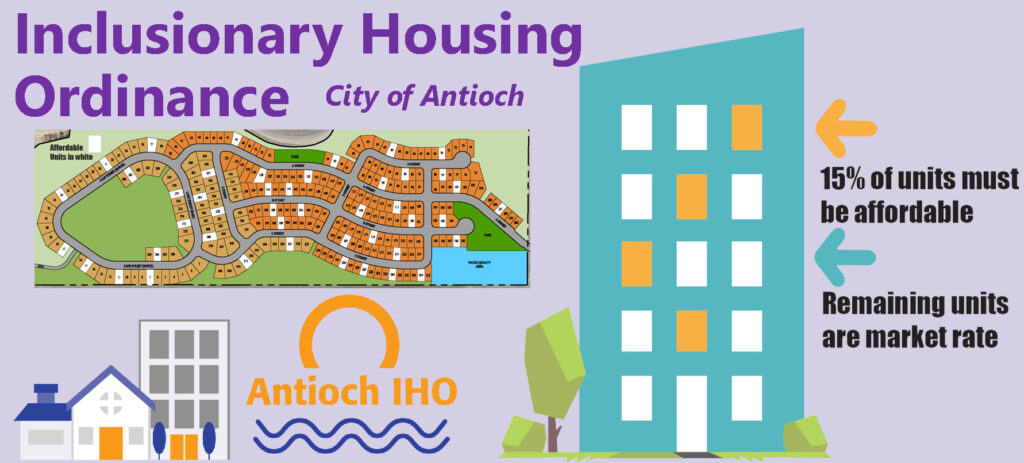
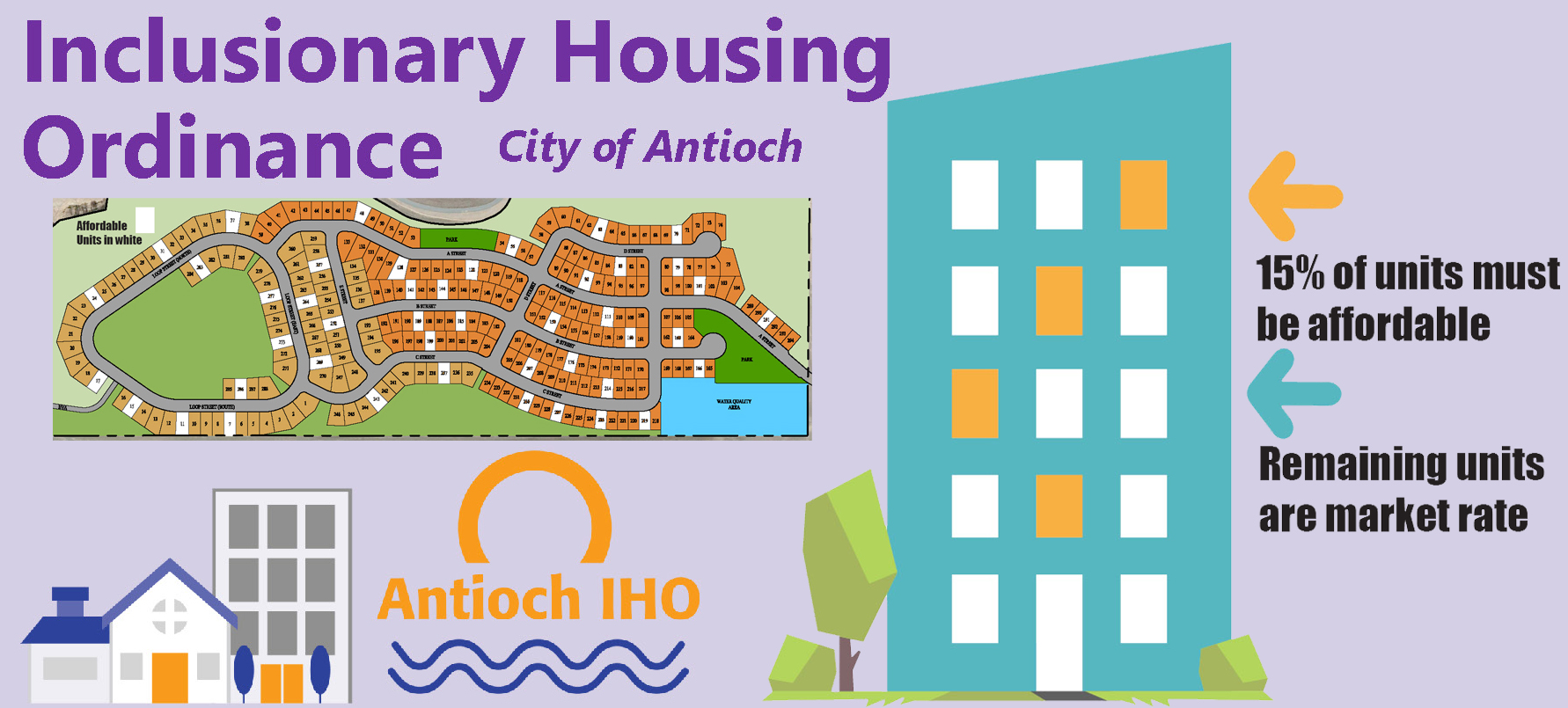
Inclusionary Housing Ordinance will require developers to privately-subsidize housing by setting aside 15% of new units for low-income buyers/residents or pay a $200K per unit fee
Will also establish affordable Inclusionary Housing Trust Fund requiring more City staff
Building Industry says ordinance not state required, will have opposite effect
“The higher the inclusionary requirement, the fewer market-rate homes are constructed” – UC Berkeley, UCLA joint study
Participants might not be allowed to keep increase in equity, but share it with City instead
By Allen D. Payton
During their meeting tomorrow night, Tuesday, March 10, 2026, the Antioch City Council will require new home developers to set aside 15% of housing units for Very Low-Income, Low-Income, and Moderate Income households. Although it’s not required by the state and opposed by the Building Industry Association of the Bay Area, on February 4, 2026, the Planning Commission voted 4-0, with two members absent, to recommend the City Council adopt an Inclusionary Housing Ordinance (IHO). The IHO would apply to both single-family homes and both for rent and for sale multi-family projects.
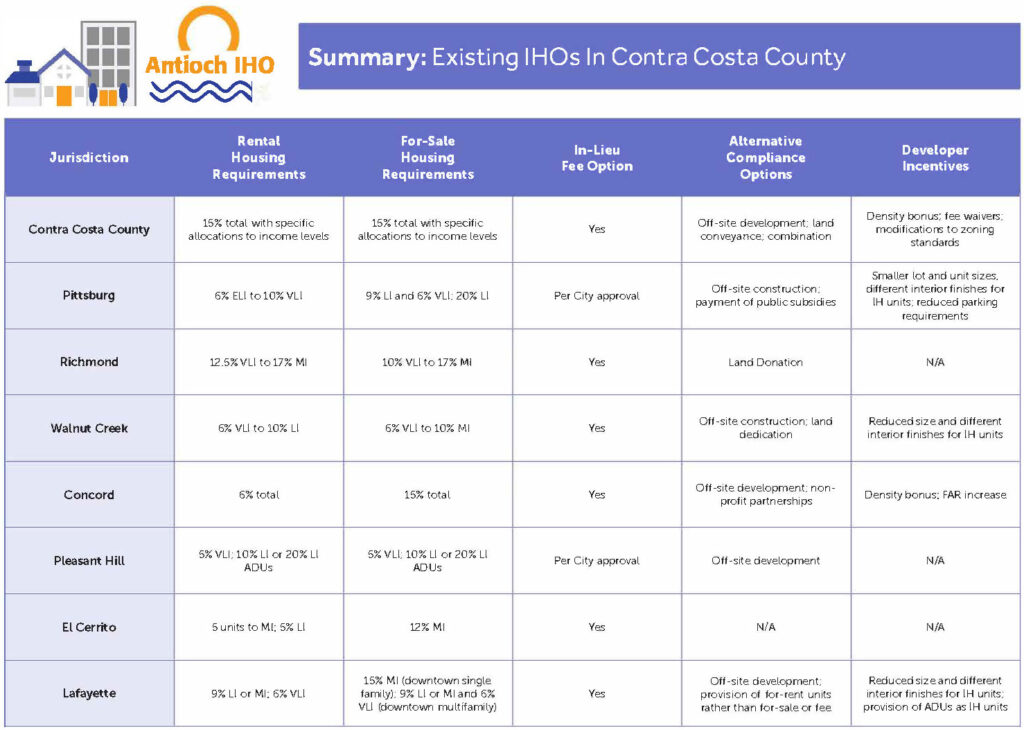
Antioch would be only the eighth city out of 19 to approve such an ordinance.
Program Participants Might Not Get to Keep Equity Growth or Must Share it With City
The lower-income homebuyers who would participate in and benefit by the program would be able to purchase the same home as their neighbors but at a much lower price. Yet, when they sell the home, they might only be allowed to keep the amount of their original downpayment but not receive any of the increase in equity as the home must be resold to another buyer who qualifies, whenever the sale occurs “in perpetuity”. The other option would be the seller would have to share the increase in equity with the City.
Section 3.3 DISPOSITION REQUIREMENTS of the Financial Feasibility Analysis for the ordinance reads:
“An inclusionary ordinance will likely require that households purchasing an affordable unit qualify based
on income and that the sales price qualify as affordable to that household. The program will also have to identify what restriction, if any, will be applied to future resales of these affordable units. Different state and federal programs have different requirements.
We recommend that the city’s ordinance restrict future resales so that the purchasing household also be income-qualified and the sales price represents an affordable housing payment for the purchasing household. We further recommend that this restriction be enforced by a deed restriction for a period of 45 years. This would be consistent with some federal affordable housing programs, but it is worth noting that it is unlikely that federal funding would be involved with mixed-income inclusionary housing projects.
As an alternative, Antioch could consider using provisions similar to the State Density Bonus Law. The original purchaser would still have to be income-qualified and the sales price would have to be qualified as affordable to the purchasing household. The purchasing household would not be restricted from selling the property in the future at then market-rates or to selling to households that are not qualified as low income. However, there would be an equity sharing agreement, and the city would receive the amount of the original sales price write-down and a proportional share of any appreciation in value. Antioch could then use its share of the sales price to support other affordable housing projects and programs.”
However, the proposed ordinance in Section 9-5.4308 – Ongoing Affordability and Occupancy reads, “A. Ongoing Affordability of For-Sale Units. In order to maintain the availability of For-Sale Inclusionary Units constructed pursuant to this Article, the affordable sales prices of for-sale Inclusionary Units shall be restricted in perpetuity, and reset upon resale of the unit(s), as documented through an Inclusionary Housing Agreement, as prescribed in Section 9-5.4305.F, recorded against the property.”
Program Details, Previous Findings Stated Antioch IHO “Not Warranted…Not Reasonable”
According to the City staff report for the agenda item, #8, an IHO is a zoning tool that requires developers to allocate a percentage of housing units in market-rate developments as “affordable”, or below-market rate (BMR) units. Many HOs include the option of paying a fee (“in-lieu” fee) rather than building the required affordable units onsite.
Inclusionary ordinances require that a specific percentage of units in market-rate development projects be offered at below market rates, typically to Very Low-Income (VLI), Low-Income (LI), and Moderate Income (MI) households (see below for definitions). These percentages are known as inclusionary requirements.
Developers would be given the option to instead pay an in-lieu fee, which is proposed at $202,500 per unit, and the City would collect the fees and be deposited into an Inclusionary Housing Trust Fund (IHTF) to be used for affordable housing purposes. The purpose of the IHTF is to assist in the creation and preservation of affordable housing in the City of Antioch for the benefit of extremely low, very low, low and moderate-income households.
The staff report also explained that Antioch has considered adopting an IHO since approximately 2009. Past City leadership concluded that market rate housing in Antioch was already adequately affordable. In 2016, the Contra Costa Grand Jury released a report titled Where Will We Live: The Affordable Housing Waiting List Is Closed. The report recommended that Antioch should consider adopting an IHO. The City responded to this recommendation on August 9, 2016, stating that the City, assuming 2000-2009 home values, “already provides a diversity of housing options and is accessible to households of all income levels…” Therefore, an IHO was “not warranted and is not reasonable.”
IHO Income Levels
The Area Median Income (AMI) per household in Contra Costa County is $159,800. The three categories of affordable housing typically accommodated in IHOs are:
- Very Low-Income (VLI) Housing. Units affordable to households earning 0-50% of the Area Median Income (AMI).
- Low-Income (LI) Housing. Units affordable to households earning 51-80% of AMI.
- Moderate Income (MI) Housing. Units affordable to households earning 80-120% of AMI.
The State also recognizes Above-Moderate Income Housing, which are units affordable to households earning more than 120% of AMI. However, this affordability level is not provided for in IHOs.
Proposed Ordinance Applies Citywide Including New Sand Creek Area Subdivisions
The proposed City of Antioch Inclusionary Housing Ordinance is composed of the following basic regulations:
Applicable Geography. The proposed IHO requirements apply to Residential Development Projects citywide.
Affordability Term. The proposed IHO requires all BMR units to be affordable in perpetuity.
Threshold Project Size. The proposed IHO requirements apply to all Residential Development Projects consisting of five or more units.
Income and Affordability Requirements. As proposed, 15 percent of all new Residential Development Projects shall be affordable to VLI and LI incomes.
Specifically:
- Ten percent of the BMR units shall be affordable to VLI households.
- Five percent of the BMR units shall be affordable to LI households.
- The first BMR unit shall be affordable to VLI households, the second unit shall be affordable to LI households, and so forth for all the BMR units in the project.
Affordability Standards. The proposed IHO includes standards to ensure that affordable units are of the same quality as Market Rate Units. Per the IHO, all affordable units shall:
- Be built in the same proportion as the Market Rate Units.
- Have an average square footage of at least 90 percent of Market Rate Units with the same bedroom count.
- Be developed with the same bedroom count ratio as the Market Rate Units.
- Have the same quality of exterior design and overall quality of construction as the Market Rate Units.
- Have the same quality and type of interior finishes and features as the Market Rate Units.
- Meet all site, design, and construction standards included in the City’s Building Regulations, Planning and Zoning.
Planning Commission Recommendations
During the Feb. 4th Planning Commission meeting one member of the public opposed the IHO with six members of the public representing coalitions of housing advocates spoke in favor. A letter in support was submitted by Joey Flegel-Mishlove, East Bay Housing Organizations, on behalf of California Center for Movement Legal Services, Contra Costa Budget Justice Coalition, East Bay Alliance for a Sustainable Economy, East Bay Housing Organizations, Ensuring Opportunity Campaign to End Poverty in Contra Costa County, Hope Solutions, Lift Up Contra Costa County, Monument Impact, Multi-Faith ACTION Coalition, Public Advocates, Rising Juntos and United Latino Voices of Contra Costa County. They wanted to set “the IHO’s overall inclusionary rate at 20%.”
The Commission provided recommendations and requested that the City Attorney review them prior to the City Council reviewing the IHO including:
- That the housing units created with the IHTF shall be prioritized for residents of Antioch.
However, the City Attorney responded, “the City of Antioch generally cannot lawfully adopt a broad resident-priority rule for assistance funded by inclusionary in-lieu fees, particularly for homebuyer subsidies. California law strongly protects statewide housing objectives and fair housing principles, and such a preference would likely conflict with those goals.”
- That the IHO and IHTF gives preference to local unions.
But the City Attorney responded, “the City of Antioch cannot lawfully require private developers to give priority to union labor over non-union contractors on inclusionary housing projects. Such a requirement would first be preempted by federal law under the National Labor Relations Act (NLRA), which governs private-sector labor relations and occupies the field to the exclusion of most local regulation.”
Developers’ Share Concerns
According to the staff report, during a December 2024 workshop, local housing developers “stressed that the difficulty of qualifying for home loans may impede the function of an IHO. Per participants, lower income households in Contra Costa typically face severe economic barriers to mortgage qualification, including an adequate down payment. As such, requiring the construction of for-sale units for very low-income or low-income households may be an unproductive path toward privately subsidized affordable housing.”
Building Industry Says IHO’s Aren’t State Required, Don’t Work, Benefits “Lucky” Few
In a letter to the council members and commissioners for the study session during the Planning Commission meeting on April 16, 2025, the Eastern Division of the Building Industry Association of the Bay Area submitted a letter opposing the ordinance saying they aren’t required by the state and they don’t work, making the cost to build the market rate housing to high.
The letter reads, “the California Housing & Community Development staff informs us that no jurisdiction is required to study the feasibility of an inclusionary ordinance or adopt such a program as part of the housing element review process.”
The BIA letter also includes a policy brief published in 2019 and updated in 2021by the Mercatus Center at George Mason University which “found that none of the six major studies of inclusionary programs show that they increase the housing supply or lower prices. Instead, much of the research comes to the opposite conclusion: Except for a very small number of people lucky enough to secure one of the affordable units, inclusionary programs cause overall housing prices and rents to rise, further reducing affordability for everyone else.”
“‘Relying on new housing construction to provide subsidized units is not a strategy that can lead to more housing that’s affordable for more people,’ wrote research fellow Emily Hamilton. ‘In cases where inclusionary zoning raises house prices generally, the costs of the policy fall hardest on the lowest-income.’”
Furthermore, the BIA letter claims that a “joint study by the Terner Center for Housing Innovation at UC Berkeley and the Lewis Center for Regional Policy Studies released earlier this year also found that inclusionary policies trigger significant tradeoffs between affordable housing and market rate housing production levels: The higher the inclusionary requirement, the fewer market-rate homes are constructed.”
An IHO “improves housing affordability for a few at the risk of worsening affordability for many, and it taxes precisely the activity needed to ameliorate the housing shortage and bring down rents: development.”
The BIA letter also states, “a 15 percent inclusionary requirement is infeasible for all single-family large lot developments and only partially feasible for single-family small lot and townhome developments. On the rental side, only high-density multifamily projects are fully feasible for very low, low and moderate income households. The market for very dense rental housing in Antioch is limited, at best. Overall, adopting a 10 or 15 percent inclusionary requirement will result in fewer homes being built in Antioch.”
The BIA requests City “staff to work with the development industry on alternative incentive-based approaches.”
Local Real Estate Broker Says IHO “Unnecessary”, “Built on…Fundamentally Socialist Ideology…Failed Model”
In a letter to the Commission, local real estate broker, Mark Jordan wrote, “an inclusionary housing ordinance is unnecessary, unsupported by current case law, and of questionable constitutional validity. Adoption of this ordinance would expose the City to avoidable legal and financial risk.” His letter cited a successful lawsuit against City of East Palo Alto and as a result, “significantly modified its inclusionary housing ordinance” and possibly paid the man who sued that city.
In a previous email to the City Council dated Sept. 15, 2025, Jordan wrote, “Though rarely stated outright, the lnclusionary Housing Ordinance is built on a fundamentally socialist ideology-one that demands others pay the price for systemic outcomes beyond their control. But socialism, like Marxism, is a failed model. It doesn’t uplift communities; it burdens them and eventually collapses under its own weight.
“If life hasn’t turned out the way we want, the answer isn’t to demand others pay the price. The answer is to adapt, to work harder, to upskill, to disengage from distractions-and to pursue our own happiness through self-reliance.
“In closing, I urge you to table this ordinance. It is ill-timed, legally risky, economically unwise, and ideologically misguided.”
Antioch Housing Already Affordable, Hundreds of Units Already Approved or in Approval Process
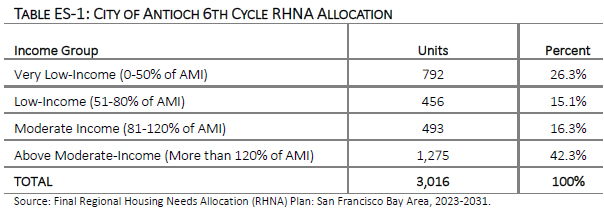
The City is already meeting its Regional Housing Needs Allocation (RHNA) requirements for very low- and low-income housing. A total of 1,248 new housing units are required in those categories. Yet, as previously reported, over 2,000 apartment units have either been or can be approved by staff through the 10 Commercial Infill Housing Overlay Districts about by the City Council in 2022, many of which will be affordable, including in the extremely-low, very-low and low-income housing categories.
In addition, according to Redfin.com, “The housing market in Antioch, CA, is currently competitive, with homes selling for a median price of $603K. The market is somewhat competitive, with homes selling in about 40 days on average. The median sale price per square foot is $306, down 3.2% since last year. In December 2025, Antioch home prices were down 1.2%.”
Finally, according to Realtor.com, “The housing market in Contra Costa County, CA, presents a range of home values and prices. As of February 2026, the median price for a single-family home is $780,000, with a median AVM value of $801,000 for properties sold in the last year.” According to RocketMortgage.com, AVM value is “an estimated property value generated by an Automated Valuation Model using algorithms and real estate data.”
Questions for Mayor, Council Members
An email was sent to the mayor and four council members Monday afternoon, asking questions about the ordinance:
They were asked, “since it’s not required by state law why do you feel an IHO is necessary in Antioch, since our city is already going to have at least five if not 10 more affordable housing apartment complexes as part of the Commercial Infill Housing Overlay Districts?”
They were also asked, “why does the proposed ordinance apply citywide and therefore include the remaining Sand Creek Focus Area developments that have yet to be approved, when those homes have long been intended to be the more upscale, higher priced homes for that end of our housing mix?”
Finally, they were asked, “why use this option to achieve the RHNA requirements when Antioch homes are less expensive than the average throughout the county?”
No responses were received to the email and further efforts to contact each of the council members were unsuccessful prior to publication time. Please check back later for any updates to this report.
Council Meeting Details
The Council meeting begins with a Closed Session at 4:30 p.m. for a Conference with legal counsel regarding “significant exposure to litigation.”
That will be followed at 5:00 p.m. for a Special Meeting/Study Session on the fiscal year 2026-27 budget and an update on the Code Enforcement Division’s progress and operations.
The regular meeting will begin at 7:00 p.m. The latter two meetings will be held in the Council Chambers at 200 H Street, or can be viewed via livestream on the City’s website or on Comcast cable TV channel 24 or AT&T U-verse channel 99.
See IHO agenda item #8.
See Council meeting agenda packet.
the attachments to this post:
RHNA Table
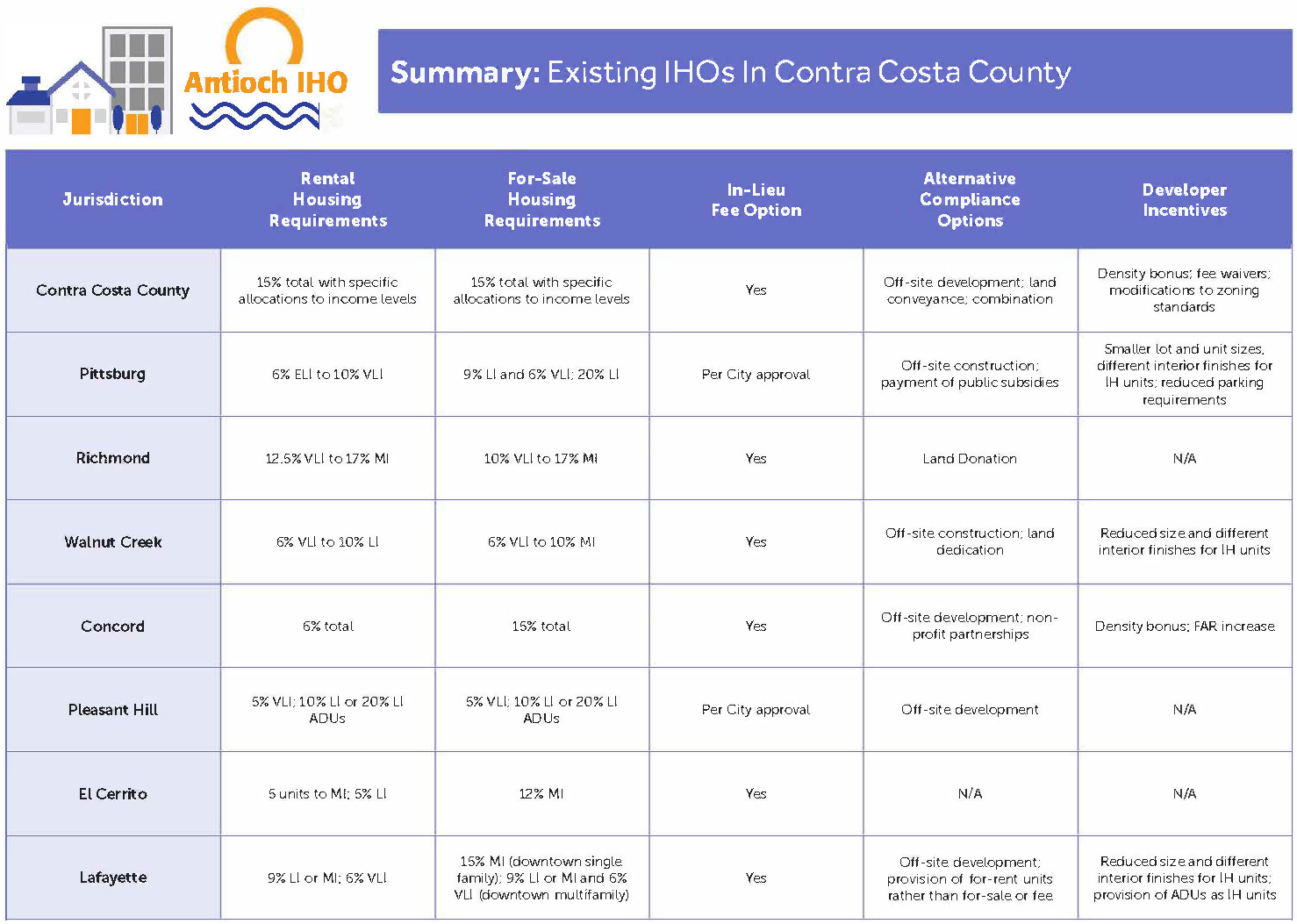
Existing IHOs in Co Co County chart
IHO cover art